





Muscular Dystrophy: Causes, Symptoms, Diagnosis & Ayurvedic Treatment
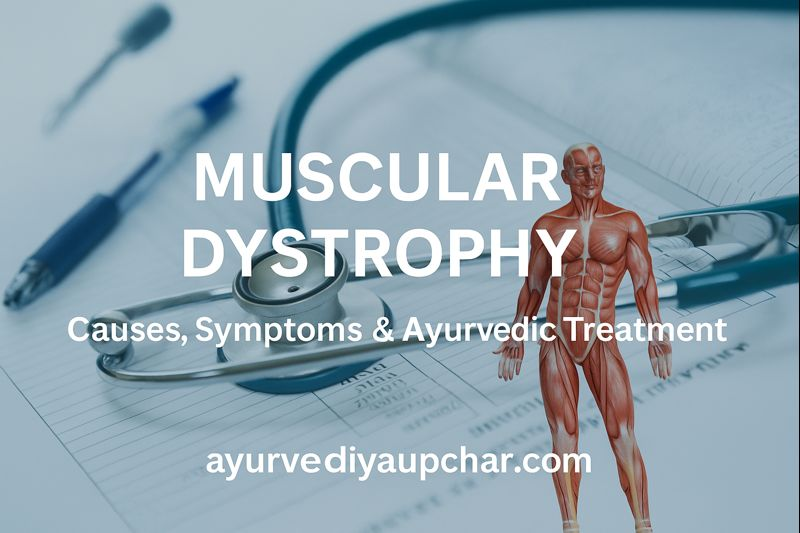
Introduction — A Disease of Progressive Muscle Weakness and Degeneration
Muscular Dystrophy (MD) is a serious genetic disorder in which the muscles of the body gradually become weak and lose their normal functioning. Initially, a person may appear healthy and able to walk normally, but over time the muscles begin to show stiffness, tightness, weakness, swelling, and reduced flexibility.
As the disease progresses, it becomes increasingly difficult for the patient to walk, stand, breathe, or perform daily activities. Certain types of MD begin as early as 5 years of age, and many patients struggle with life-threatening complications by the age of 20–25.
— What is Muscular Dystrophy?
Muscular Dystrophy refers to a group of hereditary muscle disorders that gradually destroy muscle tissue. The disease primarily affects the legs, thighs, hips, spine, and shoulder muscles. As the condition advances, the patient may develop spinal deformity, walking difficulties, and eventually require a wheelchair.
In Muscular Dystrophy:
-
Muscle fibers begin to break down
-
The body fails to produce dystrophin, a muscle-protective protein
-
Motor nerves lose control over muscles
-
Muscles become thin, weak, and inactive
A striking aspect is that the brain remains completely normal, but the muscles slowly stop responding, making the person dependent for basic activities.
— Early Signs and Onset of the Disease
Symptoms may not appear at birth, but in certain types like Duchenne Muscular Dystrophy (DMD), signs appear as early as 1.5–2 years of age.
Common Early Symptoms:
-
Delay in standing or walking
-
Inability to stand without support
-
Frequent falls
-
Difficulty climbing stairs
-
Waddling or wide-based walking
-
Thick or enlarged calf muscles
-
Weakness in hip and lower back muscles
If a child aged 2–3 years is unable to walk properly or falls frequently, immediate evaluation is essential.
— Progression and Advanced Symptoms
As the disease advances, the following symptoms become more prominent:
1. Difficulty in Climbing Stairs
The child uses hands to push on thighs while climbing.
2. Frequent Falling
Weak muscles fail to maintain balance.
3. Difficulty Rising from the Floor
A classic sign called Gowers’ sign is observed.
4. Spinal Curvature (Scoliosis)
The spine bends due to weak back muscles.
5. Loss of Walking Ability
Between 10–12 years of age, many children become wheelchair-bound.
6. Breathing Difficulty
Respiratory muscles weaken, requiring ventilatory support.
7. Heart-Related Complications
Weakening of the heart muscle may lead to cardiomyopathy, which can be life-threatening.
— Why Does Muscular Dystrophy Occur? (Causes)
The root cause of Muscular Dystrophy is a gene mutation.
The most critical gene involved is:
The Dystrophin Gene
This gene produces dystrophin, a protein that protects and repairs muscle fibers.
When this gene becomes defective:
-
Muscle fibers tear easily
-
Regeneration does not occur
-
Muscles gradually die and weaken
The disease commonly follows an X-linked inheritance pattern, where mothers carry the defective gene and male children are more severely affected.
— Major Types of Muscular Dystrophy
1. Duchenne Muscular Dystrophy (DMD)
-
Most common and severe type
-
Symptoms appear at 3–5 years
-
Loss of walking ability by age 12
-
Heart and respiratory failure by 20–25 years
2. Becker Muscular Dystrophy (BMD)
-
Similar to DMD but progresses slower
-
Symptoms appear in adolescence
3. Congenital Muscular Dystrophy
-
Present at birth
-
Rare and severe
4. Facioscapulohumeral MD (FSHD)
Affects facial, shoulder, and upper-arm muscles.
5. Limb-Girdle Muscular Dystrophy (LGMD)
Affects thigh and hip muscles.
6. Emery–Dreifuss Muscular Dystrophy
Begins early in childhood and has significant heart involvement.
— Diagnosis of Muscular Dystrophy
Diagnosis is based on several key investigations:
1. Blood Test
Elevated Creatine Kinase (CK) indicates muscle damage.
2. Electromyography (EMG)
Measures electrical activity in muscles.
3. Nerve Conduction Study
Checks nerve signal transmission.
4. Muscle Biopsy
Shows degeneration of muscle fibers under a microscope.
5. Genetic Testing
Accurately identifies the defective gene.
6. Prenatal Diagnosis
Determines if the fetus is affected.
— Modern (Allopathic) Management
There is no complete cure for Muscular Dystrophy, but treatment slows progression:
-
Steroid therapy
-
Regular physiotherapy
-
Assisted breathing devices
-
Orthopedic surgeries
-
Heart medications
— Muscular Dystrophy in Ayurvedic Perspective
In Ayurveda, this disorder is related to:
-
Vata imbalance
-
Mamsa Dhatu Kshaya (muscle tissue degeneration)
-
Prana and Udana Vayu disturbances
-
Weak digestive fire (Agni Mandya)
Ayurveda focuses on improving muscle strength, enhancing nourishment, balancing Vata, and slowing degeneration.
— Ayurvedic Treatment (Medicine Protocol)
1. Trayodashang Guggulu
Strengthens nerves and muscles; balances Vata.
2. Vantatak Syrup
Reduces stiffness and muscle tightness.
3. Orthomove Oil Massage
Provides relief from pain, swelling, and rigidity.
4. Arogyavardhini Vati
Improves digestion and strengthens body tissues.
Note: Always use Ayurvedic medicines under proper medical supervision.
— Yoga and Pranayama
Yoga significantly benefits Muscular Dystrophy patients by:
-
Improving blood circulation
-
Enhancing flexibility
-
Strengthening the nervous system
Recommended Asanas
-
Tadasana
-
Bhujangasana
-
Makarasana
-
Pawanmuktasana
-
Shashankasana
-
Vajrasana
Pranayama
-
Anulom-Vilom
-
Bhramari
-
Deep breathing exercises
- Physiotherapy Support
Physiotherapy helps maintain mobility for a longer period:
-
Stretching
-
Strengthening exercises
-
Walking assistance
-
Respiratory exercises
-
Hydrotherapy (water-based therapy)
— Diet & Lifestyle Recommendations
Foods to Include
-
Sprouted grains
-
Moong dal
-
Milk and ghee
-
Sesame and flax seeds
-
Green vegetables
-
Vitamin E-rich foods
-
Fruits like apple, papaya, kiwi
Foods to Avoid
-
Fast food
-
Cold drinks
-
Excessive salt
-
Deep-fried foods
-
Late-night meals
Lifestyle Tips
-
Avoid prolonged inactivity
-
Light massage regularly
-
Hot–cold compress
-
Avoid stress and negative thoughts
— Complications of Muscular Dystrophy
Untreated or severe cases may lead to:
-
Respiratory failure
-
Heart failure
-
Complete immobility
-
Spinal deformity
-
Nutritional deficiencies
-
Recurrent infections
— Conclusion
Muscular Dystrophy is a complex and progressive genetic disorder. Although modern medicine does not offer a complete cure, Ayurveda, yoga, physiotherapy, diet control, and emotional well-being can significantly slow disease progression and improve quality of life.
Early diagnosis, continuous care, and a holistic treatment plan can help patients remain active and independent for a longer time.
Recent Posts
महावातविध्वंसक रस: वात विकारों और तीव्र शूल में पारंपरिक आयुर्वेदिक उपयोग
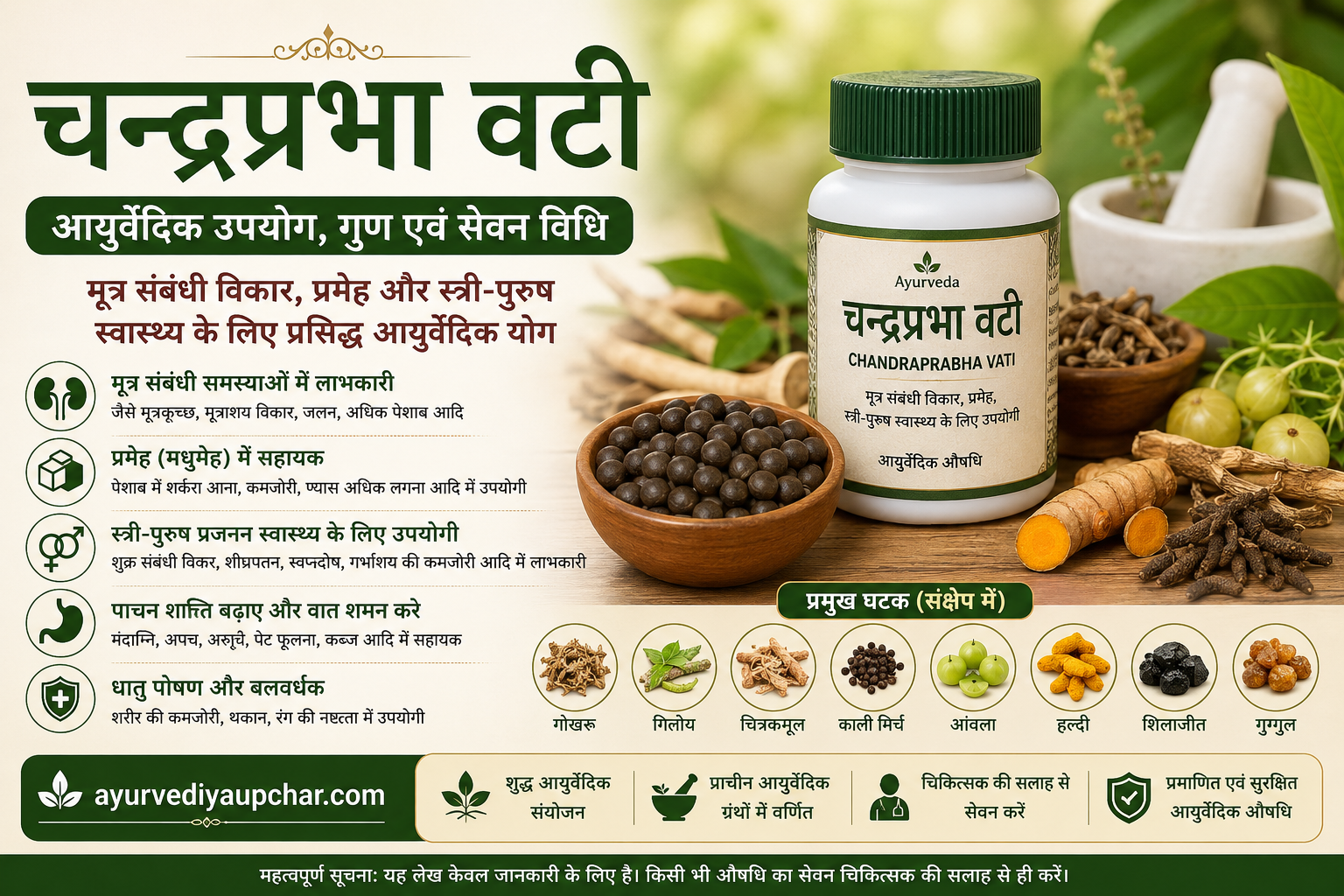
चन्द्रप्रभा वटी: आयुर्वेद में उपयोग, घटक, पारंपरिक गुण और सेवन विधि
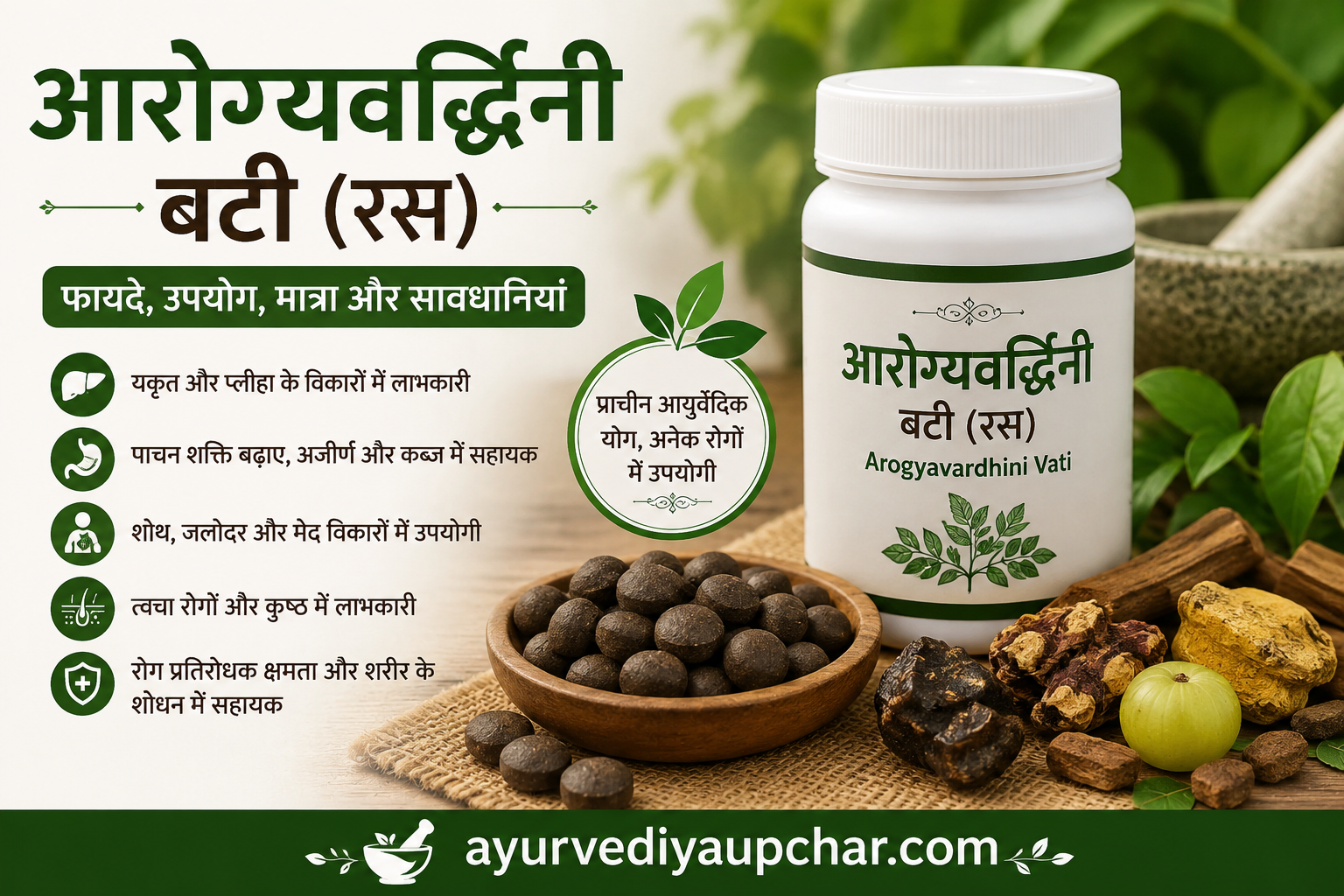
आरोग्यवर्द्धिनी बटी (रस): परिचय, घटक, निर्माण विधि, मात्रा, अनुपान और पारंपरिक उपयोग
वृद्धिबाधिका बटी: अण्डवृद्धि, अण्डकोष में सूजन और हर्निया के संबंध में आयुर्वेदिक दृष्टिकोण
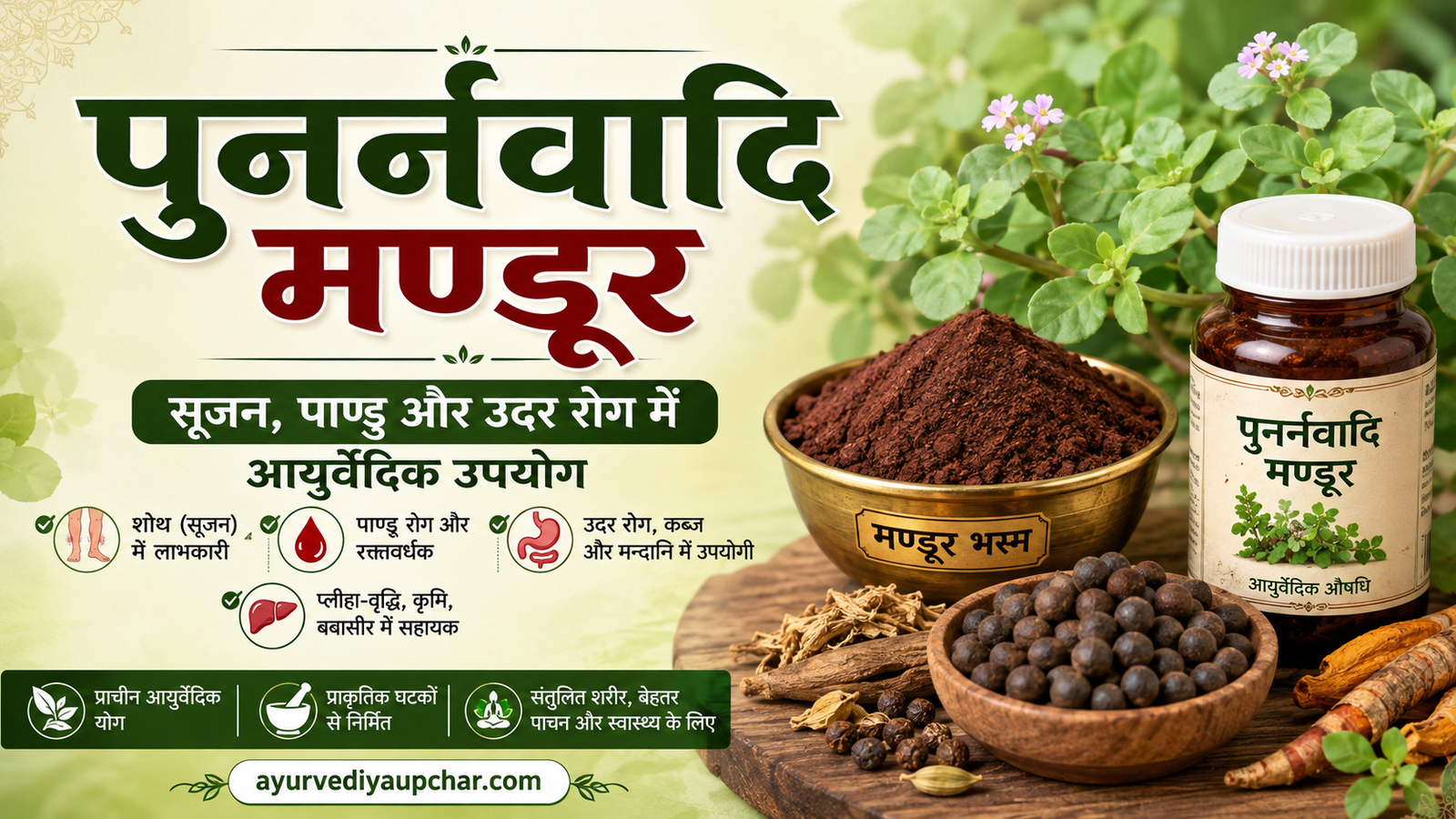
पुनर्नवादि मण्डूर: सूजन, पाण्डु और उदर विकारों में प्रसिद्ध आयुर्वेदिक योग

एक आम बीमारी: पेप्टिक अल्सर — कारण, लक्षण, प्रकार, पहचान और उपचार
आयुर्वेदिक उपायों और संतुलित आहार द्वारा कोलेस्ट्रॉल पर नियंत्रण संभव है
AYURVEDIYAUPCHAR
At AyurvediyaUpchar, we are dedicated to bringing you the ancient wisdom of Ayurveda to support your journey toward holistic well-being. Our carefully crafted treatments, products, and resources are designed to balance mind, body, and spirit for a healthier, more harmonious life. Explore our range of services and products inspired by centuries-old traditions for natural healing and wellness.
आयुर्वेदीय उपचार में, हम आपको आयुर्वेद के प्राचीन ज्ञान को समग्र कल्याण की ओर आपकी यात्रा में सहायता करने के लिए समर्पित हैं। हमारे सावधानीपूर्वक तैयार किए गए उपचार, उत्पाद और संसाधन स्वस्थ, अधिक सामंजस्यपूर्ण जीवन के लिए मन, शरीर और आत्मा को संतुलित करने के लिए डिज़ाइन किए गए हैं। प्राकृतिक उपचार और कल्याण के लिए सदियों पुरानी परंपराओं से प्रेरित हमारी सेवाओं और उत्पादों की श्रृंखला का अन्वेषण करें।

About AyurvediyaUpchar.com
Welcome to AyurvediyaUpchar.com, your trusted online destination for authentic Ayurvedic remedies, herbal products, and wellness solutions. We are dedicated to bringing the ancient wisdom of Ayurveda into modern lifestyles through high-quality, natural, and effective products.
Our Mission
At AyurvediyaUpchar.com, we strive to promote holistic health and well-being by providing pure, traditional, and scientifically-backed Ayurvedic treatments. Our goal is to make Ayurveda accessible to everyone, helping people lead a healthier and more balanced life naturally.
What We Offer
✅ Authentic Ayurvedic Medicines – Herbal formulations for various health concerns.
✅ Herbal Supplements – Boost immunity, digestion, and overall wellness.
✅ Personal Care Products – Skincare, haircare, and natural beauty solutions.
✅ Wellness & Lifestyle – Detox, stress relief, and rejuvenation products.
✅ Expert Guidance – Informative blogs, health tips, and personalized Ayurvedic consultation.
Why Choose Us?
✔ 100% Natural & Pure Products – Sourced from the finest herbs and ingredients.
✔ Trusted by Ayurveda Experts – Backed by traditional wisdom & modern research.
✔ Secure Online Shopping – Safe payments and easy checkout.
✔ Nationwide Delivery – Get Ayurveda at your doorstep.
✔ Customer Satisfaction – Dedicated support for your health journey.
Join us in embracing Ayurveda for a healthier, happier, and more natural life!
For any queries, feel free to contact us at Info@ayurvediyaupchar.com