
Turmeric Benefits: Nutrition, Uses, Recipes & How to Choose Quality Turmeric Powder
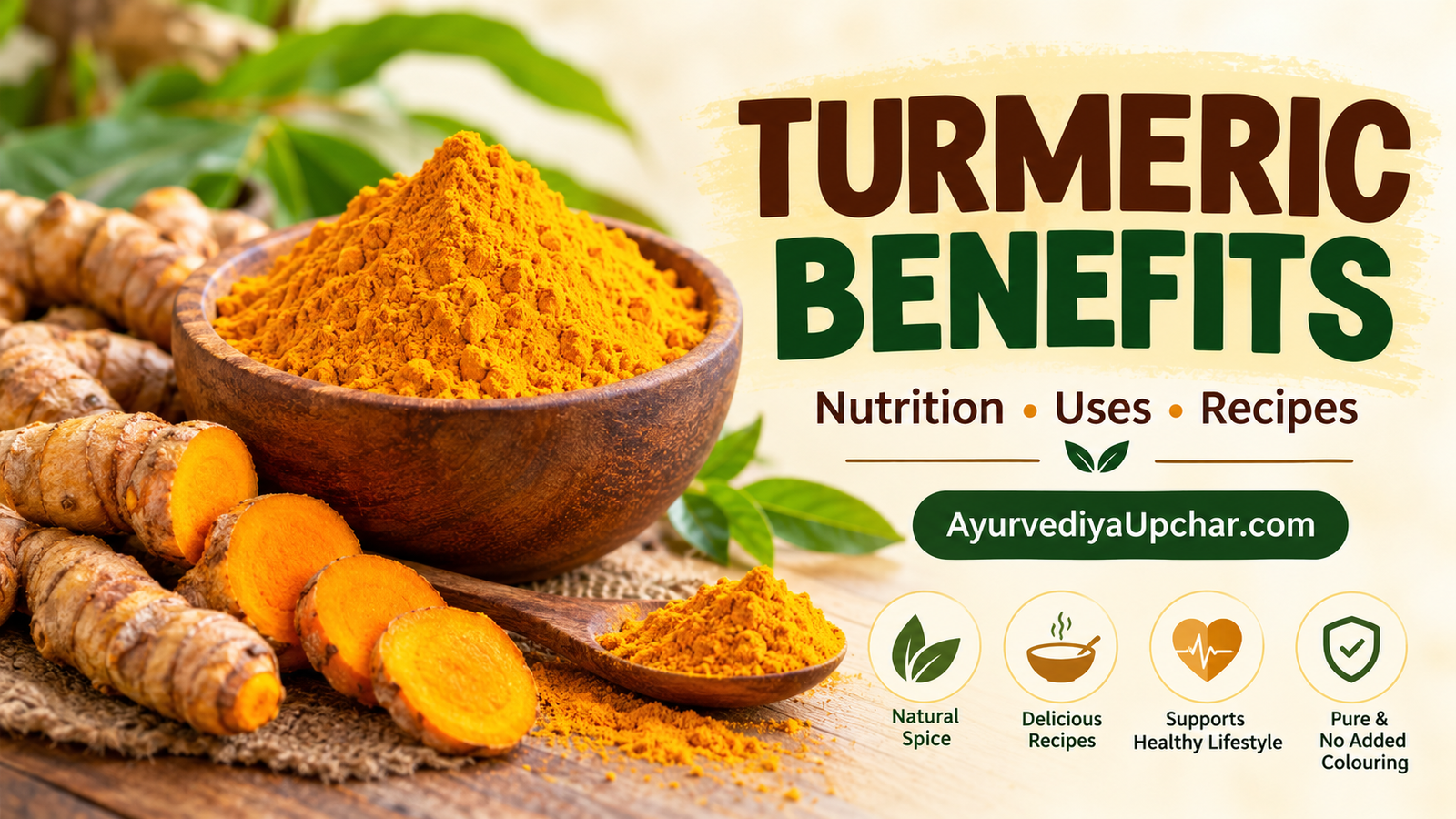
Turmeric Benefits: Nutrition, Uses, Recipes & How to Choose Quality Turmeric Powder
Turmeric is a popular golden-yellow spice used in kitchens around the world. From traditional Indian curries to modern smoothies and golden milk, turmeric adds a distinctive color, earthy aroma, and warm flavor to everyday meals.
In the United States, turmeric has also become a popular ingredient among people interested in cooking with natural spices and learning about traditional wellness practices. But what does science actually say about turmeric benefits? How can you use turmeric powder in everyday cooking, and what should you know before taking turmeric supplements?
In this complete guide, we explore turmeric's nutritional value, potential health benefits, cooking uses, popular recipes, safety considerations, and practical tips for choosing turmeric powder.
If you are looking for a convenient kitchen spice, you will also learn about AyurvediyaUpchar Haldi Powder, available in 100 g, 200 g, and 500 g pack sizes.
What Is Turmeric?
Turmeric is a spice obtained from the underground stem, or rhizome, of a plant botanically known as Curcuma longa. It belongs to the ginger family and is widely used in Indian, South Asian, and other international cuisines.
Fresh turmeric root has a bright orange-yellow interior. When dried and ground, it produces the familiar golden powder used in cooking.
Turmeric is valued for several reasons:
Its characteristic golden-yellow color
Its earthy, slightly bitter flavor
Its distinctive aroma
Its versatility in savory dishes and beverages
Its long history in traditional Indian cooking and Ayurvedic practices
Today, turmeric is available as fresh root, dried powder, tea ingredients, and concentrated dietary supplements. These forms have different uses and should not be assumed to have identical effects.
What Makes Turmeric Special? Understanding Curcumin
One of the best-known compounds in turmeric is curcumin, a naturally occurring substance responsible for much of its yellow pigment.
Researchers have studied curcumin because of its antioxidant and anti-inflammatory activity in laboratory experiments. These properties have led to scientific interest in its possible effects on different aspects of human health.
However, laboratory results do not automatically establish a health benefit in people. Human studies have produced mixed findings, and the results depend on the condition studied, the formulation used, and the amount consumed.
It is also important to understand that ordinary turmeric powder contains several naturally occurring compounds. It is not the same as a concentrated curcumin extract.
For most everyday cooking, turmeric is best appreciated as a versatile spice rather than as a medicine.
8 Potential Turmeric Benefits
Turmeric has a long history of culinary use, while several of its possible health-related effects remain under investigation.
1. Antioxidant Properties
Antioxidants interact with reactive molecules that can contribute to cellular damage under certain conditions.
Curcumin has demonstrated antioxidant activity in laboratory studies. Scientists continue to investigate whether these properties produce meaningful benefits when people consume turmeric or curcumin supplements.
Although the research is interesting, there is not enough evidence to conclude that adding turmeric to your diet prevents specific diseases.
Everyday tip: Enjoy turmeric as one ingredient in a varied diet that includes vegetables, fruits, legumes, whole grains, nuts, and seeds.
2. Anti-Inflammatory Potential
Inflammation is a normal part of the body's response to injury and infection. Persistent inflammation, however, can play a role in certain health conditions.
Curcumin has shown anti-inflammatory activity in laboratory research, and human clinical studies are exploring its potential effects.
Some findings are promising, but the evidence is not strong enough to recommend turmeric as a general treatment for inflammatory diseases.
Turmeric should not replace prescribed medicines or professional medical care.
3. Joint Health Research
Some clinical studies have investigated curcumin supplements in people with knee osteoarthritis.
Certain studies suggest that specific curcumin preparations may help improve pain or stiffness in some participants. However, the available research has limitations, and more high-quality studies are needed.
Importantly, research involving concentrated extracts cannot automatically be applied to ordinary turmeric powder used in cooking.
Anyone experiencing persistent joint pain or swelling should seek medical advice.
4. Support for a Balanced Diet
Turmeric contributes flavor and variety to meals. It can be combined with other spices to prepare flavorful dishes without relying entirely on salt.
For example, turmeric works well with cumin, coriander, ginger, garlic, black pepper, and paprika.
A balanced diet is more important than relying on any single spice for overall nutritional quality.
5. Traditional Digestive Uses
Turmeric has been used traditionally in food and wellness practices, including preparations associated with digestive comfort.
Nevertheless, scientific evidence that turmeric supplements reliably treat specific digestive disorders remains limited. Turmeric may also cause acid reflux, nausea, or stomach discomfort in some people.
Persistent digestive symptoms should be discussed with a healthcare professional.
6. Metabolic Health Research
Researchers have investigated curcumin supplements for potential effects on blood glucose, cholesterol, and other metabolic markers.
Some studies have reported changes in selected measurements, but results are not consistent enough to establish turmeric as a treatment for diabetes, high cholesterol, or other metabolic conditions.
People taking medication for these conditions should not change their treatment based on turmeric-related claims.
7. Heart Health Research
Scientists are studying whether curcumin may influence biological processes associated with cardiovascular health.
However, current evidence does not establish turmeric supplements as a method of preventing heart attacks, strokes, or cardiovascular disease.
Well-established approaches to heart health include balanced nutrition, regular physical activity, avoiding tobacco, and appropriate management of blood pressure and cholesterol.
8. Everyday Culinary Benefits
One of the clearest benefits of turmeric is its usefulness in the kitchen.
Its rich color and earthy flavor can enhance soups, rice, vegetable dishes, marinades, lentils, and sauces.
Using flavorful spices also helps make home-cooked meals more interesting, encouraging variety in everyday food preparation.
Turmeric Nutrition Facts
Turmeric contains carbohydrates, dietary fiber, small amounts of protein and fat, and various minerals.
Approximate nutrition values for 100 grams of ground turmeric are shown below.
| Nutrient | Approximate amount |
|---|---|
| Calories | 312 kcal |
| Carbohydrates | 67.1 g |
| Dietary fiber | 22.7 g |
| Protein | 9.7 g |
| Total fat | 3.3 g |
These values refer to 100 grams of ground turmeric, not a typical serving.
Most recipes use only a small amount of turmeric, so the contribution to total daily nutrient intake will generally be modest.
Turmeric is primarily a seasoning, rather than a replacement for foods that provide substantial amounts of protein, vitamins, or other essential nutrients.
How to Use Turmeric Powder in Everyday Cooking
Turmeric powder is easy to incorporate into many recipes. A small amount can provide noticeable color and flavor.
Turmeric in Dal and Lentils
Add turmeric while cooking lentils, beans, or dal. It complements cumin, garlic, ginger, and coriander.
Turmeric in Vegetable Curries
Use turmeric in vegetable curries made with potatoes, cauliflower, peas, carrots, spinach, or other vegetables.
Turmeric in Rice
A small amount of turmeric can give rice an attractive golden color. Combine it with suitable seasonings for a simple side dish.
Turmeric in Soups
Stir turmeric into vegetable soup, lentil soup, or chicken soup. Add a small quantity initially and adjust according to taste.
Turmeric in Marinades
Combine turmeric with yogurt or a suitable alternative, ginger, garlic, and other spices to create a flavorful marinade for vegetables, tofu, or meat.
Turmeric in Roasted Vegetables
Mix vegetables with a little oil, turmeric, and other seasonings before roasting. This is an easy way to add variety to weeknight meals.
3 Easy Turmeric Recipes to Try at Home
1. Simple Turmeric Tea
Ingredients
1 cup hot water
A small amount of ground turmeric
Lemon, if desired
Honey, if desired
Instructions
Heat the water.
Stir in the turmeric.
Allow it to steep briefly.
Stir again before drinking because turmeric powder does not fully dissolve.
Add lemon or honey if you prefer.
Turmeric tea is a beverage, not a proven treatment for infections, inflammation, or other medical conditions.
2. Homemade Golden Milk
Golden milk is a warm drink made with milk or a plant-based alternative and turmeric.
Ingredients
1 cup milk or unsweetened plant-based milk
A small amount of turmeric powder
A pinch of cinnamon, if desired
A little ginger, if desired
Sweetener, optional
Instructions
Pour the milk into a small saucepan.
Add the turmeric and optional spices.
Warm gently while stirring.
Avoid allowing the milk to boil over.
Serve warm.
Golden milk can be enjoyed as part of your regular food routine. It should not be considered a substitute for medical treatment.
3. Golden Turmeric Rice
Ingredients
1 cup rice
Water according to the rice variety
A small amount of turmeric powder
Salt according to preference
Optional cumin seeds
Instructions
Rinse the rice.
Add it to a saucepan with the appropriate amount of water.
Add turmeric and any optional seasonings.
Cook until the rice is tender.
Fluff gently and serve with vegetables, lentils, or another dish.
This simple recipe demonstrates how turmeric can add color and flavor to ordinary meals.
How to Choose Quality Turmeric Powder
When buying turmeric powder, look beyond the color of the product.
Here are some useful points to consider.
1. Check the ingredient list.
Look for clear information about the ingredients and whether any additional ingredients are included.
2. Read the product description.
The listing should explain the intended use, available pack sizes, and relevant product details.
3. Look for clear packaging information.
Check the net quantity, manufacturer or packer details, applicable food license information, and storage instructions.
4. Choose convenient packaging.
Packaging that can be properly closed after opening helps protect the powder from moisture and kitchen contaminants.
5. Store turmeric correctly.
Keep it in a tightly closed container in a cool, dry place, away from direct sunlight, heat, and moisture.
6. Avoid unsupported claims.
Be cautious of products advertised as guaranteed cures for diseases or as replacements for prescribed medication.
Discover AyurvediyaUpchar Haldi Powder
For everyday Indian cooking, AyurvediyaUpchar offers Haldi Powder | Pure Turmeric Powder, a kitchen spice intended to add natural golden color, characteristic aroma, and turmeric flavor to meals.
The product listing describes it as turmeric powder made from dried turmeric rhizomes, with no added colouring matter. It is presented for everyday cooking in dishes such as dal, sabzi, curry, soups, and rice.
Product Highlights
Brand: AyurvediyaUpchar
Product: Haldi Powder / Pure Turmeric Powder
Intended use: Everyday cooking
Described features: Golden color and characteristic aroma
Product listing states: No added colouring matter
Available pack sizes: 100 g, 200 g, and 500 g
Product details and availability may change. Please check the current listing for the latest information before ordering.
Explore the product here:
Shop AyurvediyaUpchar Haldi Powder – Official Product Page
Use this turmeric powder in your favorite recipes to bring the familiar color and flavor of haldi to your kitchen.
Turmeric Powder vs. Curcumin Supplements
Turmeric powder and curcumin supplements are different products.
| Feature | Turmeric powder | Curcumin supplement |
|---|---|---|
| Main purpose | Cooking and seasoning | Concentrated supplement use |
| Composition | Whole ground turmeric | Concentrated curcumin or related compounds |
| Typical use | Small amounts in recipes | Product-specific supplement directions |
| Evidence | Food use differs from supplement trials | Research varies by formulation |
| Safety | Usually well tolerated in normal food amounts | May cause side effects or medication interactions |
There is no universally established supplement dose that is suitable for everyone.
Some supplements contain piperine, a compound from black pepper that can increase curcumin absorption. Increased absorption may also affect medication interactions and safety.
Ask a healthcare professional before taking concentrated turmeric or curcumin supplements, especially if you have a medical condition or take medication.
Turmeric Side Effects and Safety
Turmeric used in normal culinary amounts is generally well tolerated by most adults. Concentrated supplements require more caution.
Digestive Discomfort
Turmeric or curcumin supplements may cause nausea, stomach upset, acid reflux, diarrhea, or constipation in some people.
Liver Safety
Rare cases of liver injury have been reported with turmeric or curcumin supplements, including some formulations designed to increase absorption.
Seek medical advice promptly if you develop symptoms such as dark urine, unusual fatigue, persistent nausea, or yellowing of the skin or eyes after taking a supplement.
Medication Interactions
Consult a doctor or pharmacist before taking turmeric supplements if you use prescription medicines, particularly medicines that affect blood clotting or require careful monitoring.
Pregnancy and Breastfeeding
Normal culinary use differs from concentrated supplement use. Safety information for medicinal amounts during pregnancy and breastfeeding is limited. Seek professional advice before using concentrated products.
Existing Health Conditions
People with gallbladder or bile-duct problems, liver disease, or other significant medical conditions should discuss supplement use with a healthcare professional.
Important: Do not replace prescribed medication with turmeric powder, turmeric tea, or dietary supplements.
Frequently Asked Questions About Turmeric
What are the main benefits of turmeric?
Turmeric is a versatile spice containing curcumin and other naturally occurring compounds. Researchers are investigating its antioxidant and anti-inflammatory properties. Some studies suggest possible benefits for joint symptoms, but evidence remains limited for many health claims.
Can I use turmeric powder every day?
Most adults can use turmeric in ordinary cooking as part of a balanced diet. Daily use of concentrated supplements is different and should be considered in light of individual health and medication use.
Is turmeric good for inflammation?
Curcumin has demonstrated anti-inflammatory activity in laboratory studies. However, the evidence does not establish turmeric as a general treatment for inflammatory diseases.
Can I add turmeric to milk?
Yes. Turmeric can be added to milk or plant-based milk to make golden milk. Use a culinary quantity according to your taste and remember that the drink is not a proven medical treatment.
Does turmeric contain curcumin?
Yes. Curcumin is one of the principal curcuminoids naturally present in turmeric. Its concentration can vary depending on the turmeric and the product.
Is turmeric powder the same as a turmeric supplement?
No. Turmeric powder is a whole spice used in food, while supplements may contain concentrated extracts or formulations designed to change absorption.
How should turmeric powder be stored?
Store it in a tightly closed, dry container away from moisture, heat, and direct sunlight. Follow any storage instructions provided on the package.
Where can I buy AyurvediyaUpchar Haldi Powder?
You can review the available sizes and current product information on the official product page:
https://ayurvediyaupchar.com/product/ayurvediyaupchar-haldi-powder-pure-turmeric-powder
Can turmeric cure diseases?
Turmeric has not been established as a cure for cancer, diabetes, arthritis, or other chronic diseases. It should not replace appropriate diagnosis or medical treatment.
Final Thoughts
Turmeric is a versatile spice that brings color, aroma, and flavor to everyday cooking. Its long culinary history and the scientific interest surrounding curcumin make it a useful subject for anyone interested in spices, nutrition, and traditional ingredients.
The most practical way to enjoy turmeric is to incorporate it into a balanced diet through dishes such as curries, soups, rice, roasted vegetables, and golden milk. Although research into curcumin continues, many health claims remain uncertain, and concentrated supplements can carry additional risks.
If you want to explore turmeric for your kitchen, you can learn more about AyurvediyaUpchar Haldi Powder through the official product page.
Medical disclaimer: This article is intended for educational purposes only. It does not provide medical advice, diagnosis, or treatment. Consult a qualified healthcare professional for personal medical concerns.
Recent Posts


Vitamin B12 Deficiency: 10 Warning Signs, Causes, Symptoms, Diagnosis and Treatment

विटामिन B12 की कमी: 10 प्रमुख लक्षण, कारण, जांच, उपचार और बचाव के उपाय
प्लेटलेट्स कम होने के कारण, लक्षण, उपचार और खान-पान: Low Platelet Count की संपूर्ण जानकारी
श्रृंग भस्म (Shringa Bhasma): परिचय, पारंपरिक निर्माण विधि, गुण, उपयोग और सावधानियाँ
लाल मिर्च के फायदे, उपयोग और गुण: भारतीय रसोई में लाल मिर्च पाउडर का महत्व
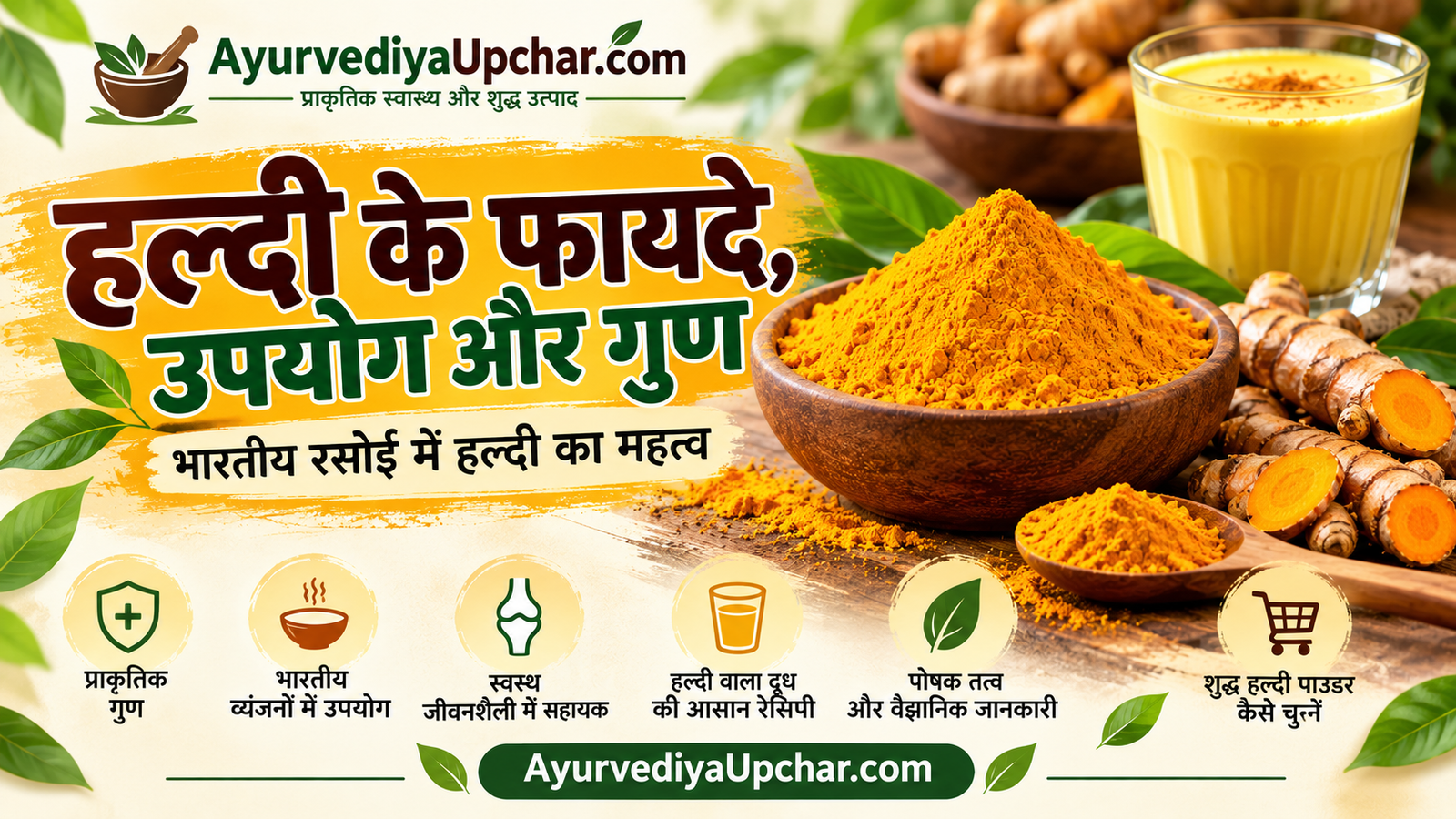
हल्दी के फायदे, उपयोग और गुण: भारतीय रसोई में हल्दी का महत्व और सही हल्दी पाउडर कैसे चुनें?
Turmeric Benefits: Nutrition, Uses, Recipes & How to Choose Quality Turmeric Powder
स्फटिका भस्म (फिटकरी): परिचय, पारंपरिक आयुर्वेदिक गुण, उपयोग एवं सावधानियाँ
AYURVEDIYAUPCHAR
At AyurvediyaUpchar, we bring you a carefully selected range of quality Masala & Spices and Natural Products for your everyday needs. From Haldi and Red Chilli Powder to Neem, Amla, Moringa and other natural powders, our products are selected with a focus on quality, convenience and everyday use. Explore our products and informative blog resources for simple ideas, traditional knowledge and a more natural lifestyle.
आयुर्वेदीय उपचार में हम आपके दैनिक उपयोग के लिए गुणवत्तापूर्ण मसाले, स्पाइसेज़ और प्राकृतिक उत्पादों की चुनिंदा रेंज उपलब्ध कराने का प्रयास करते हैं। हल्दी और लाल मिर्च पाउडर से लेकर नीम, आंवला, मोरिंगा और अन्य प्राकृतिक पाउडर तक, हमारे उत्पादों का चयन गुणवत्ता, उपयोगिता और सुविधा को ध्यान में रखकर किया जाता है। हमारे उत्पादों के साथ-साथ जानकारीपूर्ण ब्लॉग का भी आनंद लें, जहाँ आपको पारंपरिक ज्ञान, उपयोगी जानकारी और प्राकृतिक जीवनशैली से जुड़े विषय मिलेंगे।

About AyurvediyaUpchar.com
Welcome to AyurvediyaUpchar.com, an Indian online platform offering Natural Products, Masala & Spices, and selected everyday wellness products. We aim to bring carefully selected products inspired by traditional Indian knowledge and everyday needs, with a focus on quality, transparency, and customer trust.
Our Mission
At AyurvediyaUpchar.com, our aim is to make quality natural products and everyday spices easily accessible through a simple and reliable online shopping experience. We focus on providing clear product information and building a trusted relationship with our customers.
What We Offer
Natural Products – Neem Powder, Moringa Powder, Amla Powder, Tulsi Powder and other selected natural products.
Masala & Spices – Haldi, Mirchi and other everyday spices and masala products.
Selected Wellness Products – Carefully selected products for everyday lifestyle and wellness needs.
Marketplace Products – Products from selected sellers may also be available on our platform.
Informative Blog – Articles covering Ayurveda, natural ingredients, traditional knowledge, nutrition, spices, wellness and healthy lifestyle.
Why Choose Us?
✔ Quality Focus – We focus on carefully selected products and clear product information.
✔ Product Transparency – Important product details are provided wherever applicable.
✔ Natural & Traditional Products – Explore products based on natural ingredients and traditional Indian knowledge.
✔ Secure Shopping – Convenient online ordering and secure payment options.
✔ Reliable Support – Customer support for orders, products, shipping, returns and general queries.
At AyurvediyaUpchar.com, we believe in combining traditional Indian knowledge with modern shopping convenience to offer products for everyday needs.
Natural Products • Masala & Spices • Everyday Wellness
For any queries, contact us at:
Email: ayurvediyaupchar@gmail.com
Phone/WhatsApp: +91 96172 28848
RIDANYA ENTERPRISES
Creatives Heights, 2nd Floor, 204, E8, Arera Colony,
Bhopal, Madhya Pradesh – 462016, India.