

Ayurvedic Morning Routine: 10 Simple Habits to Start Your Day Naturally

A good morning can set the tone for the entire day. The way you wake up, what you drink, how you move, what you eat, and how you prepare your mind can all influence how you experience the hours ahead.
Ayurveda, the traditional Indian system of wellness, places considerable importance on daily routines, often referred to as Dinacharya. Rather than focusing only on what to do when you feel unwell, Ayurveda emphasizes consistent daily habits that support balance, digestion, energy, relaxation, and overall well-being.
You do not have to completely change your lifestyle to bring Ayurvedic principles into a modern American routine. In fact, many Ayurvedic morning practices are simple, affordable, and easy to adapt to busy schedules.
From drinking water after waking up to spending a few quiet minutes outdoors, these habits can help you create a more intentional start to your day.
This guide explores 10 simple Ayurvedic morning habits that you can incorporate into your daily routine while adapting them to a modern lifestyle.
Note: Ayurveda is a traditional wellness system. The practices discussed in this article are intended for general wellness and should not replace professional medical advice, diagnosis, or treatment.
What Is an Ayurvedic Morning Routine?
An Ayurvedic morning routine is a collection of daily practices traditionally designed to help a person begin the day in a calm, clean, and balanced way.
In Ayurveda, the morning is considered an important time for establishing rhythm and preparing the body and mind for the day. Traditional routines may include waking early, oral hygiene, cleansing practices, movement, meditation, self-massage, and mindful eating.
Modern lifestyles are very different from traditional Indian lifestyles, especially for people living in the United States. Work schedules, commuting, family responsibilities, school, exercise routines, and technology can make traditional routines difficult to follow exactly.
The good news is that you do not need to follow every traditional practice.
Instead, you can choose a few simple habits that fit your lifestyle.
The goal is consistency rather than perfection.
10 Ayurvedic Morning Habits to Try
1. Wake Up at a Consistent Time
One of the simplest Ayurvedic-inspired habits is maintaining a relatively consistent sleep and wake schedule.
Going to bed and waking up at completely different times every day can make it harder to establish a predictable daily rhythm. A consistent schedule can help you create a more organized morning.
Instead of immediately reaching for your phone when you wake up, give yourself a few minutes before checking emails, social media, or news.
Try this:
- Wake up around the same time most days.
- Avoid immediately checking your phone.
- Sit quietly for a minute or two.
- Take a few slow breaths.
- Think about what you want to accomplish that day.
You do not need to wake up extremely early simply because traditional Ayurvedic routines often emphasize early rising.
Getting adequate sleep should remain a priority.
If waking up at 5 a.m. means you are sleeping only a few hours, that is not a healthy trade-off.
For most adults, maintaining sufficient sleep is more important than forcing an unusually early wake-up time.
2. Start Your Morning With Water
After several hours of sleep, many people naturally feel thirsty when they wake up.
A simple glass of water can be an easy way to begin your morning hydration routine.
In traditional Ayurvedic practices, drinking water after waking is commonly included as part of morning cleansing and preparation.
For a modern routine, plain water is perfectly adequate.
You can keep a glass or bottle of water beside your bed or in the kitchen so it becomes easier to remember.
Should You Drink Warm Water?
Some people prefer warm or room-temperature water in the morning.
Warm water can be comforting, especially during colder months, but there is no need to believe that extremely hot water provides special health benefits.
Choose a temperature that feels comfortable for you.
You can also add a small amount of lemon if you enjoy the taste. However, lemon water is not a magical detox drink, and your body already has natural systems for processing and eliminating waste.
The important habit is simply staying adequately hydrated throughout the day.
3. Practice Gentle Oral Hygiene
Ayurveda traditionally places importance on oral hygiene as part of the morning routine.
Modern dental care also emphasizes regular brushing and cleaning between the teeth.
A practical Ayurvedic-inspired morning routine can therefore include:
- Brushing your teeth.
- Cleaning between your teeth.
- Cleaning your tongue gently.
- Rinsing your mouth.
- Drinking water afterward if desired.
What About Tongue Scraping?
Tongue scraping is a traditional Ayurvedic practice that has become increasingly popular in the United States.
A tongue scraper is used gently across the surface of the tongue to remove accumulated coating.
If you choose to try tongue scraping, avoid pressing aggressively. The tongue is sensitive, and excessive scraping may cause irritation.
Tongue scraping should complement—not replace—regular brushing, flossing, and professional dental care.
If you have persistent tongue discoloration, pain, sores, bleeding, or other unusual symptoms, speak with a dental or medical professional.
4. Spend a Few Minutes in Natural Light
One of the easiest ways to modernize an Ayurvedic morning routine is to spend some time outside after waking.
Open your curtains, step onto your balcony, walk around your yard, or take a short walk outside.
Morning light can help reinforce the body's natural sleep-wake rhythm.
For people who work indoors or spend much of the day in front of screens, getting outside in the morning can also create a useful psychological transition between sleep and daytime activities.
Try spending 5–15 minutes outdoors when practical.
You don't necessarily need an intense workout.
You can simply:
- Walk around your neighborhood.
- Sit on a patio.
- Drink your morning beverage outside.
- Walk your dog.
- Do gentle stretching outdoors.
If you are outside for extended periods, especially during strong sunlight, use appropriate sun protection.
5. Do Gentle Morning Movement
Ayurveda traditionally incorporates movement into daily routines, and modern wellness routines can benefit from the same principle.
Morning movement does not have to mean an intense workout.
A few minutes of gentle activity can help you transition from sleep to an active day.
Try:
- Gentle yoga.
- Stretching.
- Walking.
- Mobility exercises.
- Light bodyweight movements.
- Deep breathing combined with stretching.
If you already exercise regularly, your morning routine might include a full workout.
However, you do not need to exercise intensely every morning.
The key is finding movement that feels sustainable.
A Simple 5-Minute Routine
You could start with:
1 minute: Slow breathing
1 minute: Neck and shoulder mobility
1 minute: Gentle spinal movement
1 minute: Leg and hip stretches
1 minute: Easy walking
This small routine can be much easier to maintain than promising yourself a one-hour workout every morning.
6. Practice a Few Minutes of Mindfulness
Modern mornings can become stressful very quickly.
You wake up, check your phone, read emails, look at social media, think about work, prepare breakfast, and rush out the door.
Ayurvedic philosophy traditionally recognizes the importance of mental balance alongside physical habits.
A few minutes of mindfulness can create a calmer transition into the day.
You can try:
- Meditation.
- Deep breathing.
- Prayer.
- Gratitude.
- Quiet sitting.
- Journaling.
You do not need a complicated meditation technique.
Simply sit comfortably and focus on your breathing for three to five minutes.
When your mind wanders, gently bring your attention back to your breath.
Try a Simple Breathing Practice
Sit comfortably.
Relax your shoulders.
Breathe slowly through your nose if comfortable.
Notice your breathing without trying to force it.
Continue for several minutes.
If breathing exercises make you dizzy or uncomfortable, stop and return to normal breathing.
7. Consider a Gentle Self-Massage
Traditional Ayurveda includes a practice known as Abhyanga, or self-massage with oil.
Traditionally, warm oils such as sesame or other plant oils may be used during self-massage.
For a modern morning routine, you can keep this practice very simple.
Apply a small amount of suitable body oil to the skin and gently massage areas such as:
- Arms
- Legs
- Hands
- Feet
- Shoulders
You do not need to spend a long time doing it.
Even a few minutes can become a relaxing ritual.
However, be careful with oils if you have sensitive skin or allergies.
Always consider a small patch test before applying a new product over a large area.
Also remember that oily surfaces can become slippery. Clean your bathtub or shower floor carefully if you use oil before bathing.
8. Eat a Balanced, Nourishing Breakfast
Ayurveda traditionally pays close attention to digestion and the timing and quality of meals.
Modern Americans have very different breakfast habits.
Some people eat breakfast early, while others prefer a later first meal. Some people enjoy a large breakfast, while others do better with something small.
There is no single breakfast that works for everyone.
A practical Ayurvedic-inspired approach is to focus on nourishing, minimally processed foods and pay attention to how your body responds.
Depending on your dietary needs, breakfast could include:
- Oatmeal with fruit and nuts.
- Greek yogurt with berries.
- Eggs with vegetables and whole-grain toast.
- Warm porridge.
- Fruit with unsweetened yogurt.
- A balanced smoothie containing protein, fruit, and other nutritious ingredients.
Ayurveda often favors warm, cooked foods, especially for certain traditional dietary approaches. However, you do not have to completely avoid cold foods if they fit your nutritional needs and preferences.
The bigger goal is to build a breakfast that provides useful nutrients and keeps you satisfied.
9. Choose Ayurvedic-Inspired Herbal Drinks Carefully
Herbal beverages are another popular way to incorporate Ayurvedic traditions into a modern morning.
Some commonly used herbs and spices associated with Ayurveda include:
- Ginger
- Turmeric
- Cinnamon
- Tulsi
- Cardamom
- Fennel
You can prepare a simple herbal infusion using ingredients that you enjoy.
For example, ginger tea can be made by steeping fresh ginger slices in hot water.
However, it is important to avoid exaggerated claims about herbal drinks.
A tea is not a substitute for medical treatment, and natural does not automatically mean risk-free.
Some herbs can interact with medications or may not be appropriate during pregnancy, breastfeeding, or certain medical conditions.
If you take prescription medications or have a health condition, talk with your healthcare professional before regularly consuming concentrated herbal preparations or supplements.
For many people, simply replacing an overly sugary morning drink with unsweetened herbal tea can be a practical wellness choice.
10. Create a Screen-Free First 20 Minutes
This may be one of the most useful Ayurvedic-inspired habits for modern life.
Traditional Ayurvedic routines obviously did not involve smartphones, laptops, or social media.
Today, however, many people begin their day by immediately scrolling through notifications.
That can make the morning feel reactive instead of intentional.
Consider keeping your first 15–20 minutes screen-free.
Instead of reaching for your phone, use the time to:
- Drink water.
- Brush your teeth.
- Stretch.
- Meditate.
- Go outside.
- Prepare breakfast.
- Plan your day.
You can check your phone afterward.
This simple boundary can make your morning feel calmer and more deliberate.
A Simple 30-Minute Ayurvedic Morning Routine
You do not need two hours to follow an Ayurvedic-inspired morning routine.
Here is an example that can fit into a busy American lifestyle.
Minute 0–5: Wake and Hydrate
Get out of bed, drink water, and avoid immediately checking your phone.
Minute 5–10: Oral Care
Brush your teeth, clean between your teeth, and gently clean your tongue if you choose to do so.
Minute 10–15: Natural Light
Step outside or sit near a bright window while getting ready for the day.
Minute 15–20: Gentle Movement
Do some stretching, yoga, mobility work, or a short walk.
Minute 20–25: Mindfulness
Spend five minutes breathing quietly, meditating, praying, or journaling.
Minute 25–30: Breakfast Preparation
Prepare a balanced breakfast and think about your priorities for the day.
This routine is short enough to be realistic but still gives you time to slow down before your day becomes busy.
Ayurvedic Morning Routine for Busy Americans
One of the biggest mistakes people make when starting a wellness routine is trying to change everything at once.
If you have a full-time job, children, commuting responsibilities, school, or other commitments, a two-hour morning routine may not be realistic.
Instead, start with three habits.
For example:
Week 1: Water + oral care + morning light
Week 2: Add five minutes of movement
Week 3: Add five minutes of mindfulness
Week 4: Improve your breakfast choices
Gradually building habits is often more sustainable than trying to completely transform your lifestyle overnight.
Ayurvedic Morning Routine for Different Lifestyles
For Office Workers
If you have to leave home early, focus on the essentials:
- Hydration
- Oral hygiene
- A few minutes of stretching
- Natural light
- A nutritious breakfast
You can move meditation or a longer walk to another part of the day.
For Remote Workers
Working from home gives you an opportunity to create a stronger separation between personal and professional time.
Avoid opening your laptop immediately after waking.
Instead, take a short walk, stretch, or eat breakfast before starting work.
For Parents
Parents may not have a completely quiet morning.
Even five minutes can make a difference.
Try waking slightly earlier if your sleep schedule allows it and using those minutes for hydration, breathing, or stretching.
But do not sacrifice necessary sleep simply to create a longer routine.
For Older Adults
Gentle movement, hydration, regular meals, and a calm morning environment may be especially useful components of a daily wellness routine.
Anyone with mobility limitations or medical conditions should choose activities appropriate for their abilities and seek professional guidance when necessary.
Common Mistakes to Avoid
An Ayurvedic morning routine should support your life—not make it more stressful.
Avoid these common mistakes.
1. Trying Everything at Once
You do not need to start ten new habits tomorrow.
Start with one or two.
2. Sacrificing Sleep
Waking extremely early is not beneficial if it leaves you sleep-deprived.
Prioritize adequate sleep.
3. Believing Every Detox Claim
Your body already has organs and systems responsible for processing and eliminating waste.
Do not rely on detox drinks or restrictive cleanses as a substitute for healthy habits or medical care.
4. Overusing Herbal Supplements
Herbal products can have active compounds and may interact with medications.
Food-level use and concentrated supplements are not necessarily equivalent.
5. Following Ayurveda Rigidly
Ayurveda is a traditional system with many different practices and interpretations.
You can adapt appropriate wellness habits to your individual circumstances and modern lifestyle.
How Long Does It Take to Build an Ayurvedic Morning Routine?
There is no fixed number of days required to create a routine.
Consistency matters more than speed.
Choose habits that are easy enough to repeat.
For example:
Every morning:
- Drink water.
- Brush your teeth.
- Get natural light.
- Move for five minutes.
- Eat a balanced meal when hungry.
- Spend a few minutes away from screens.
After these habits become automatic, you can add others.
A routine should eventually feel natural rather than like another task on your to-do list.
The Ayurvedic Approach: Consistency Over Perfection
One of the most useful ideas you can take from traditional wellness systems is the value of routine.
You do not have to have a perfect morning every day.
Some mornings will be busy.
You may oversleep.
You may have an early meeting.
Your child may need your attention.
You may have to leave for a flight.
That is normal.
Instead of abandoning your routine completely, keep a small version available.
Your 5-minute routine could simply be:
- Drink water.
- Brush your teeth.
- Take a few deep breaths.
- Stretch.
- Get some natural light.
On days when you have more time, expand the routine.
This makes your wellness habits flexible and sustainable.
Final Thoughts
An Ayurvedic morning routine does not need to be complicated, expensive, or time-consuming.
The basic idea is simple: begin your day with habits that encourage consistency, mindfulness, movement, nourishment, and connection with your natural daily rhythm.
You can start with something as simple as drinking water after waking, practicing good oral hygiene, getting morning light, moving your body, spending a few quiet minutes away from screens, and eating a nourishing breakfast.
Traditional Ayurvedic practices such as tongue cleaning, self-massage, herbal beverages, and meditation can also be incorporated thoughtfully if they suit your lifestyle.
The most important point is to avoid turning wellness into another source of pressure.
Choose practices that are safe, practical, and enjoyable.
Start small.
Be consistent.
Pay attention to how you feel.
And remember that an Ayurvedic-inspired routine should complement—not replace—evidence-based healthcare.
For persistent symptoms, medical concerns, or questions about herbs and supplements, consult a qualified healthcare professional.
Your morning does not have to be perfect.
It simply needs to give you a healthier, calmer foundation for the day ahead.
Frequently Asked Questions
Is an Ayurvedic morning routine suitable for everyone?
Many basic habits such as maintaining a regular sleep schedule, practicing oral hygiene, drinking water, moving gently, and eating balanced meals can fit into many lifestyles. However, individual needs vary. Certain Ayurvedic herbs, supplements, fasting practices, or specialized routines may not be appropriate for everyone.
What should I drink first thing in the morning according to Ayurveda?
Traditional Ayurvedic routines commonly include drinking water after waking. Plain water is a simple option. Warm or room-temperature water may be preferred based on personal comfort, but there is no need to consume extremely hot water.
Is lemon water an Ayurvedic detox?
Lemon water can be a refreshing way to drink more fluids, but it should not be considered a magical detox treatment. Your body has natural systems for processing and eliminating waste.
Can I practice Ayurveda if I live in the United States?
Absolutely. Ayurvedic wellness principles can be adapted to modern lifestyles. You do not need to follow every traditional practice. Choose simple habits that fit your schedule, dietary needs, culture, and health circumstances.
Should I wake up at 5 a.m. for Ayurveda?
Not necessarily. Getting adequate sleep is important. Rather than forcing yourself to wake extremely early, focus on maintaining a consistent schedule that allows you to get enough sleep.
Can I drink herbal tea every morning?
Many people enjoy herbal teas as part of their daily routine. However, certain herbs can interact with medications or may not be appropriate for particular health conditions. If you regularly take medication or have a medical condition, discuss frequent use of concentrated herbal products with your healthcare professional.
What is the easiest Ayurvedic habit to start?
A simple place to begin is creating a consistent morning routine that includes hydration, oral hygiene, natural light, gentle movement, and a few minutes of quiet time.
Recent Posts

आयुर्वेदिक उपायों और संतुलित आहार द्वारा कोलेस्ट्रॉल पर नियंत्रण संभव है

पाँव की उँगलियों के बीच बार-बार घाव क्यों होते हैं? जानिए कारण, लक्षण, आयुर्वेदिक उपचार और हर उम्र के लिए जरूरी सावधानियाँ

रोगों की जड़ खांसी (Bronchitis): कारण, लक्षण, आयुर्वेदिक दृष्टिकोण, उपचार और बचाव

घातक हो सकता है पीलिया (Jaundice): कारण, लक्षण, प्रकार, जांच, उपचार और बचाव की पूरी जानकारी

बुजुर्गों में विंटर कफ यानी पुरानी खांसी: कारण, लक्षण, बचाव और आयुर्वेदिक देखभाल

फेफड़ों का संक्रमण (Lungs Infection): कारण, लक्षण, प्रकार, उपचार, आयुर्वेदिक उपाय और बचाव की पूरी जानकारी
Ayurvedic Morning Routine: 10 Simple Habits to Start Your Day Naturally
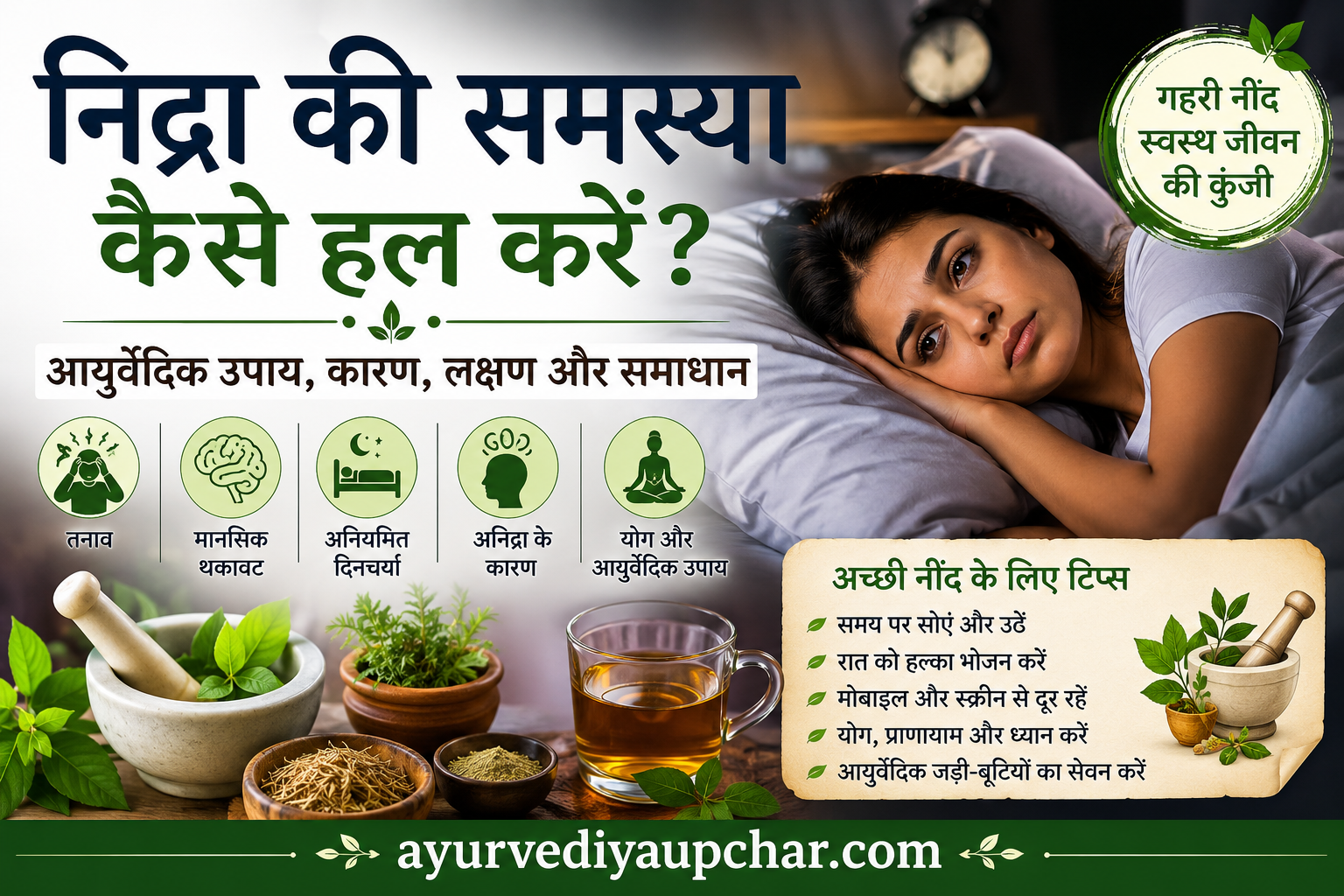
निद्रा की समस्या कैसे हल करें? अच्छी और गहरी नींद के लिए आयुर्वेदिक उपाय, कारण और सम्पूर्ण जानकारी

गुर्दे की बीमारी को शुरुआती दौर में कैसे पहचानें? जानिए किडनी खराब होने के शुरुआती लक्षण, कारण, जांच और बचाव के प्रभावी उपाय
AYURVEDIYAUPCHAR
At AyurvediyaUpchar, we are dedicated to bringing you the ancient wisdom of Ayurveda to support your journey toward holistic well-being. Our carefully crafted treatments, products, and resources are designed to balance mind, body, and spirit for a healthier, more harmonious life. Explore our range of services and products inspired by centuries-old traditions for natural healing and wellness.
आयुर्वेदीय उपचार में, हम आपको आयुर्वेद के प्राचीन ज्ञान को समग्र कल्याण की ओर आपकी यात्रा में सहायता करने के लिए समर्पित हैं। हमारे सावधानीपूर्वक तैयार किए गए उपचार, उत्पाद और संसाधन स्वस्थ, अधिक सामंजस्यपूर्ण जीवन के लिए मन, शरीर और आत्मा को संतुलित करने के लिए डिज़ाइन किए गए हैं। प्राकृतिक उपचार और कल्याण के लिए सदियों पुरानी परंपराओं से प्रेरित हमारी सेवाओं और उत्पादों की श्रृंखला का अन्वेषण करें।

About AyurvediyaUpchar.com
Welcome to AyurvediyaUpchar.com, your trusted online destination for authentic Ayurvedic remedies, herbal products, and wellness solutions. We are dedicated to bringing the ancient wisdom of Ayurveda into modern lifestyles through high-quality, natural, and effective products.
Our Mission
At AyurvediyaUpchar.com, we strive to promote holistic health and well-being by providing pure, traditional, and scientifically-backed Ayurvedic treatments. Our goal is to make Ayurveda accessible to everyone, helping people lead a healthier and more balanced life naturally.
What We Offer
✅ Authentic Ayurvedic Medicines – Herbal formulations for various health concerns.
✅ Herbal Supplements – Boost immunity, digestion, and overall wellness.
✅ Personal Care Products – Skincare, haircare, and natural beauty solutions.
✅ Wellness & Lifestyle – Detox, stress relief, and rejuvenation products.
✅ Expert Guidance – Informative blogs, health tips, and personalized Ayurvedic consultation.
Why Choose Us?
✔ 100% Natural & Pure Products – Sourced from the finest herbs and ingredients.
✔ Trusted by Ayurveda Experts – Backed by traditional wisdom & modern research.
✔ Secure Online Shopping – Safe payments and easy checkout.
✔ Nationwide Delivery – Get Ayurveda at your doorstep.
✔ Customer Satisfaction – Dedicated support for your health journey.
Join us in embracing Ayurveda for a healthier, happier, and more natural life!
For any queries, feel free to contact us at Info@ayurvediyaupchar.com