






Brain Tumor (Cerebral Tumor): Symptoms, Causes, and Ayurvedic Support
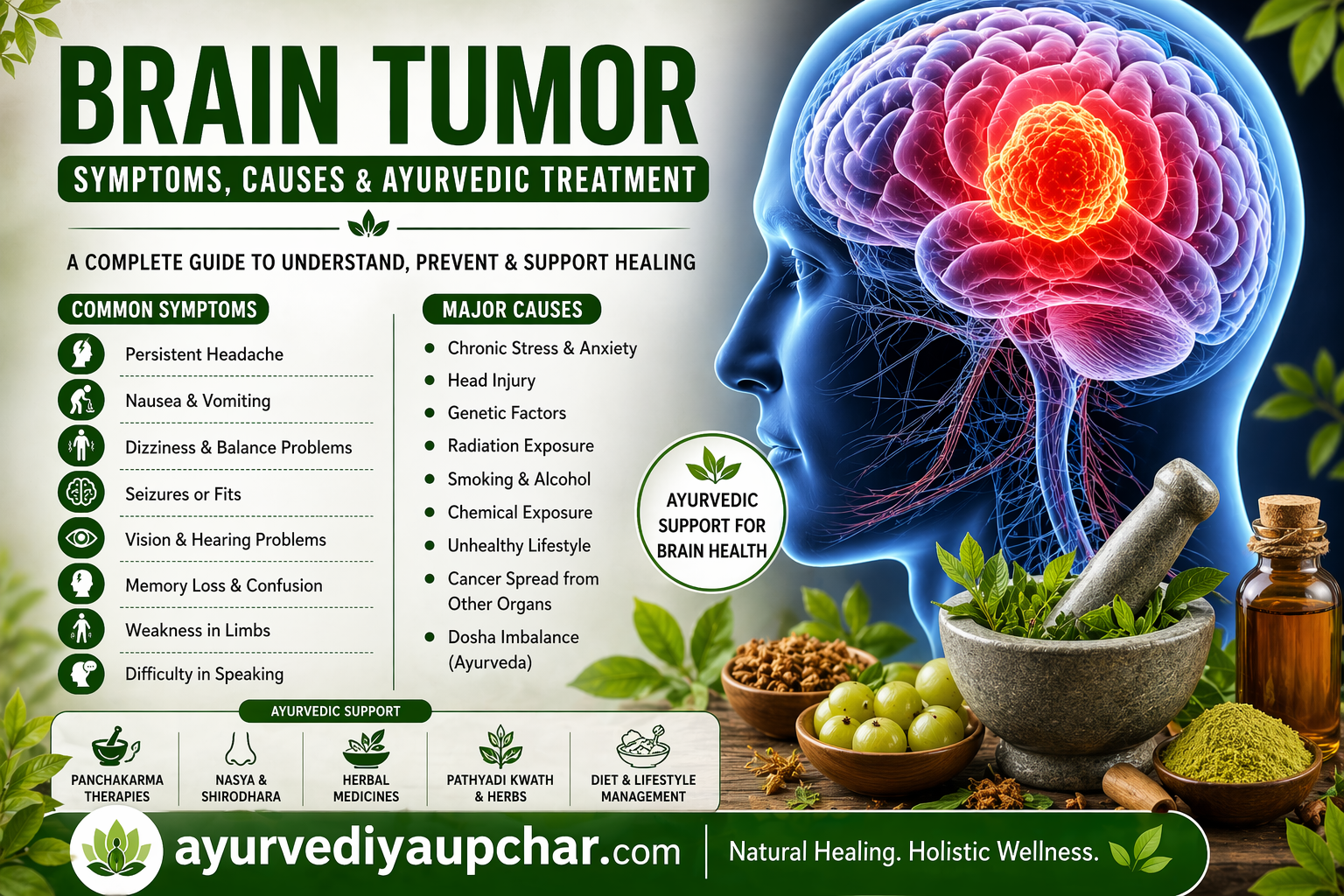
Brain Tumor (Cerebral Tumor): Symptoms, Causes, Diagnosis, Ayurvedic Support & Medical Disclaimer
The human brain is the most important and sensitive organ of the body. It controls all major body functions such as thinking, memory, speech, movement, emotions, vision, hearing, decision-making, and body coordination. Because the brain is the control center of the body, even a small problem inside it can create serious health complications.
When abnormal cells begin to grow uncontrollably inside the brain, they form a lump or mass known as a Brain Tumor. In Ayurveda, this condition is related to Mastishk Arbuda (मस्तिष्क अर्बुद). A brain tumor may be slow-growing or fast-growing depending on its type and severity.
Many people ignore the early signs because symptoms often begin with common problems like headache, dizziness, weakness, or vomiting. However, if these symptoms continue for a long time, proper medical evaluation becomes very important.
A brain tumor does not always mean cancer. Some tumors are benign (non-cancerous), while others are malignant (cancerous). Both conditions can be serious because the brain is enclosed inside the skull, and pressure inside the brain can affect vital body functions.
Early Warning Signs of Cancer
Before serious diseases like tumors or cancer develop, the body often gives warning signs. These should never be ignored.
Common Early Symptoms Include:
Unusual Bleeding or Pus
If there is sudden bleeding, pus discharge, or unusual fluid discharge from any body part without reason, medical examination is necessary.
Non-Healing Wounds
If a wound, ulcer, internal sore, or painful lesion does not heal for a long time, it should be properly investigated.
Long-Term Cough
If cough continues for many weeks, treatment does not help, and voice becomes heavy or changes frequently, it may be a warning sign.
Difficulty in Breathing or Swallowing
Breathing difficulty, throat discomfort, difficulty swallowing food, and continuous indigestion may indicate serious disease.
Changes in Bowel Habits
Constipation, diarrhea, irregular bowel movement, or sudden changes in digestion should be checked.
Changes in Moles or Skin Marks
Changes in color, size, shape, or texture of old moles, warts, or skin marks may require medical attention.
Sudden Weight Loss
Rapid weight loss without dieting or exercise may be a serious sign.
Extreme Weakness
Constant fatigue, weakness, pale face, and loss of body strength should not be ignored.
Hard Lump Formation
If a hard lump appears anywhere in the body and gradually increases in size, proper diagnosis is important.
What is a Brain Tumor?
A brain tumor is an abnormal growth of cells inside the brain. These cells multiply and form a mass that can press against nearby brain tissues.
Because the brain controls the entire body, the symptoms depend on where the tumor is located. A tumor affecting the vision area may cause eyesight problems, while one affecting the speech area may create speaking difficulties.
Even a non-cancerous tumor can become dangerous if it increases pressure inside the skull.
Types of Brain Tumor
1. Benign Brain Tumor
A benign tumor grows slowly and usually does not spread to nearby tissues. It is non-cancerous, but still may become dangerous due to pressure inside the brain.
2. Malignant Brain Tumor
A malignant tumor grows rapidly, damages surrounding tissues, and may spread aggressively. This is more serious and often requires urgent treatment.
Causes of Brain Tumor
There is no single cause of brain tumors, but several factors may increase risk.
Common Causes Include:
Chronic mental stress
Anxiety, fear, depression, anger
Old head injury
Family history or genetic factors
Smoking and alcohol
Radiation exposure
Chemical exposure
Unhealthy food habits
Lack of sleep
Weak immune system
Cancer spreading from another organ
Dosha imbalance (especially Kapha and Rakta in Ayurveda)
According to Ayurveda, excess Kapha and blood impurities contribute to abnormal tissue growth.
Common Symptoms of Brain Tumor
Symptoms may appear slowly or suddenly depending on tumor growth.
Persistent Headache
This is one of the most common symptoms. It is often worse in the morning and may increase while bending, coughing, or sneezing.
Vomiting
Repeated vomiting without digestive reasons, especially morning vomiting, can be a warning sign.
Dizziness and Balance Problems
The patient may feel unstable, dizzy, or unable to maintain body balance.
Seizures or Fits
Sudden fainting, jerking movements, or epilepsy-like attacks may occur.
Personality Changes
Mood swings, anger, irritation, forgetfulness, poor focus, and unusual behavior are common.
Vision Problems
Blurred vision, double vision, weak eyesight, or gradual blindness can occur.
Hearing Problems
Hearing loss or reduced sound sensitivity may appear.
Loss of Smell
The patient may lose the ability to identify smell.
Weakness in Hands and Legs
Muscle weakness, numbness, loss of coordination, or paralysis-like symptoms may develop.
Speech Difficulty
Speaking clearly becomes difficult, or words may not come properly.
High Blood Pressure
Brain pressure may also affect blood pressure levels.
Coma in Severe Cases
In advanced stages, unconsciousness and coma may occur.
Modern Diagnosis
Doctors use several tests to confirm brain tumors.
MRI (Magnetic Resonance Imaging)
MRI helps identify the exact location, size, and structure of the tumor.
CT Scan
This provides detailed imaging of the brain.
Biopsy
A small tissue sample is tested to confirm whether the tumor is benign or malignant.
Neurological Examination
Doctors test nerve function, balance, memory, and body coordination.
Blood Tests
These support the overall medical diagnosis.
Modern Medical Treatment
Treatment depends on tumor type, size, location, and severity.
Surgery
Doctors may perform surgery to remove the tumor.
Radiation Therapy
Radiation helps destroy cancer cells and reduce tumor growth.
Chemotherapy
Used especially in malignant tumors to control cancer spread.
Steroid Medicines
These help reduce swelling and pressure inside the brain.
Modern treatment is often necessary in serious cases, especially for malignant tumors.
Ayurvedic Supportive Treatment
Ayurveda considers brain tumor a serious disorder and focuses on improving strength, reducing symptoms, balancing doshas, and slowing disease progression.
Ayurveda should be considered as supportive care and not as a replacement for emergency medical treatment.
Main Ayurvedic Goals
Dosha balance
Blood purification
Removal of toxins (Ama)
Reducing swelling
Pain management
Improving immunity
Supporting brain function
Improving quality of life
Panchakarma Therapy
Panchakarma helps in body purification and reducing disease severity.
Important Panchakarma Procedures
Vamana
Virechana
Basti
Nasya
Raktamokshana
Shirodhara
Shirobasti
These therapies should only be performed under expert supervision.
Nasya Therapy
In Nasya therapy, medicine is given through the nose, which directly affects the brain and head region.
Common Nasya Medicines
Bitter bottle gourd powder
Bitter ridge gourd juice
Shwas Kuthar Ras
Shadbindu Taila
This therapy is often recommended for head-related disorders.
Pathyadi Kwath
Pathyadi Kwath is considered helpful in diseases of the head and upper body.
Benefits Include:
Blood purification
Improved digestion
Better appetite
Reduced inflammation
Pain relief
Support against abnormal growth
It is often used along with light food like moong-based diet.
Ayurvedic Medicines
Some commonly used supportive medicines include:
Kanchanar Guggulu
Brahmi Vati
Punarnavadi Lauh
Panchamrit Lauh
Cancer Gajakesari Vati
Vijay Parpati
Shirahshooladi Vajra Ras
Godanti Bhasma
Praval Bhasma
Sitopaladi Churna
Tulsi Juice
These should only be taken after consultation with a qualified Ayurvedic doctor.
Importance of Moringa (Sahijan)
Moringa is considered highly beneficial in supportive cancer care.
Uses Include:
Root bark decoction
Seed powder
Nasya therapy
It is especially valued in brain-related disorders.
Recommended Diet (Pathya)
A light and balanced diet is very important.
Recommended Foods
Old wheat
Rice
Barley
Moong dal
Garlic
Turmeric
Pointed gourd (Parwal)
Fresh cooked food
Light and easily digestible meals
Foods to Avoid (Apathya)
Avoid These Foods
Fried food
Very spicy food
Oily heavy meals
Processed food
Stale food
Smoking
Alcohol
Late-night waking
Stress and anger
Excessive screen exposure without rest
Prevention Tips
While not all brain tumors can be prevented, healthy habits may reduce risk.
Helpful Lifestyle Tips
Maintain mental peace
Reduce stress
Avoid smoking and alcohol
Eat fresh healthy food
Sleep properly
Protect the head from injury
Get regular health checkups
Do not ignore unusual symptoms
Disclaimer
This article is for educational and informational purposes only. It is not intended to replace professional medical advice, diagnosis, or treatment. Brain tumor is a serious medical condition and requires proper consultation with qualified doctors, neurologists, oncologists, and specialists. Do not start any medicine, Ayurvedic therapy, home remedy, or treatment without expert medical guidance. In emergency conditions, immediate hospital consultation is necessary.
Conclusion
Brain Tumor (Cerebral Tumor) is a serious condition, but early diagnosis and timely treatment can greatly improve outcomes.
Modern medicine plays the main role in diagnosis and emergency treatment, while Ayurveda may provide supportive care through Panchakarma, Nasya, Pathyadi Kwath, herbal medicines, and proper diet management.
The most important things are:
Early Diagnosis
Professional Medical Guidance
Regular Treatment
Proper Diet and Lifestyle Discipline
With timely care and the right treatment approach, the patient’s health and quality of life can be significantly improved.
Recent Posts
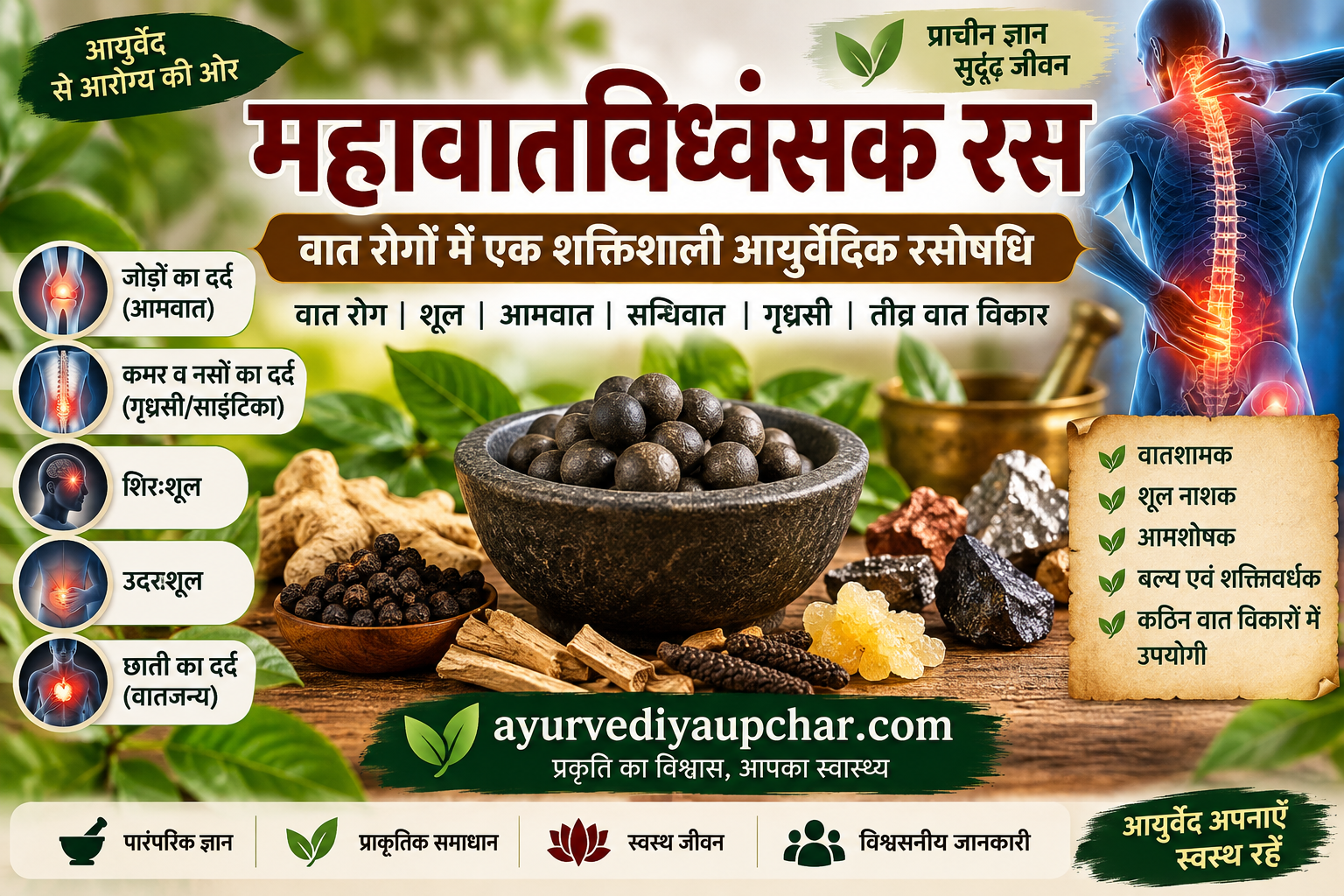
महावातविध्वंसक रस: वात विकारों और तीव्र शूल में पारंपरिक आयुर्वेदिक उपयोग
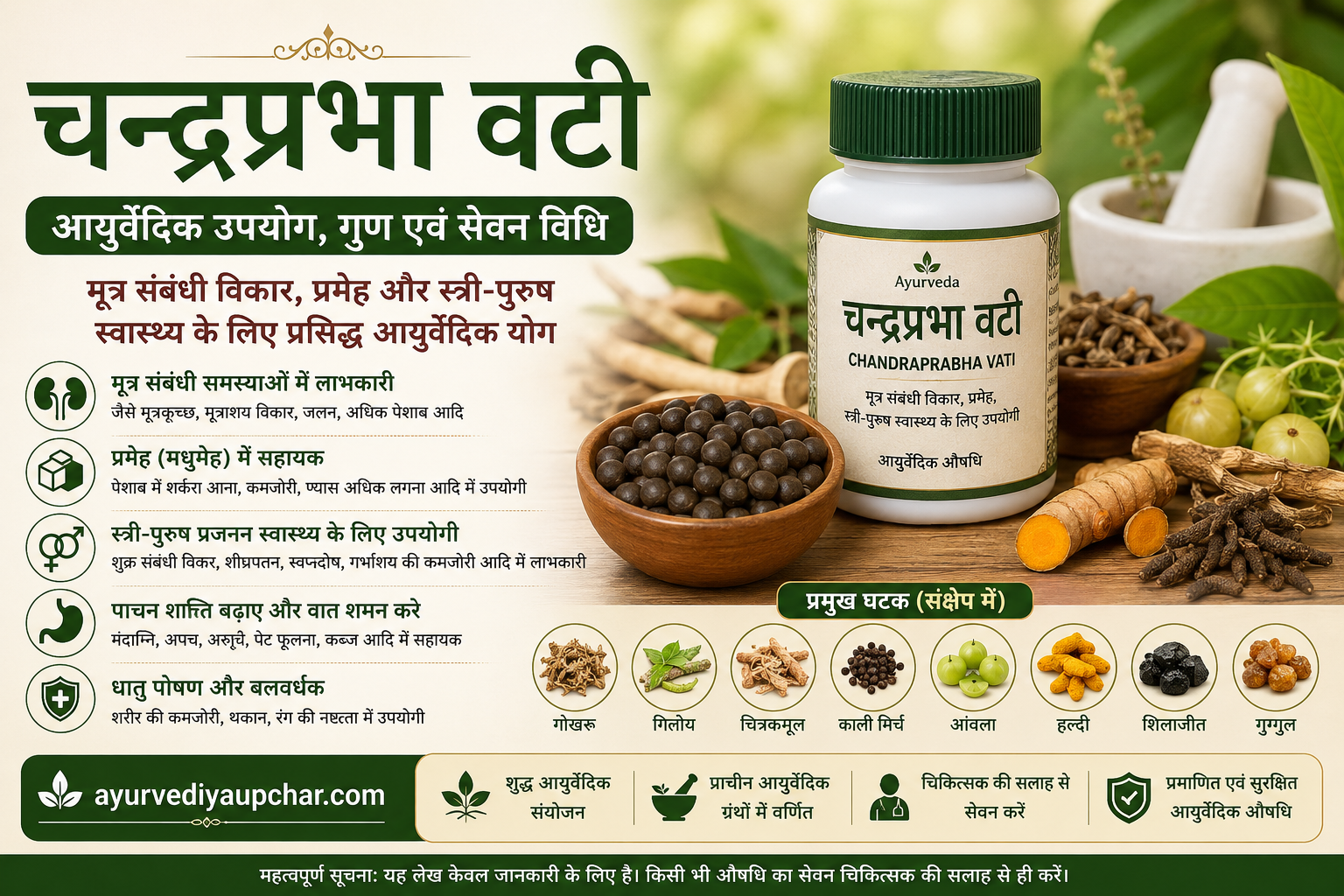
चन्द्रप्रभा वटी: आयुर्वेद में उपयोग, घटक, पारंपरिक गुण और सेवन विधि
आरोग्यवर्द्धिनी बटी (रस): परिचय, घटक, निर्माण विधि, मात्रा, अनुपान और पारंपरिक उपयोग
वृद्धिबाधिका बटी: अण्डवृद्धि, अण्डकोष में सूजन और हर्निया के संबंध में आयुर्वेदिक दृष्टिकोण
पुनर्नवादि मण्डूर: सूजन, पाण्डु और उदर विकारों में प्रसिद्ध आयुर्वेदिक योग
एक आम बीमारी: पेप्टिक अल्सर — कारण, लक्षण, प्रकार, पहचान और उपचार
आयुर्वेदिक उपायों और संतुलित आहार द्वारा कोलेस्ट्रॉल पर नियंत्रण संभव है
AYURVEDIYAUPCHAR
At AyurvediyaUpchar, we are dedicated to bringing you the ancient wisdom of Ayurveda to support your journey toward holistic well-being. Our carefully crafted treatments, products, and resources are designed to balance mind, body, and spirit for a healthier, more harmonious life. Explore our range of services and products inspired by centuries-old traditions for natural healing and wellness.
आयुर्वेदीय उपचार में, हम आपको आयुर्वेद के प्राचीन ज्ञान को समग्र कल्याण की ओर आपकी यात्रा में सहायता करने के लिए समर्पित हैं। हमारे सावधानीपूर्वक तैयार किए गए उपचार, उत्पाद और संसाधन स्वस्थ, अधिक सामंजस्यपूर्ण जीवन के लिए मन, शरीर और आत्मा को संतुलित करने के लिए डिज़ाइन किए गए हैं। प्राकृतिक उपचार और कल्याण के लिए सदियों पुरानी परंपराओं से प्रेरित हमारी सेवाओं और उत्पादों की श्रृंखला का अन्वेषण करें।

About AyurvediyaUpchar.com
Welcome to AyurvediyaUpchar.com, your trusted online destination for authentic Ayurvedic remedies, herbal products, and wellness solutions. We are dedicated to bringing the ancient wisdom of Ayurveda into modern lifestyles through high-quality, natural, and effective products.
Our Mission
At AyurvediyaUpchar.com, we strive to promote holistic health and well-being by providing pure, traditional, and scientifically-backed Ayurvedic treatments. Our goal is to make Ayurveda accessible to everyone, helping people lead a healthier and more balanced life naturally.
What We Offer
✅ Authentic Ayurvedic Medicines – Herbal formulations for various health concerns.
✅ Herbal Supplements – Boost immunity, digestion, and overall wellness.
✅ Personal Care Products – Skincare, haircare, and natural beauty solutions.
✅ Wellness & Lifestyle – Detox, stress relief, and rejuvenation products.
✅ Expert Guidance – Informative blogs, health tips, and personalized Ayurvedic consultation.
Why Choose Us?
✔ 100% Natural & Pure Products – Sourced from the finest herbs and ingredients.
✔ Trusted by Ayurveda Experts – Backed by traditional wisdom & modern research.
✔ Secure Online Shopping – Safe payments and easy checkout.
✔ Nationwide Delivery – Get Ayurveda at your doorstep.
✔ Customer Satisfaction – Dedicated support for your health journey.
Join us in embracing Ayurveda for a healthier, happier, and more natural life!
For any queries, feel free to contact us at Info@ayurvediyaupchar.com