




How to Lower Cholesterol Naturally: Your 8-Week Heart-Healthy Plan
If you've recently been told that your cholesterol is high, you're not alone.
Nearly 94 million U.S. adults have total cholesterol levels that are higher than recommended, and many don't realize it until a routine blood test reveals the problem. High cholesterol often develops silently, without noticeable symptoms, making it one of the leading hidden risk factors for heart disease and stroke.
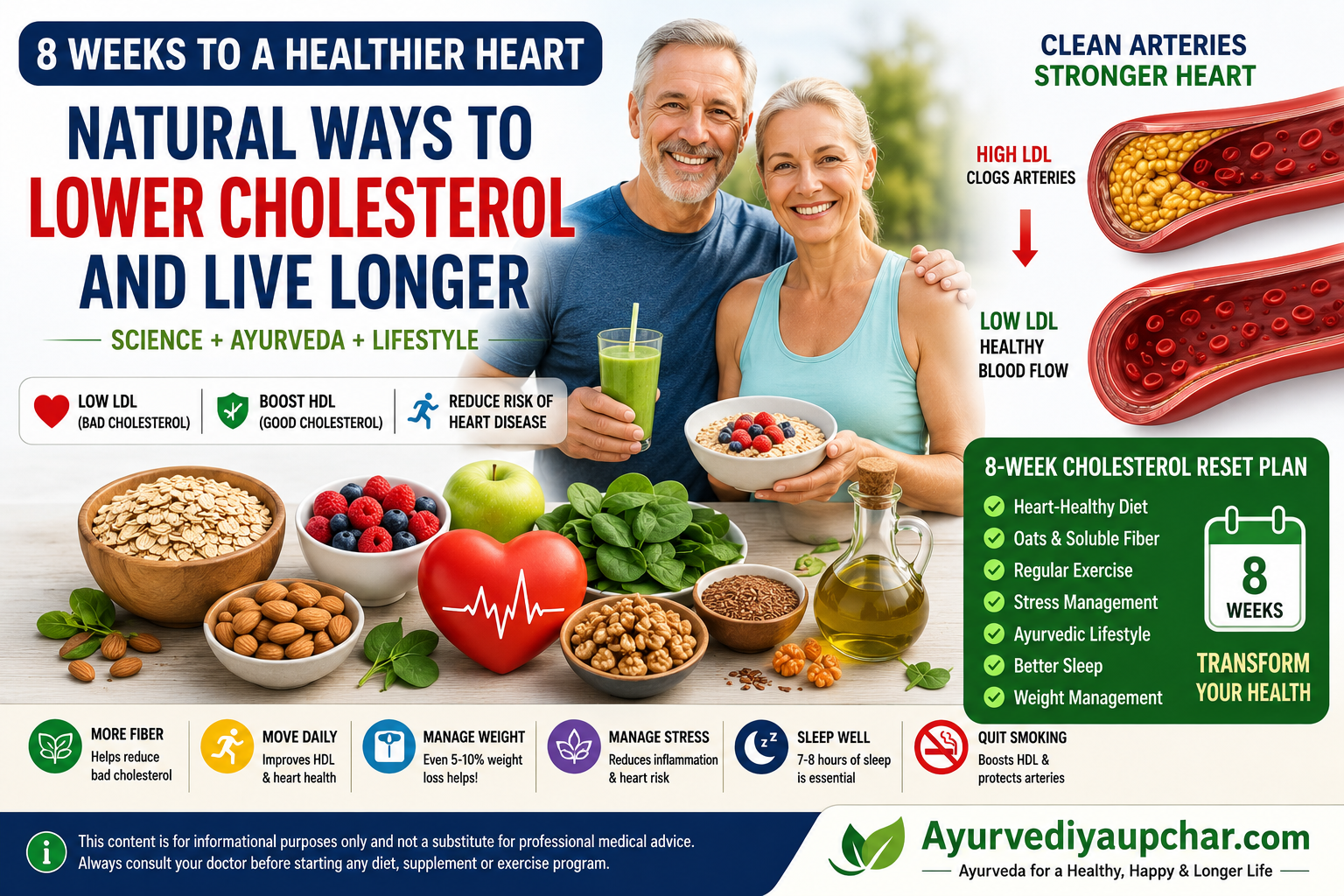
The good news? In many cases, lifestyle changes can significantly improve your cholesterol profile. Eating a heart-healthy diet, increasing physical activity, maintaining a healthy weight, managing stress, and following your healthcare provider's recommendations can all make a meaningful difference.
This guide walks you through an evidence-based 8-week plan designed to support healthier cholesterol levels and better overall heart health.
Important: This article is for educational purposes only. It does not replace personalized medical advice. Always talk with your healthcare provider before making major changes to your diet, exercise routine, or medications.
What Is Cholesterol?
Cholesterol is a waxy, fat-like substance that your body needs to function properly.
Although cholesterol often gets a bad reputation, it's actually essential for several important processes, including:
- Building healthy cell membranes
- Producing hormones such as estrogen and testosterone
- Making vitamin D
- Producing bile acids that help digest fats
Your liver naturally produces most of the cholesterol your body needs. The rest comes from foods, especially those containing saturated fat and trans fat.
Problems arise when cholesterol levels become too high, particularly LDL cholesterol, which can gradually accumulate inside artery walls.
Is All Cholesterol Bad?
No.
There are several different types of cholesterol, and each plays a different role in your health.
Understanding these differences is the first step toward improving your heart health.
LDL Cholesterol (Low-Density Lipoprotein)
Often called "bad cholesterol," LDL carries cholesterol from the liver to the body's tissues.
When LDL levels remain elevated over time, cholesterol can accumulate inside the arteries.
This buildup forms fatty deposits known as atherosclerotic plaque.
Over time, plaque may:
- Narrow the arteries
- Reduce blood flow
- Increase blood pressure
- Raise the risk of heart attack
- Increase the risk of stroke
Because of these risks, lowering elevated LDL cholesterol is one of the primary goals of cardiovascular prevention.
HDL Cholesterol (High-Density Lipoprotein)
HDL is commonly known as "good cholesterol."
Rather than depositing cholesterol in artery walls, HDL helps transport excess cholesterol back to the liver, where it can be processed and removed.
Higher HDL levels are generally associated with a lower risk of cardiovascular disease, although overall heart health depends on many factors—not HDL alone.
Healthy habits that may support HDL include:
- Regular physical activity
- Maintaining a healthy weight
- Avoiding tobacco products
- Choosing healthy fats such as olive oil, nuts, and fatty fish
Triglycerides
Triglycerides are another type of fat found in your blood.
After you eat, your body converts excess calories into triglycerides for storage.
While triglycerides are an important energy source, consistently high levels—especially when combined with elevated LDL or low HDL—may increase cardiovascular risk.
Common causes include:
- Excess added sugars
- Refined carbohydrates
- Obesity
- Physical inactivity
- Excess alcohol intake
- Poorly controlled diabetes
Total Cholesterol
A standard lipid panel usually measures:
- Total cholesterol
- LDL cholesterol
- HDL cholesterol
- Triglycerides
Your healthcare provider looks at all of these values together, along with factors such as age, blood pressure, smoking status, diabetes, and family history, to estimate your overall cardiovascular risk.
What Causes High Cholesterol?
High cholesterol rarely has a single cause.
Instead, it usually develops because of a combination of lifestyle habits, genetics, and underlying health conditions.
The most common contributors include:
1. Diet High in Saturated Fat
Foods such as:
- Processed meats
- Fast food
- Fried foods
- Butter
- Full-fat dairy
- Commercial baked goods
can contribute to higher LDL cholesterol when consumed regularly.
2. Lack of Physical Activity
Regular exercise helps improve cardiovascular health and supports healthy cholesterol levels.
People who spend most of the day sitting may have:
- Higher LDL
- Lower HDL
- Increased triglycerides
- Greater cardiovascular risk
3. Excess Body Weight
Carrying extra weight—especially around the waist—is associated with:
- Higher LDL
- Lower HDL
- Increased inflammation
- Greater insulin resistance
Even losing 5–10% of body weight can improve several heart-health markers for many people.
4. Smoking
Smoking damages blood vessels and accelerates plaque formation.
It also lowers HDL cholesterol and increases the likelihood of heart attack and stroke.
Quitting smoking is one of the most effective ways to improve long-term cardiovascular health.
5. Diabetes
People with Type 2 diabetes often have:
- Higher triglycerides
- Smaller, denser LDL particles
- Lower HDL cholesterol
Managing blood sugar effectively is an important part of improving heart health.
6. Genetics
Some people inherit conditions such as familial hypercholesterolemia, which can cause very high LDL cholesterol even with a healthy lifestyle.
If close family members developed heart disease at a young age, discuss your family history with your healthcare provider.
7. Age and Hormonal Changes
As we age, cholesterol levels often rise naturally.
After menopause, many women experience changes in cholesterol due to declining estrogen levels, making regular screening even more important.
Can You Feel High Cholesterol?
One of the biggest misconceptions about cholesterol is that it causes obvious symptoms.
In reality, high cholesterol is often called a "silent condition." Most people feel completely healthy until plaque buildup has already narrowed their arteries. That's why regular screening is so important—especially if you have other cardiovascular risk factors.
In advanced cases, reduced blood flow may eventually contribute to symptoms such as:
- Chest discomfort during physical activity (angina)
- Shortness of breath
- Pain in the legs while walking (peripheral artery disease)
- Stroke symptoms
- Heart attack
These symptoms usually result from cardiovascular disease, not from high cholesterol itself.
Who Should Get Their Cholesterol Checked?
According to current preventive care recommendations, adults should discuss cholesterol screening with their healthcare provider based on their age, personal risk factors, and family history.
You may need more frequent testing if you have:
- Diabetes
- High blood pressure
- Obesity
- A family history of early heart disease
- Chronic kidney disease
- A history of smoking
Regular testing allows you and your provider to track changes over time and decide whether lifestyle changes alone are appropriate or if medication may also be needed.
Understanding Your Lipid Panel
A standard lipid panel includes several measurements that work together to give a clearer picture of your cardiovascular health.
| Test | Generally Desirable Level* |
|---|---|
| Total Cholesterol | Below 200 mg/dL |
| LDL Cholesterol | Lower is generally better; targets depend on individual risk |
| HDL Cholesterol | 40 mg/dL or higher for most men, 50 mg/dL or higher for most women |
| Triglycerides | Below 150 mg/dL |
*Your ideal numbers may differ depending on your medical history. Your healthcare provider will help determine the most appropriate goals for you.
Can Lifestyle Changes Really Lower Cholesterol?
For many people, yes.
Lifestyle changes are considered the foundation of cholesterol management, whether or not medication is also prescribed.
Healthy habits can help:
- Lower LDL cholesterol
- Improve HDL cholesterol
- Reduce triglycerides
- Lower blood pressure
- Improve blood sugar control
- Reduce inflammation
- Support healthy body weight
The key is consistency—not perfection.
Your 8-Week Cholesterol Improvement Plan
This plan focuses on sustainable habits that support long-term heart health.
Week 1: Know Your Starting Point
Start by understanding where you are today.
Your Goals
✔ Schedule or review your lipid panel
✔ Record:
- Weight
- Waist measurement
- Blood pressure (if available)
✔ Write down everything you eat for three days.
Many people underestimate how much saturated fat and added sugar they consume. A simple food journal often reveals patterns that can be improved.
Week 2: Upgrade Your Breakfast
Breakfast is one of the easiest meals to improve.
Replace high-saturated-fat options with foods rich in soluble fiber, which helps reduce LDL cholesterol by binding cholesterol in the digestive tract.
Great choices include:
- Oatmeal
- Steel-cut oats
- Barley
- Apples
- Pears
- Berries
- Ground flaxseed
- Chia seeds
A bowl of oatmeal topped with blueberries and walnuts is a heart-healthy way to start the day.
Week 3: Eat More Fiber
Fiber plays a major role in cholesterol management.
Aim to include more:
- Beans
- Lentils
- Chickpeas
- Black beans
- Vegetables
- Fruits
- Whole grains
Most Americans consume far less fiber than recommended.
Increasing fiber gradually—and drinking enough water—can improve digestion while supporting healthier cholesterol levels.
Week 4: Replace Unhealthy Fats
Not all fats are created equal.
Instead of eliminating fat entirely, replace saturated fats with healthier unsaturated fats.
Choose More Often
- Extra virgin olive oil
- Avocados
- Almonds
- Walnuts
- Pistachios
- Salmon
- Sardines
- Trout
Limit
- Butter
- Processed meats
- Bacon
- Sausage
- Deep-fried foods
- Commercial pastries
Small substitutions made consistently can have a meaningful impact over time.
Week 5: Move Every Day
Physical activity is one of the best investments you can make for your heart.
Aim for at least 150 minutes of moderate-intensity aerobic exercise each week, such as:
- Brisk walking
- Cycling
- Swimming
- Dancing
- Hiking
Also include strength training at least twice per week to support muscle mass and overall metabolic health.
If you're just getting started, even a 15-minute walk after meals is a great first step.
Week 6: Lose Excess Weight
If you're overweight, even modest weight loss can improve cholesterol levels and reduce cardiovascular risk.
Rather than focusing on rapid weight loss, aim for gradual, sustainable progress.
Helpful strategies include:
- Watching portion sizes
- Prioritizing protein and vegetables
- Limiting sugary beverages
- Planning meals ahead of time
- Cooking more meals at home
Even a 5–10% reduction in body weight may improve multiple heart-health markers.
Week 7: Improve Sleep and Manage Stress
Heart health isn't just about food.
Poor sleep and chronic stress may influence behaviors that increase cardiovascular risk, such as overeating, inactivity, or smoking.
Healthy habits include:
- Aim for 7–9 hours of sleep each night.
- Keep a consistent bedtime.
- Reduce screen time before bed.
- Practice deep breathing or meditation.
- Spend time outdoors.
- Stay socially connected.
Taking care of your mental well-being supports your physical health too.
Week 8: Review Your Progress
At the end of eight weeks:
- Compare your current habits with Week 1.
- Notice improvements in energy, exercise, and eating patterns.
- If recommended by your healthcare provider, repeat your lipid panel after an appropriate interval to evaluate your progress.
Remember, heart health is a lifelong journey—not an eight-week finish line.
Lifestyle Changes vs. Medication
Lifestyle improvements are essential for everyone with high cholesterol.
However, some individuals—especially those with very high LDL cholesterol, familial hypercholesterolemia, or established cardiovascular disease—may also benefit from cholesterol-lowering medications such as statins or other therapies prescribed by a healthcare professional.
Lifestyle changes and medication often work together, not as alternatives.
The Best Foods to Help Lower Cholesterol Naturally
When it comes to improving cholesterol levels, no single food is a magic solution. Instead, the greatest benefits come from building a balanced eating pattern rich in whole, minimally processed foods.
Many of the foods below are staples of the Mediterranean diet, one of the most researched dietary patterns for supporting heart health.
1. Oats: One of the Best Breakfast Choices
Oats are among the most widely recommended foods for people trying to lower LDL cholesterol.
Their key benefit comes from beta-glucan, a type of soluble fiber that forms a gel-like substance in the digestive tract. This helps reduce the amount of cholesterol absorbed into the bloodstream.
Easy ways to eat more oats
- Warm oatmeal with berries
- Overnight oats
- Homemade oat muffins
- Oat smoothies
- Steel-cut oats with walnuts
Look for plain oats instead of flavored instant packets, which often contain added sugar.
2. Beans and Lentils
Legumes are naturally rich in:
- Soluble fiber
- Plant protein
- Potassium
- Magnesium
Replacing some red meat with beans or lentils can support healthier cholesterol levels while also increasing fiber intake.
Excellent choices include:
- Black beans
- Kidney beans
- Chickpeas
- Lentils
- Navy beans
- Pinto beans
3. Fatty Fish
Fatty fish provide omega-3 fatty acids, which support heart health.
While omega-3s do not directly lower LDL cholesterol, they may help reduce triglycerides and support overall cardiovascular function.
Good options include:
- Salmon
- Sardines
- Trout
- Mackerel
- Herring
Aim for two servings per week, unless your healthcare provider recommends otherwise.
4. Nuts
Tree nuts provide:
- Healthy unsaturated fats
- Fiber
- Plant protein
- Vitamin E
- Magnesium
Research suggests that regularly eating moderate portions of nuts may support heart health when they replace less healthy snacks.
Great choices include:
- Almonds
- Walnuts
- Pistachios
- Pecans
Keep portions moderate, as nuts are calorie-dense.
5. Avocados
Avocados are rich in monounsaturated fats and fiber.
Instead of mayonnaise or butter, try:
- Mashed avocado on whole-grain toast
- Avocado in salads
- Avocado with eggs
- Guacamole with fresh vegetables
6. Olive Oil
Extra-virgin olive oil is a cornerstone of the Mediterranean diet.
Use it instead of:
- Butter
- Lard
- Shortening
It's ideal for:
- Salad dressings
- Roasted vegetables
- Whole-grain pasta
- Light sautéing
7. Fruits Rich in Soluble Fiber
Many fruits naturally contain pectin, another form of soluble fiber.
Excellent options include:
- Apples
- Pears
- Oranges
- Berries
- Grapefruit (check with your doctor if you take medications, as grapefruit can interact with certain drugs)
Eating whole fruit is generally better than drinking fruit juice because it provides more fiber and less concentrated sugar.
8. Vegetables
Vegetables are naturally:
- Low in calories
- High in fiber
- Rich in antioxidants
- Packed with vitamins and minerals
Aim to fill half your plate with vegetables at lunch and dinner.
Top choices include:
- Broccoli
- Brussels sprouts
- Spinach
- Kale
- Carrots
- Cauliflower
- Bell peppers
- Asparagus
9. Whole Grains
Whole grains retain more fiber than refined grains.
Better choices include:
- Brown rice
- Quinoa
- Whole-wheat bread
- Whole-grain pasta
- Barley
- Farro
Try replacing white bread or white rice with whole-grain alternatives whenever possible.
10. Seeds
Seeds may be small, but they're packed with nutrients.
Consider adding:
- Chia seeds
- Ground flaxseed
- Pumpkin seeds
- Sunflower seeds
They pair well with yogurt, oatmeal, smoothies, or salads.
Foods to Limit for Better Heart Health
Rather than labeling foods as "good" or "bad," it's more helpful to focus on eating certain items less often.
Processed Meats
Examples include:
- Bacon
- Sausage
- Hot dogs
- Deli meats
These foods are often high in saturated fat and sodium.
Fried Foods
Deep-fried foods can be high in unhealthy fats and calories.
Instead, try:
- Baking
- Air frying
- Roasting
- Grilling
Sugary Drinks
Regular consumption of:
- Soda
- Sweet tea
- Energy drinks
- Sweetened coffee beverages
may contribute to weight gain and higher triglycerides.
Choose:
- Water
- Sparkling water
- Unsweetened tea
- Black coffee (if appropriate for you)
Highly Processed Snacks
Limit foods such as:
- Potato chips
- Cookies
- Doughnuts
- Packaged pastries
- Candy
These often contain refined carbohydrates, added sugars, and unhealthy fats.
Understanding the Mediterranean Diet
The Mediterranean diet isn't a strict meal plan—it's a long-term eating pattern supported by decades of research.
Its key principles include:
- Plenty of vegetables
- Fruits every day
- Whole grains
- Beans and legumes
- Healthy fats from olive oil and nuts
- Fish several times per week
- Moderate dairy
- Limited processed foods
- Minimal added sugars
Rather than focusing on restriction, the Mediterranean diet encourages adding more nutrient-dense foods to your meals.
What About Eggs?
Eggs have long been debated in nutrition discussions.
Current evidence suggests that for many healthy people, moderate egg consumption can fit into a balanced diet.
However, individuals with certain medical conditions—such as diabetes or established cardiovascular disease—should discuss personalized dietary advice with their healthcare provider or a registered dietitian.
Your Heart-Healthy Grocery Shopping List
A successful cholesterol-lowering plan begins before you even enter the kitchen—it starts at the grocery store. Filling your cart with nutrient-rich, minimally processed foods makes healthy eating much easier throughout the week.
Fresh Produce
Aim to include a variety of colorful fruits and vegetables, such as:
- Leafy greens (spinach, kale, romaine)
- Broccoli
- Brussels sprouts
- Cauliflower
- Bell peppers
- Tomatoes
- Carrots
- Sweet potatoes
- Apples
- Berries
- Oranges
- Pears
- Avocados
Whole Grains
Choose:
- Old-fashioned oats
- Steel-cut oats
- Brown rice
- Quinoa
- Whole-wheat bread
- Whole-grain pasta
- Barley
Lean Protein Sources
Include:
- Skinless chicken breast
- Turkey
- Salmon
- Tuna
- Sardines
- Trout
- Lentils
- Chickpeas
- Black beans
- Tofu
- Edamame
Healthy Fats
Keep these staples available:
- Extra-virgin olive oil
- Almonds
- Walnuts
- Pistachios
- Chia seeds
- Ground flaxseed
- Pumpkin seeds
- Natural peanut butter (without added sugar)
A 7-Day Heart-Healthy Meal Plan
Day 1
Breakfast
Oatmeal topped with blueberries, walnuts, and ground flaxseed
Snack
Apple with almond butter
Lunch
Grilled chicken salad with olive oil vinaigrette
Snack
Carrot sticks with hummus
Dinner
Baked salmon, quinoa, and roasted broccoli
Day 2
Breakfast
Greek yogurt with strawberries and chia seeds
Lunch
Turkey and avocado whole-grain wrap
Snack
Handful of almonds
Dinner
Lentil soup with mixed green salad
Day 3
Breakfast
Whole-grain toast with avocado and sliced tomatoes
Lunch
Quinoa bowl with black beans, corn, spinach, and grilled vegetables
Snack
Pear
Dinner
Grilled trout with asparagus and brown rice
Day 4
Breakfast
Overnight oats with raspberries
Lunch
Chickpea salad
Snack
Walnuts
Dinner
Turkey chili loaded with beans and vegetables
Day 5
Breakfast
Vegetable omelet with whole-grain toast
Lunch
Mediterranean salad with grilled chicken
Snack
Orange
Dinner
Baked cod with roasted Brussels sprouts
Day 6
Breakfast
Smoothie made with spinach, berries, oats, and unsweetened almond milk
Lunch
Vegetable soup with whole-grain crackers
Snack
Pistachios
Dinner
Grilled shrimp with quinoa and roasted vegetables
Day 7
Breakfast
Steel-cut oats with cinnamon and sliced banana
Lunch
Grilled salmon salad
Snack
Fresh berries
Dinner
Whole-wheat pasta with tomato sauce, vegetables, and grilled chicken
Smart Snacks That Support Heart Health
Healthy snacks help prevent overeating later in the day.
Great options include:
- Fresh fruit
- Unsalted nuts
- Greek yogurt
- Hummus with vegetables
- Air-popped popcorn
- Cottage cheese with berries
- Roasted chickpeas
- Edamame
Eating Out Without Hurting Your Progress
Restaurant meals don't have to derail your goals.
Better Choices
✔ Grilled instead of fried
✔ Steamed vegetables
✔ Salad with olive oil dressing
✔ Whole-grain sides
✔ Water instead of soda
Limit
- French fries
- Onion rings
- Cream sauces
- Large desserts
- Sugary drinks
Restaurant portions are often oversized. Consider sharing an entrée or taking half home.
Does Coffee Raise Cholesterol?
For most people, filtered coffee can be part of a heart-healthy lifestyle.
However, unfiltered coffee (such as French press or boiled coffee) contains compounds called diterpenes that may increase LDL cholesterol in some individuals.
Tips:
- Choose paper-filtered coffee when possible.
- Skip sugary syrups and heavy cream.
- Keep specialty coffee drinks as an occasional treat.
What About Alcohol?
Alcohol affects people differently.
While some older studies suggested potential heart benefits from moderate alcohol intake, current evidence does not recommend starting to drink alcohol for heart health.
If you drink, do so in moderation and discuss it with your healthcare provider—especially if you have high triglycerides, liver disease, or take medications.
Plant Sterols and Stanols
Plant sterols and stanols are naturally occurring compounds found in small amounts in fruits, vegetables, nuts, seeds, and whole grains.
They work by reducing the amount of cholesterol absorbed in the digestive tract.
Some foods, such as certain margarines, yogurts, and juices, are fortified with plant sterols. These may be helpful for some people as part of an overall cholesterol-lowering plan.
Supplements: What Does the Evidence Say?
Many supplements are marketed for cholesterol, but evidence varies.
Soluble Fiber (Psyllium)
Research suggests psyllium may help lower LDL cholesterol when used alongside a healthy diet.
Omega-3 Fish Oil
Helpful for lowering triglycerides in some individuals, but it does not significantly lower LDL cholesterol.
Red Yeast Rice
Some products contain naturally occurring compounds similar to statins, but quality and potency can vary widely. Because of safety concerns and inconsistent formulations, talk with your healthcare provider before using it.
Garlic
Research on garlic supplements has shown mixed results. While garlic may have other health benefits, it should not replace evidence-based cholesterol management.
Always consult a healthcare professional before starting any supplement, especially if you take prescription medications.
Common Mistakes That Slow Progress
Many people make healthy changes but still struggle because of these common pitfalls:
- Skipping breakfast
- Eating oversized portions of healthy foods
- Drinking calories through soda or sweetened coffee
- Not reading nutrition labels
- Exercising only on weekends
- Expecting overnight results
- Stopping healthy habits after a few weeks
Remember: long-term consistency matters more than short-term perfection.
Build an Exercise Routine You Can Maintain
Exercise is one of the most effective lifestyle habits for improving cardiovascular health. While physical activity alone may not dramatically lower LDL cholesterol, it can help raise HDL cholesterol, improve blood pressure, support weight management, and reduce the risk of heart disease.
Weekly Exercise Goals
The American Heart Association recommends aiming for:
- At least 150 minutes of moderate-intensity aerobic activity each week, or
- 75 minutes of vigorous-intensity activity each week,
- Plus strength training at least two days per week.
Beginner-Friendly Cardio
If you're just getting started, consider:
- Brisk walking
- Cycling
- Swimming
- Dancing
- Hiking
- Low-impact aerobics
The key is consistency. Even a 20–30 minute walk most days of the week can support long-term heart health.
Why Strength Training Matters
Many people focus only on cardio, but resistance training also plays an important role.
Benefits include:
- Supporting a healthy metabolism
- Improving insulin sensitivity
- Preserving muscle mass
- Helping maintain a healthy body weight
- Enhancing overall physical function
Simple options include:
- Bodyweight squats
- Wall push-ups
- Resistance bands
- Light dumbbells
- Machine exercises at the gym
Aim for all major muscle groups at least twice per week.
Don't Overlook Sleep
Poor sleep has been linked to an increased risk of obesity, type 2 diabetes, and cardiovascular disease.
Healthy sleep habits include:
- Sleeping 7–9 hours per night
- Keeping a consistent bedtime
- Limiting screen time before bed
- Avoiding heavy meals late at night
- Keeping the bedroom cool, quiet, and dark
Quality sleep supports better energy, healthier food choices, and improved recovery from exercise.
Managing Stress for Better Heart Health
Chronic stress doesn't directly raise cholesterol, but it can influence behaviors that increase cardiovascular risk, such as overeating, smoking, drinking alcohol, or avoiding exercise.
Stress-management strategies include:
- Deep breathing exercises
- Meditation or mindfulness
- Yoga
- Spending time outdoors
- Connecting with family and friends
- Journaling
- Professional counseling when needed
Even a few minutes of intentional relaxation each day can make a difference.
Common Myths About Cholesterol
Myth 1: "Only overweight people have high cholesterol."
Fact: Genetics, age, and certain medical conditions can cause high cholesterol in people of any body size.
Myth 2: "If I take medication, I don't need to eat healthy."
Fact: Cholesterol-lowering medications work best when combined with healthy lifestyle habits.
Myth 3: "I feel fine, so my cholesterol must be normal."
Fact: High cholesterol usually has no symptoms until significant artery disease develops.
Myth 4: "All fats are unhealthy."
Fact: Unsaturated fats from foods like olive oil, nuts, seeds, and fish can be part of a heart-healthy eating pattern.
Myth 5: "Lowering cholesterol is only about avoiding eggs."
Fact: Overall dietary patterns matter much more than focusing on one specific food.
Frequently Asked Questions
Can high cholesterol be reversed naturally?
Many people can improve their cholesterol levels through healthy eating, regular exercise, weight management, and other lifestyle changes. However, some individuals may also require medication based on their personal cardiovascular risk.
How long does it take to lower cholesterol?
Meaningful improvements may be seen within several weeks to a few months after consistent lifestyle changes, although individual results vary.
Is oatmeal really good for cholesterol?
Yes. Oats contain beta-glucan, a soluble fiber that can help lower LDL cholesterol as part of a heart-healthy diet.
Are eggs bad for cholesterol?
For many healthy individuals, eggs can fit into a balanced eating pattern. People with certain health conditions should discuss individualized dietary advice with their healthcare provider.
Can I eat cheese?
Yes, but moderation is important. Choosing lower-fat dairy products and limiting portions may support overall heart health.
Which cooking oil is best?
Extra-virgin olive oil is one of the most studied heart-healthy oils and is a staple of the Mediterranean diet.
Do supplements replace medication?
No. Supplements should never replace prescribed medications without guidance from your healthcare provider.
Should everyone take a statin?
No. The decision depends on your LDL cholesterol level, overall cardiovascular risk, age, medical history, and other factors. This decision should always be made with a healthcare professional.
Key Takeaways
- High cholesterol often develops without symptoms.
- LDL cholesterol contributes to plaque buildup in arteries.
- Healthy lifestyle changes are the foundation of cholesterol management.
- A Mediterranean-style eating pattern is strongly supported by research.
- Soluble fiber from foods like oats and beans may help lower LDL cholesterol.
- Regular physical activity, weight management, and good sleep all support heart health.
- Some people will also benefit from cholesterol-lowering medications prescribed by their healthcare provider.
- Regular cholesterol screening is essential because early detection allows earlier intervention.
Final Thoughts
Lowering cholesterol isn't about following a perfect diet for a few weeks—it's about building sustainable habits that protect your heart for years to come.
Small, consistent changes often lead to meaningful improvements over time. Choosing more whole foods, staying physically active, getting enough sleep, and working closely with your healthcare provider can significantly reduce your long-term risk of heart disease.
Remember, every healthy choice you make today is an investment in your future cardiovascular health.
Medical Disclaimer
This article is intended for educational and informational purposes only. It should not be considered medical advice and is not a substitute for professional diagnosis, treatment, or recommendations from a qualified healthcare provider. Always consult your physician before making changes to your diet, exercise routine, medications, or supplement use.
Recent Posts
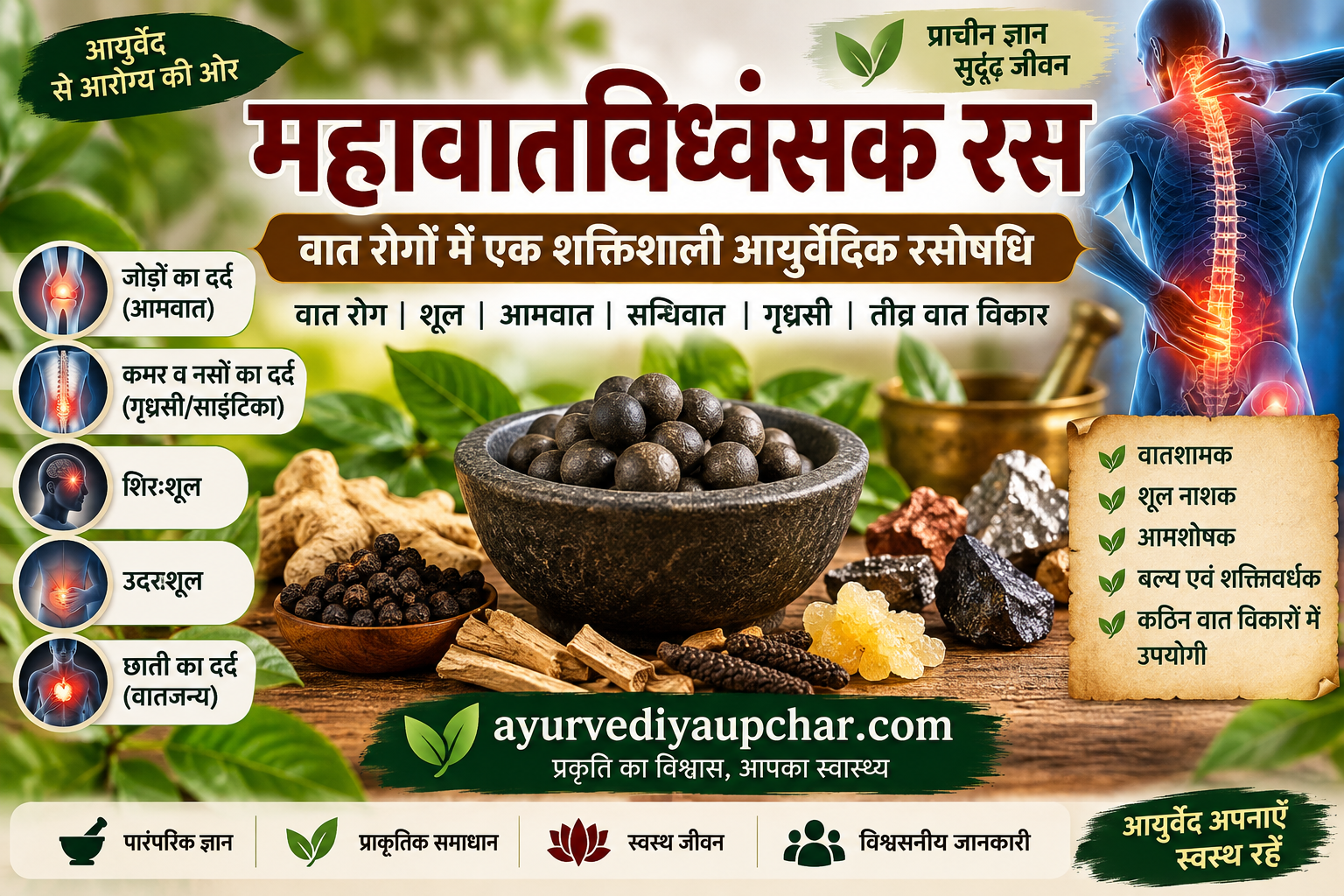
महावातविध्वंसक रस: वात विकारों और तीव्र शूल में पारंपरिक आयुर्वेदिक उपयोग
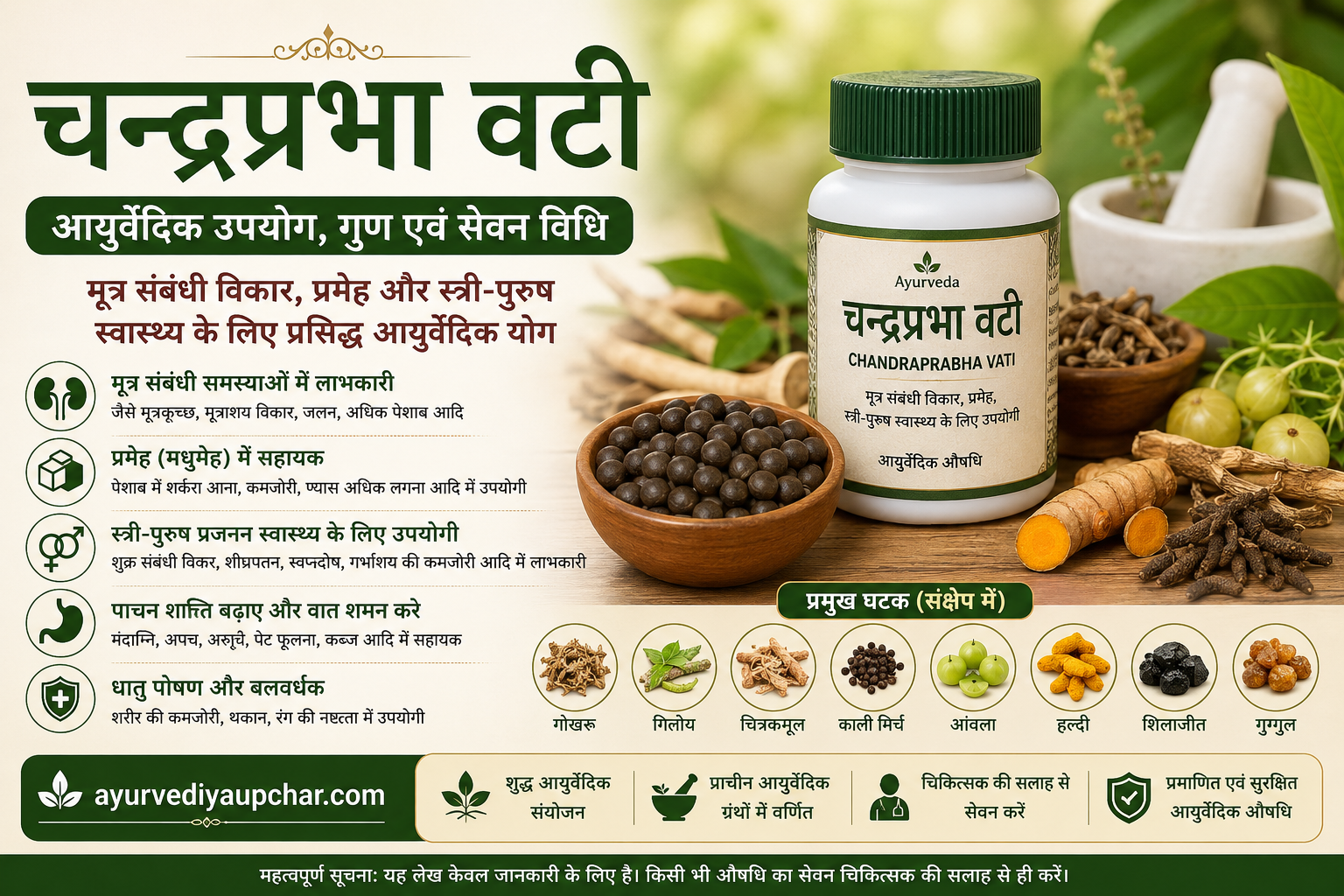
चन्द्रप्रभा वटी: आयुर्वेद में उपयोग, घटक, पारंपरिक गुण और सेवन विधि
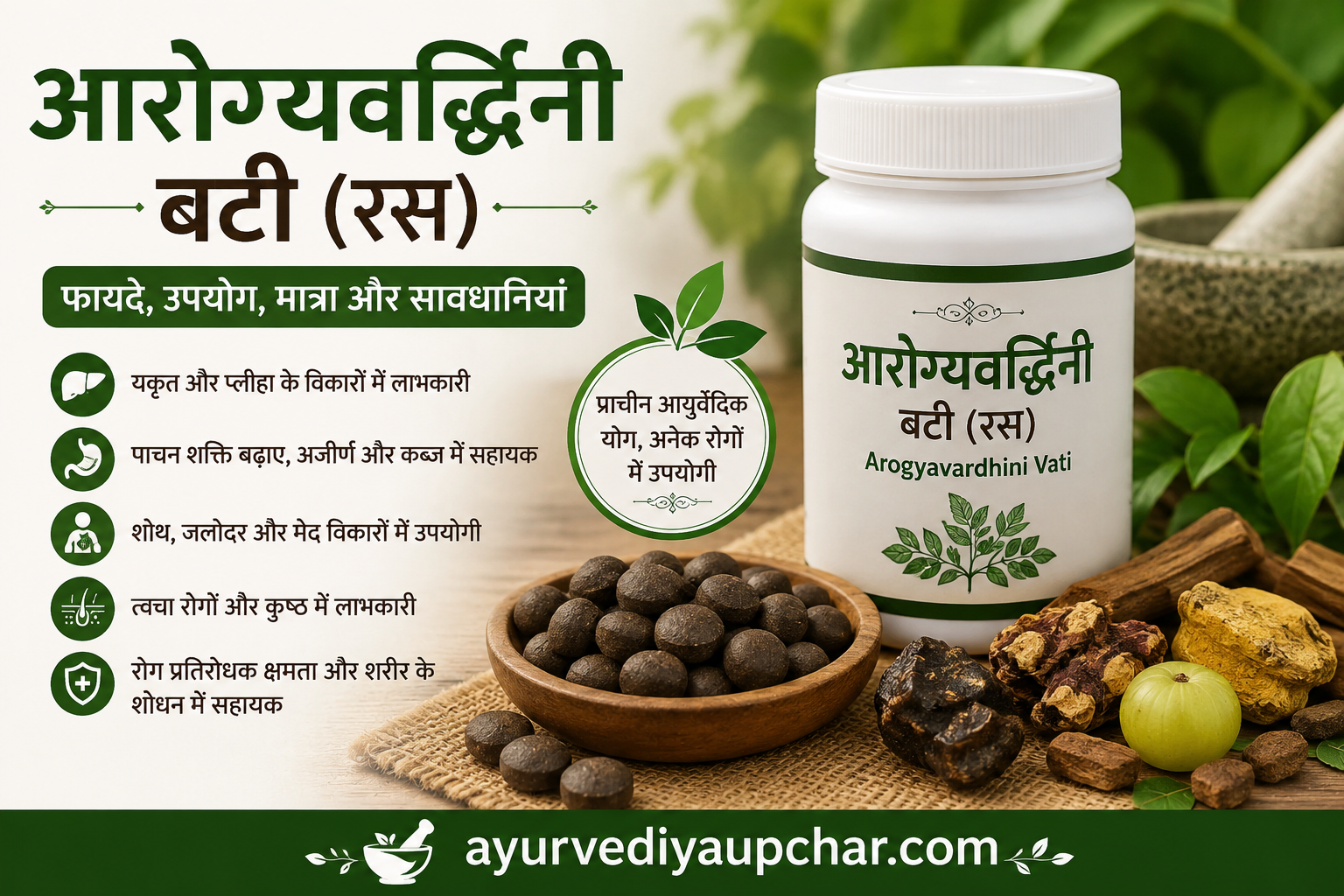
आरोग्यवर्द्धिनी बटी (रस): परिचय, घटक, निर्माण विधि, मात्रा, अनुपान और पारंपरिक उपयोग
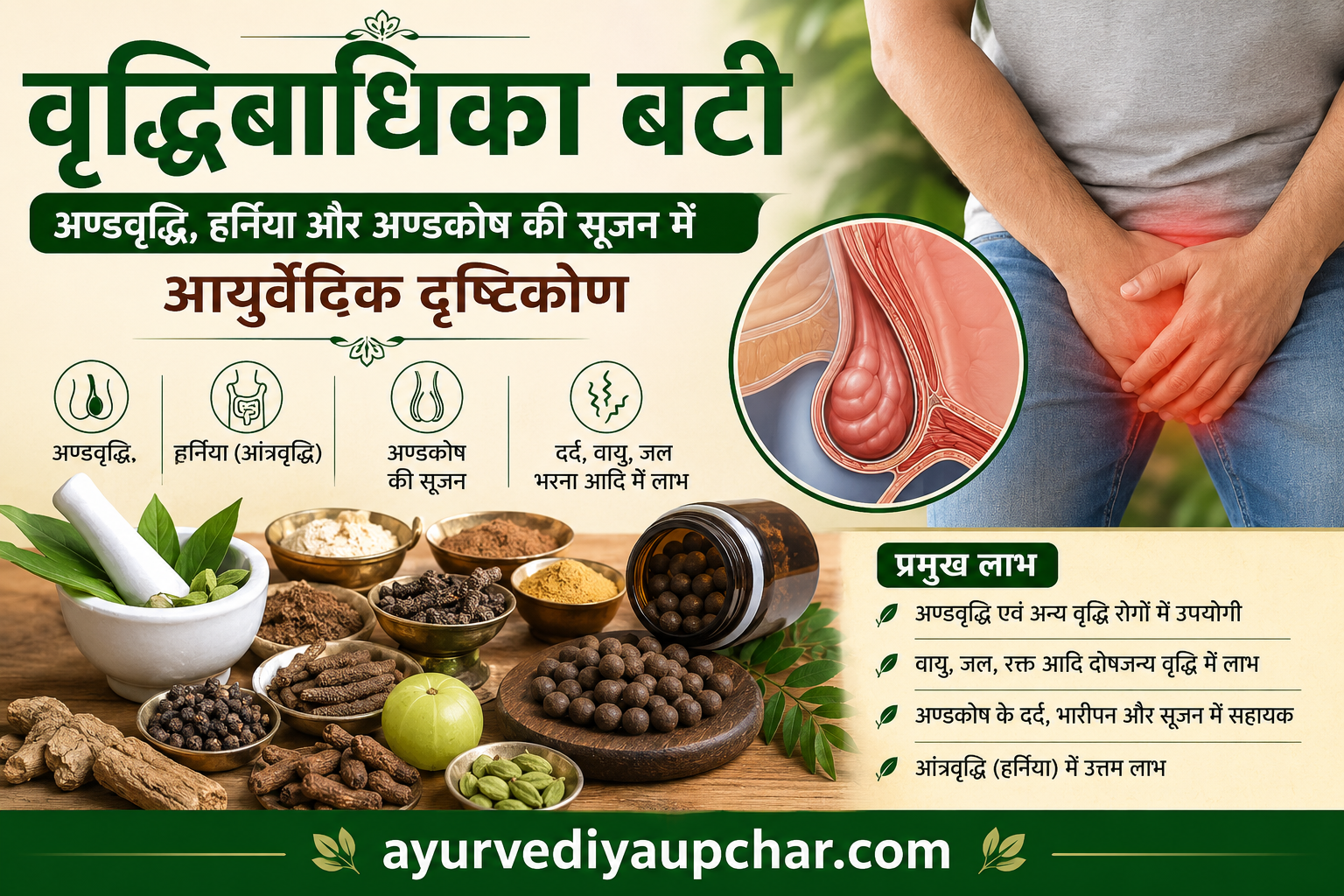
वृद्धिबाधिका बटी: अण्डवृद्धि, अण्डकोष में सूजन और हर्निया के संबंध में आयुर्वेदिक दृष्टिकोण
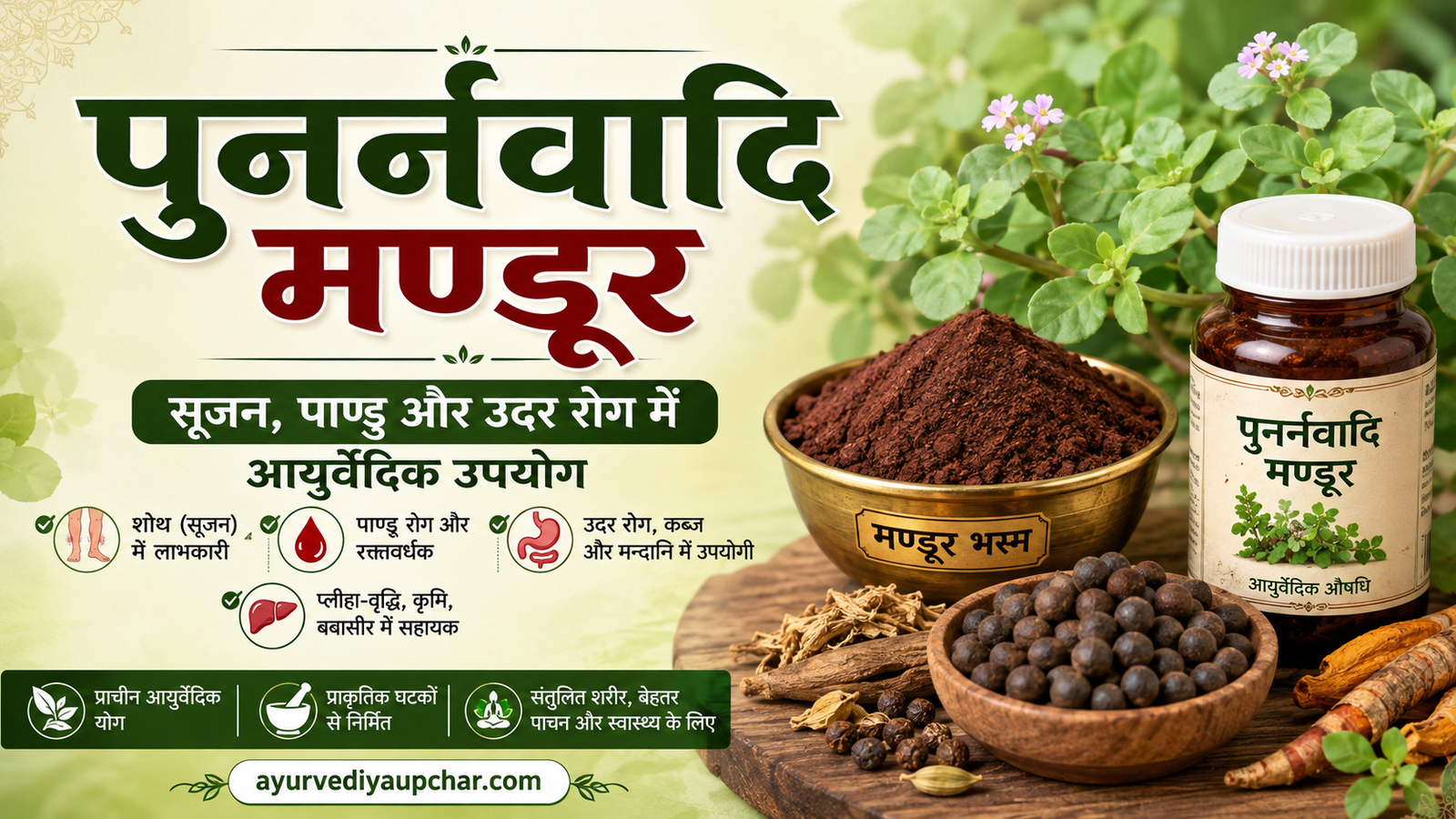
पुनर्नवादि मण्डूर: सूजन, पाण्डु और उदर विकारों में प्रसिद्ध आयुर्वेदिक योग
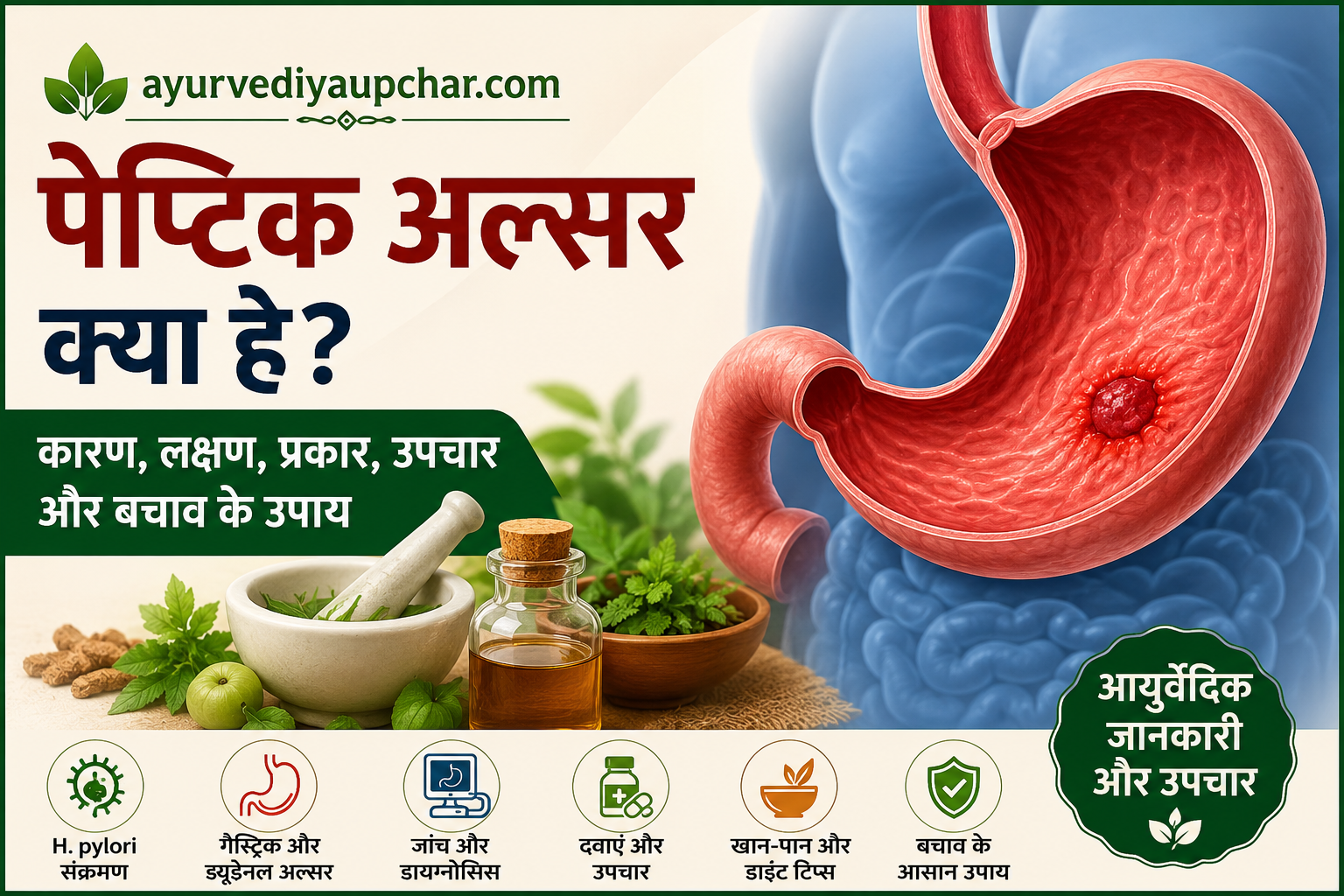
एक आम बीमारी: पेप्टिक अल्सर — कारण, लक्षण, प्रकार, पहचान और उपचार
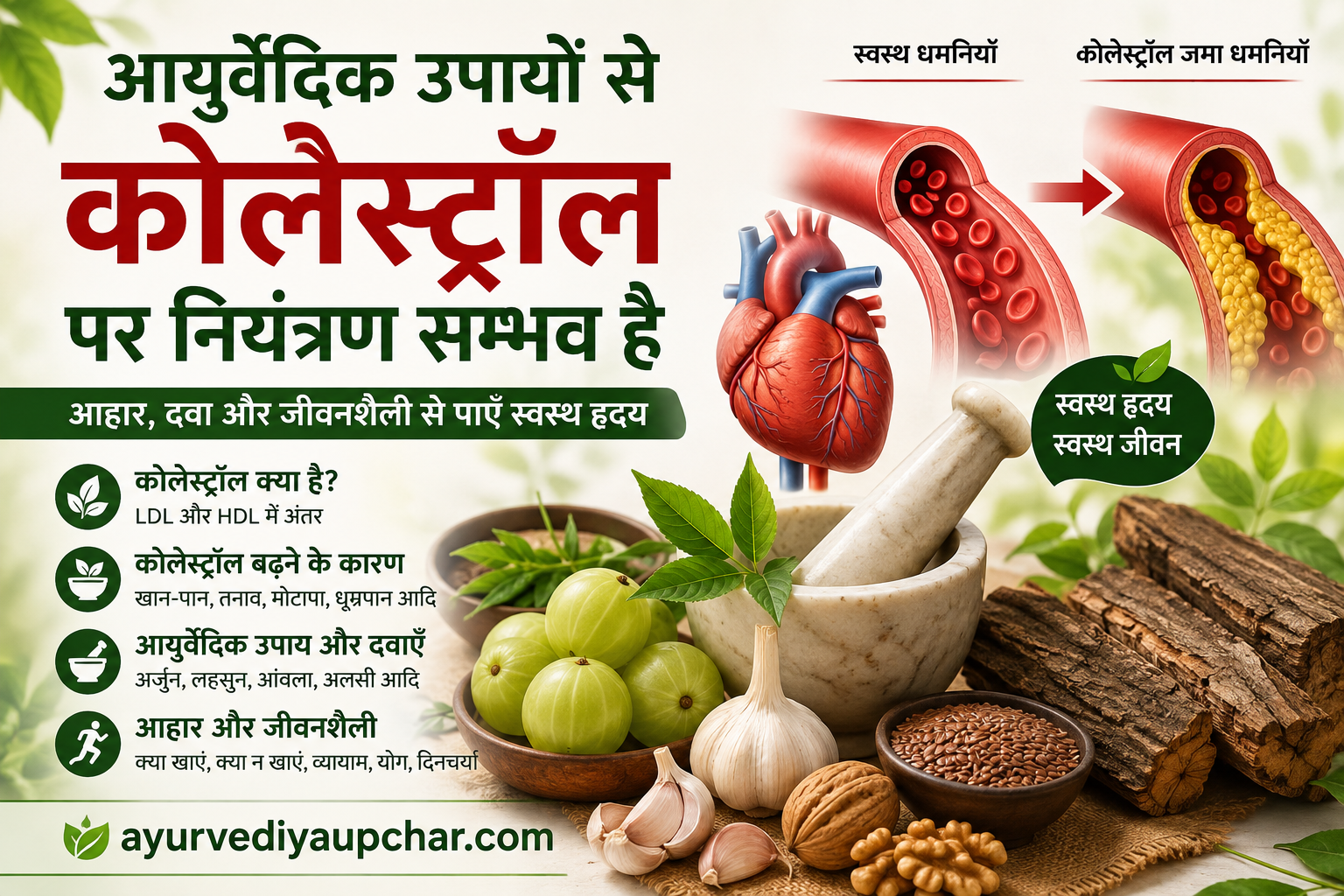
आयुर्वेदिक उपायों और संतुलित आहार द्वारा कोलेस्ट्रॉल पर नियंत्रण संभव है
AYURVEDIYAUPCHAR
At AyurvediyaUpchar, we are dedicated to bringing you the ancient wisdom of Ayurveda to support your journey toward holistic well-being. Our carefully crafted treatments, products, and resources are designed to balance mind, body, and spirit for a healthier, more harmonious life. Explore our range of services and products inspired by centuries-old traditions for natural healing and wellness.
आयुर्वेदीय उपचार में, हम आपको आयुर्वेद के प्राचीन ज्ञान को समग्र कल्याण की ओर आपकी यात्रा में सहायता करने के लिए समर्पित हैं। हमारे सावधानीपूर्वक तैयार किए गए उपचार, उत्पाद और संसाधन स्वस्थ, अधिक सामंजस्यपूर्ण जीवन के लिए मन, शरीर और आत्मा को संतुलित करने के लिए डिज़ाइन किए गए हैं। प्राकृतिक उपचार और कल्याण के लिए सदियों पुरानी परंपराओं से प्रेरित हमारी सेवाओं और उत्पादों की श्रृंखला का अन्वेषण करें।

About AyurvediyaUpchar.com
Welcome to AyurvediyaUpchar.com, your trusted online destination for authentic Ayurvedic remedies, herbal products, and wellness solutions. We are dedicated to bringing the ancient wisdom of Ayurveda into modern lifestyles through high-quality, natural, and effective products.
Our Mission
At AyurvediyaUpchar.com, we strive to promote holistic health and well-being by providing pure, traditional, and scientifically-backed Ayurvedic treatments. Our goal is to make Ayurveda accessible to everyone, helping people lead a healthier and more balanced life naturally.
What We Offer
✅ Authentic Ayurvedic Medicines – Herbal formulations for various health concerns.
✅ Herbal Supplements – Boost immunity, digestion, and overall wellness.
✅ Personal Care Products – Skincare, haircare, and natural beauty solutions.
✅ Wellness & Lifestyle – Detox, stress relief, and rejuvenation products.
✅ Expert Guidance – Informative blogs, health tips, and personalized Ayurvedic consultation.
Why Choose Us?
✔ 100% Natural & Pure Products – Sourced from the finest herbs and ingredients.
✔ Trusted by Ayurveda Experts – Backed by traditional wisdom & modern research.
✔ Secure Online Shopping – Safe payments and easy checkout.
✔ Nationwide Delivery – Get Ayurveda at your doorstep.
✔ Customer Satisfaction – Dedicated support for your health journey.
Join us in embracing Ayurveda for a healthier, happier, and more natural life!
For any queries, feel free to contact us at Info@ayurvediyaupchar.com