





Sinusitis (Sinus Infection): Causes, Symptoms, Types, Diagnosis & Complete Ayurvedic Treatment
Introduction
Sinusitis, commonly known as a sinus infection, is one of the most widespread chronic health problems affecting people of all ages—from children to the elderly. In modern lifestyles, increasing air pollution, dust exposure, allergens, irregular eating habits, stress, and weakened immunity have made sinus problems extremely common, especially in urban populations.
Although sinusitis may begin as a simple cold or nasal congestion, untreated or recurrent infections can significantly reduce quality of life. Chronic sinusitis often leads to persistent headaches, breathing difficulty, fatigue, disturbed sleep, reduced concentration, and emotional stress.
Ayurveda views sinusitis not merely as a local nasal disease but as a systemic imbalance, primarily involving Kapha Dosha, with involvement of Vata and Pitta in advanced stages. With proper Ayurvedic treatment, lifestyle correction, and detoxification therapies, sinusitis can be effectively controlled and managed long-term.
1. What Are Sinuses?
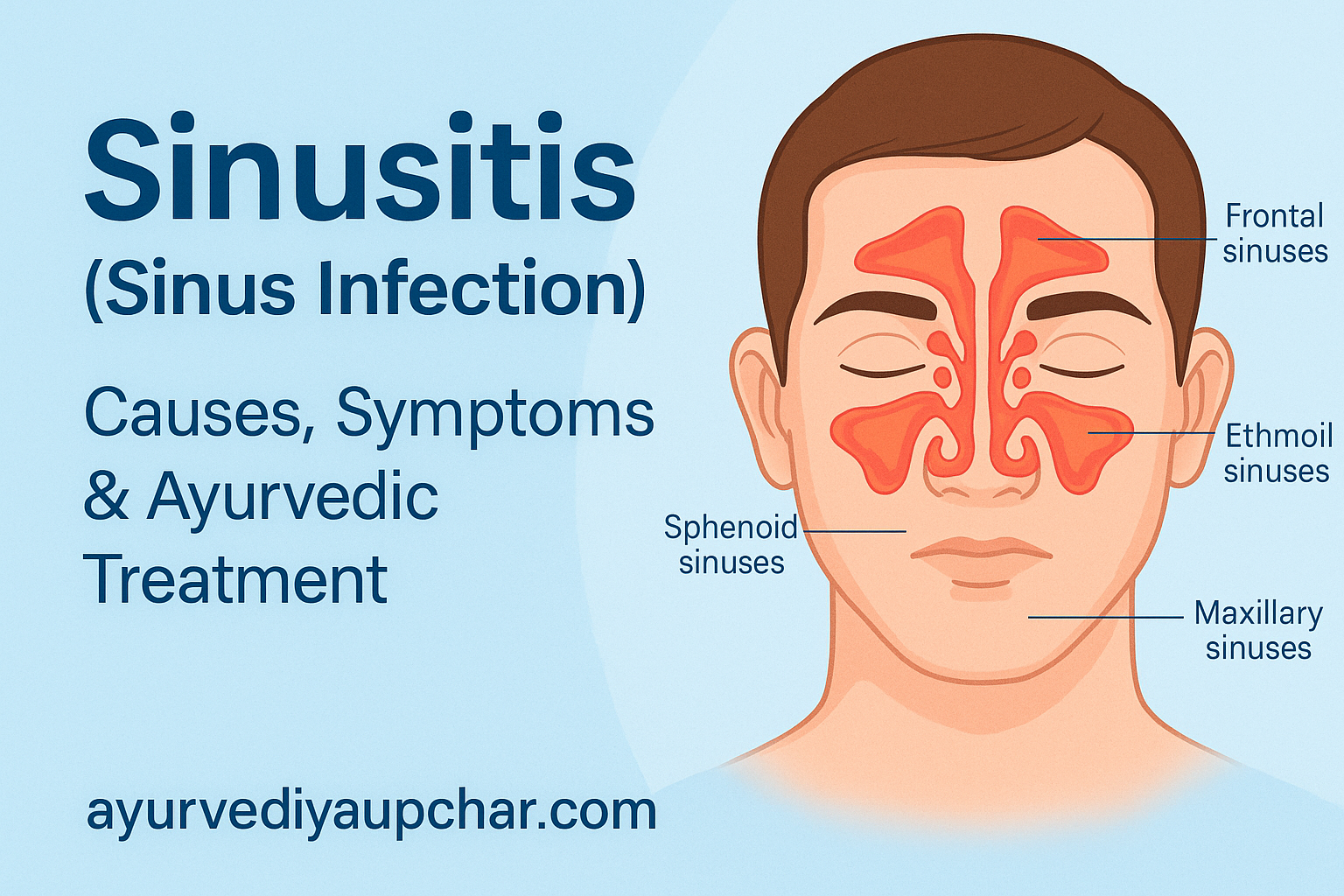
Sinuses are hollow, air-filled cavities located within the bones of the skull and face. These cavities are lined with a thin mucous membrane and connected to the nasal passages.
Major Types of Sinuses
-
Maxillary Sinuses – Located in the cheekbones
-
Frontal Sinuses – Located in the forehead
-
Ethmoid Sinuses – Located between the eyes
-
Sphenoid Sinuses – Located deep inside the skull
Functions of Sinuses
-
Reduce the weight of skull bones
-
Warm and humidify inhaled air
-
Trap dust, pollutants, and microbes
-
Enhance voice resonance and speech clarity
Healthy sinuses produce mucus that drains smoothly into the nasal cavity. Problems begin when this drainage is blocked.
2. What Is Sinusitis?
Sinusitis is an inflammatory condition in which the lining of the sinuses becomes swollen or infected, leading to mucus accumulation and blockage.
When mucus cannot drain properly, it creates a favorable environment for bacteria, viruses, or fungi to grow, resulting in infection.
Ayurvedic Perspective
In Ayurveda, sinusitis is associated with Pratishyaya, Peenasa, and Kaphaja disorders. Accumulated Kapha obstructs nasal channels (Srotas), leading to inflammation, heaviness, pain, and discharge.
3. Types of Sinusitis
1. Acute Sinusitis
-
Duration: 10–14 days
-
Usually caused by viral or bacterial infection
-
Often follows common cold
2. Sub-Acute Sinusitis
-
Duration: 4–12 weeks
-
Symptoms persist despite initial treatment
3. Chronic Sinusitis
-
Duration: More than 12 weeks
-
Recurrent or continuous symptoms
-
Often associated with nasal polyps or structural defects
4. Allergic Sinusitis
-
Triggered by dust, pollen, pet dander, or seasonal changes
-
Common in people with allergic rhinitis or asthma
4. Causes of Sinusitis
Modern Medical Causes
-
Bacterial, viral, or fungal infections
-
Recurrent cold and flu
-
Allergic reactions
-
Air pollution and cigarette smoke
-
Exposure to damp or moldy environments
-
Excessive intake of cold foods and drinks
-
Deviated nasal septum (DNS)
-
Nasal polyps
-
Weak immune system
Ayurvedic Causes
-
Excessive Kapha-provoking diet (cold, oily, heavy foods)
-
Irregular digestion (Mandagni)
-
Suppression of natural urges
-
Exposure to cold wind
-
Poor daily routine (Dinacharya)
5. Symptoms of Sinusitis
Common Symptoms
-
Persistent headache
-
Pressure or pain in forehead, cheeks, and around eyes
-
Nasal congestion or blockage
-
Thick, yellow or green nasal discharge
-
Post-nasal drip
-
Reduced sense of smell
-
Sneezing and nasal irritation
-
Mild fever and fatigue
-
Facial heaviness
Associated Symptoms
-
Voice changes (nasal tone)
-
Ear pressure or fullness
-
Tooth pain
-
Poor sleep quality
-
Premature graying of hair (as per Ayurvedic observation)
6. Diagnosis of Sinusitis
Common Diagnostic Methods
-
X-Ray of Sinuses – Identifies fluid levels or blockage
-
CT Scan – Detailed imaging for chronic or complicated cases
-
Nasal Endoscopy – Visual inspection of nasal cavity
-
Allergy Testing – Identifies allergic triggers
7. Conventional (Allopathic) Treatment – Brief Overview
-
Antibiotics (for bacterial infections)
-
Antihistamines
-
Nasal decongestant sprays
-
Steroid sprays
-
Pain relievers
⚠️ Long-term use may cause side effects and symptom recurrence after discontinuation.
8. Ayurvedic Approach to Sinusitis
Ayurveda focuses on root-cause treatment, not just symptom relief.
Main Treatment Goals
-
Eliminate excess Kapha
-
Clear nasal passages
-
Improve digestion and metabolism
-
Strengthen immunity
-
Prevent recurrence
9. Important Ayurvedic Remedies (Traditional Formulations)
⚠️ Use only under medical supervision
-
Almond (50 g) + Black Pepper (20 g) powder – 1 tsp with warm milk
-
Tulsi Ghan Vati + Lakshmi Vilas Ras + Sanjeevani Vati – with honey
-
Reetha + Trikatu decoction – 2 drops as nasal instillation
-
Black Pepper, Dry Ginger, Amla, Mulethi, Tulsi – with honey
-
Shadbindu Oil – 2 drops in each nostril
-
Arogyavardhini Vati + Sitopaladi Churna + Sanjeevani Vati
-
Black Pepper, Ginger, Pippali – with ghee and honey
10. Panchakarma Therapies for Sinusitis
1. Nasya Therapy
-
Medicated oil administered through nostrils
-
Clears sinuses and strengthens nasal tissues
2. Swedana (Steam Therapy)
-
Liquefies thick mucus
-
Promotes drainage
3. Vamana (Therapeutic Emesis)
-
Recommended in severe Kapha disorders
-
Detoxifies respiratory system
11. Useful Ayurvedic Medicines
-
Godanti Bhasma
-
Tankan Bhasma
-
Abhrak Bhasma
-
Lakshmi Vilas Ras
-
Chitrak Haritaki
-
Shadbindu Taila
-
Sitopaladi Churna
-
Kanakasava
12. Diet & Lifestyle (Ahara-Vihara)
Recommended Foods
-
Warm, freshly cooked meals
-
Herbal teas and decoctions
-
Ginger, turmeric, black pepper
-
Light soups
Foods to Avoid
-
Cold drinks and ice cream
-
Refrigerated foods
-
Night-time curd/yogurt
-
Excessive sugar and processed foods
13. Prevention of Sinusitis
-
Avoid dust and pollution
-
Cover nose in cold weather
-
Practice yoga and pranayama
-
Maintain strong digestion
-
Follow daily routine (Dinacharya)
14. Conclusion
Sinusitis is a stubborn yet completely manageable condition when addressed holistically. Ayurveda offers a time-tested, natural, and sustainable approach by correcting internal imbalances rather than suppressing symptoms.
With proper Ayurvedic medication, Panchakarma therapies, disciplined lifestyle, and dietary modifications, long-term relief from sinusitis is achievable without harmful side effects.
© ayurvediyaupchar.com
Natural Healing | Authentic Ayurveda | Root-Cause Treatment
Recent Posts
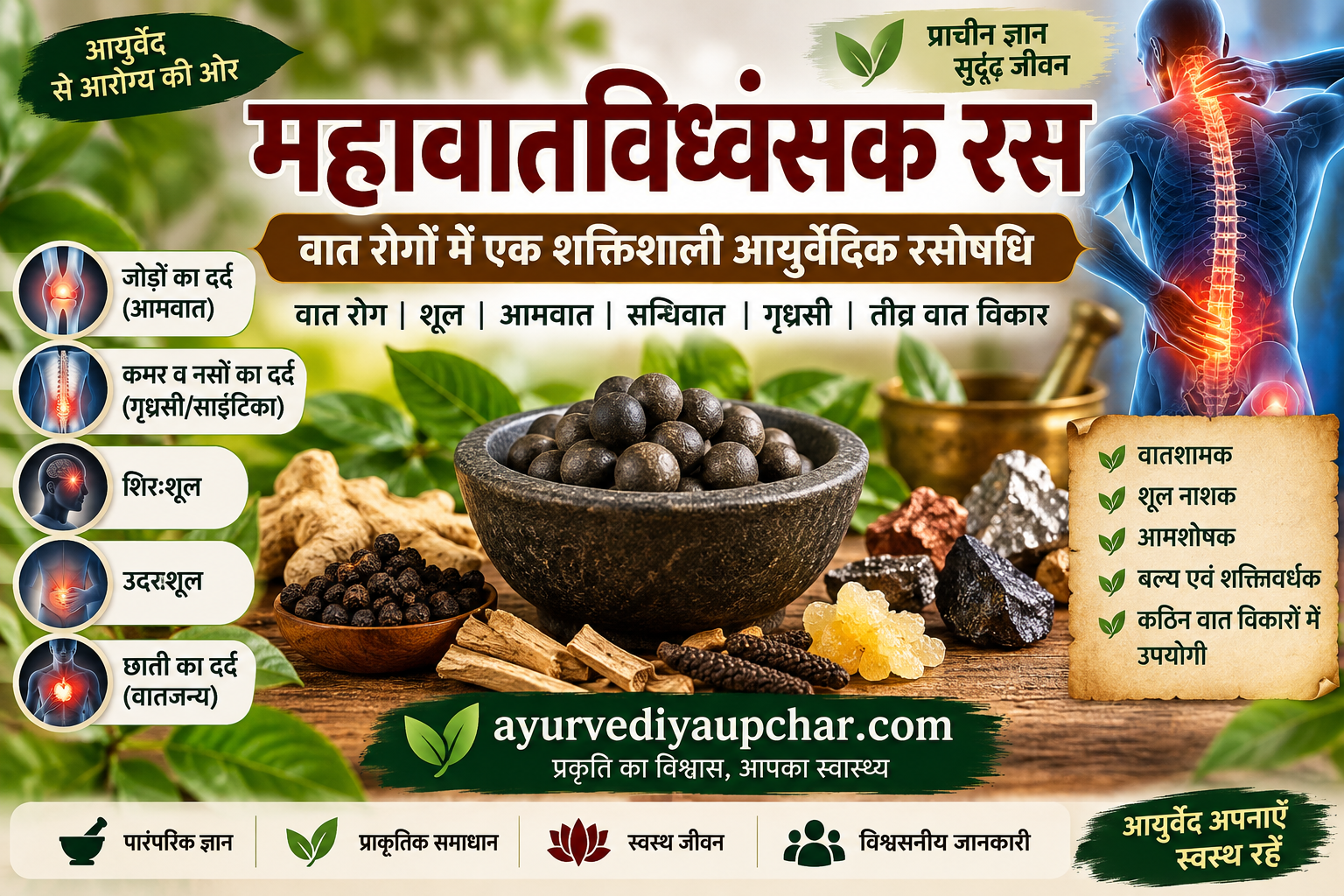
महावातविध्वंसक रस: वात विकारों और तीव्र शूल में पारंपरिक आयुर्वेदिक उपयोग
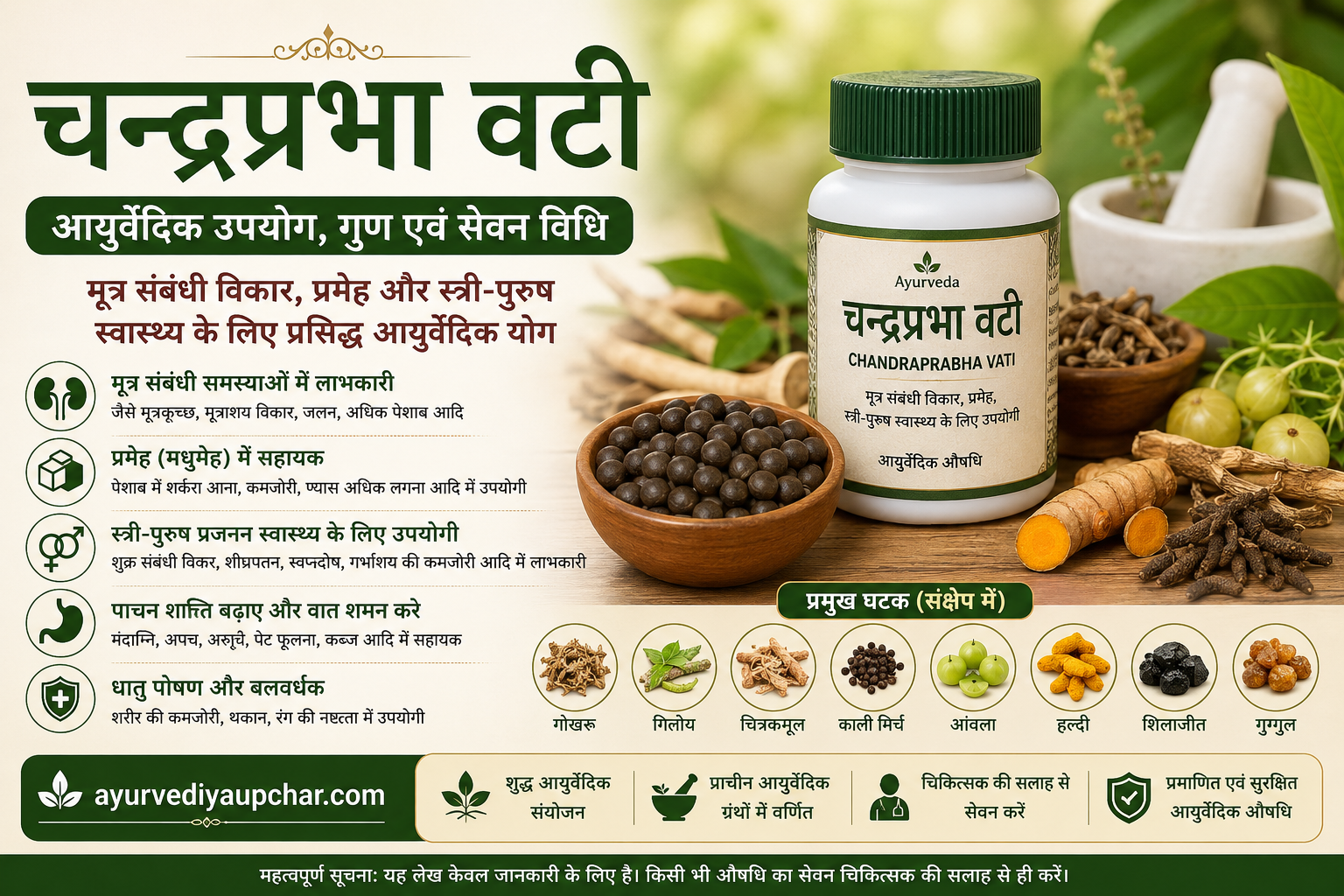
चन्द्रप्रभा वटी: आयुर्वेद में उपयोग, घटक, पारंपरिक गुण और सेवन विधि
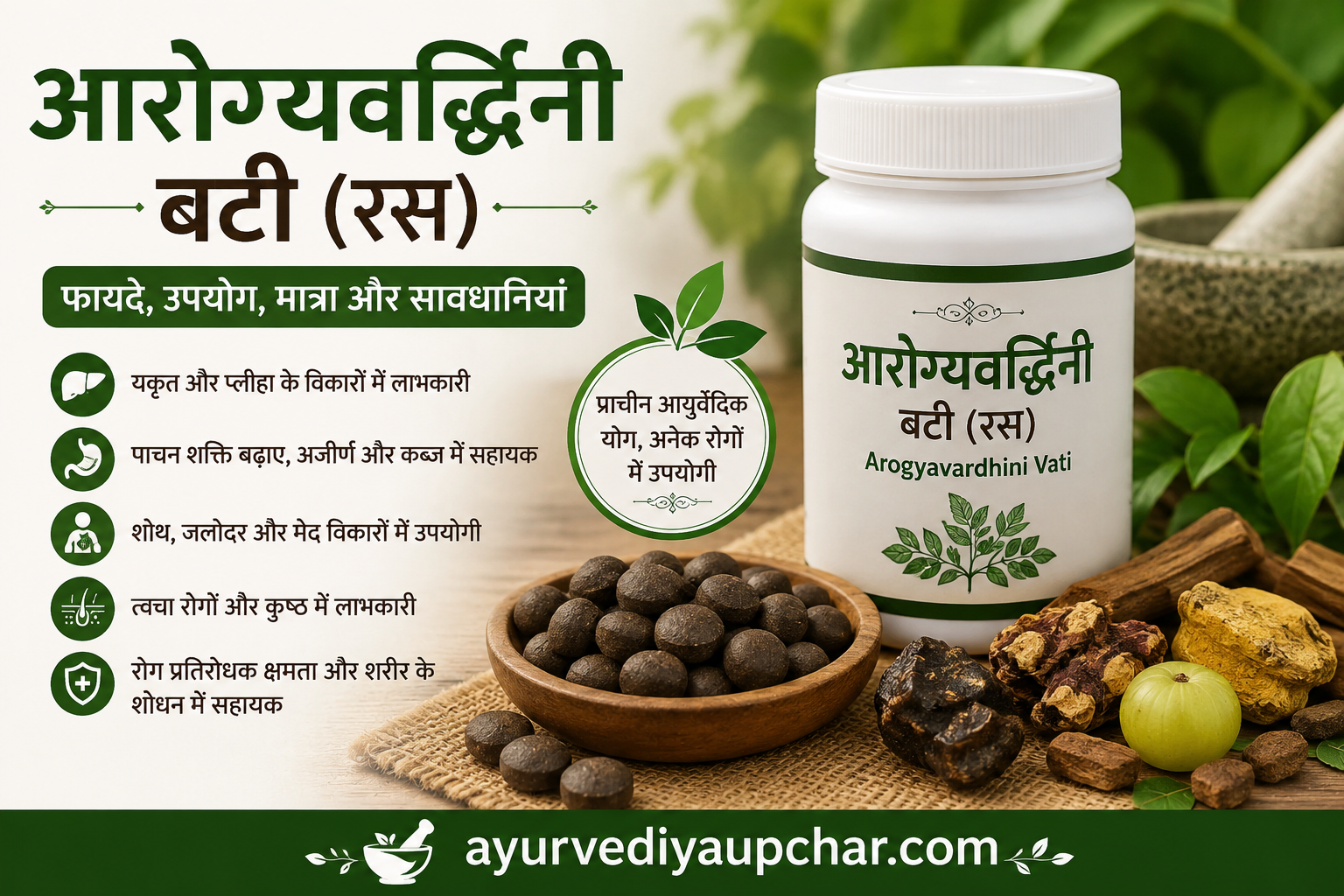
आरोग्यवर्द्धिनी बटी (रस): परिचय, घटक, निर्माण विधि, मात्रा, अनुपान और पारंपरिक उपयोग
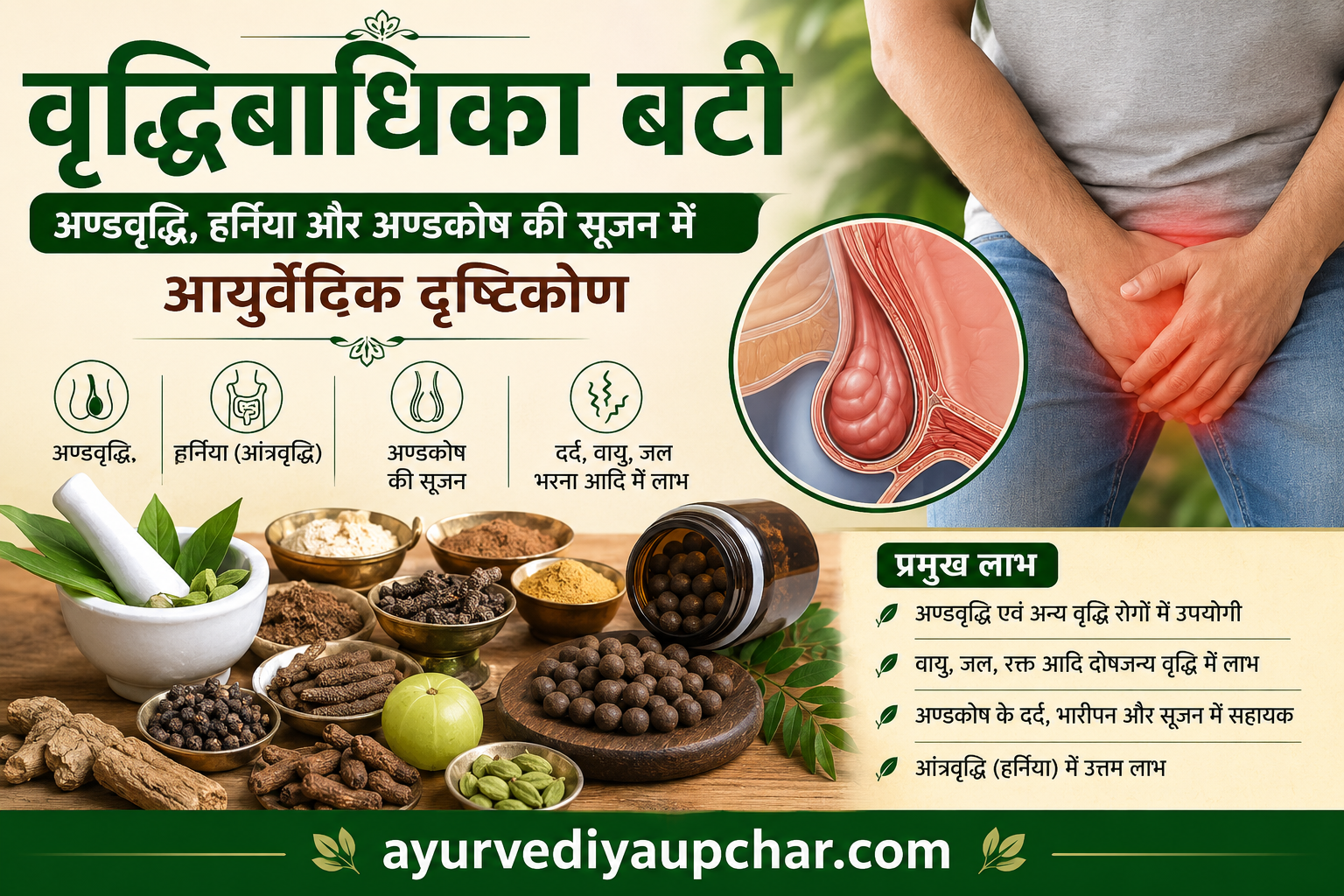
वृद्धिबाधिका बटी: अण्डवृद्धि, अण्डकोष में सूजन और हर्निया के संबंध में आयुर्वेदिक दृष्टिकोण
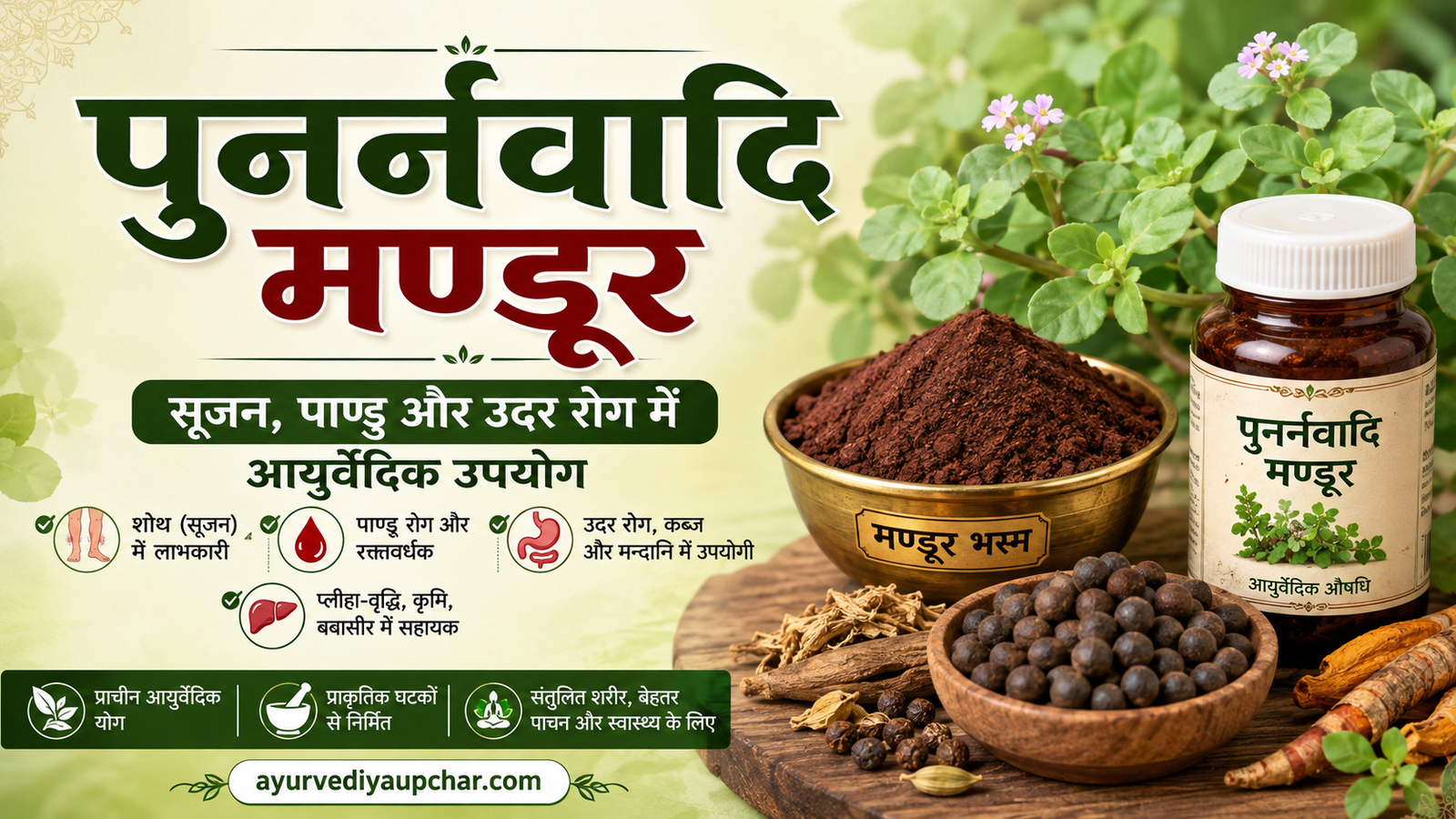
पुनर्नवादि मण्डूर: सूजन, पाण्डु और उदर विकारों में प्रसिद्ध आयुर्वेदिक योग
एक आम बीमारी: पेप्टिक अल्सर — कारण, लक्षण, प्रकार, पहचान और उपचार
आयुर्वेदिक उपायों और संतुलित आहार द्वारा कोलेस्ट्रॉल पर नियंत्रण संभव है
AYURVEDIYAUPCHAR
At AyurvediyaUpchar, we are dedicated to bringing you the ancient wisdom of Ayurveda to support your journey toward holistic well-being. Our carefully crafted treatments, products, and resources are designed to balance mind, body, and spirit for a healthier, more harmonious life. Explore our range of services and products inspired by centuries-old traditions for natural healing and wellness.
आयुर्वेदीय उपचार में, हम आपको आयुर्वेद के प्राचीन ज्ञान को समग्र कल्याण की ओर आपकी यात्रा में सहायता करने के लिए समर्पित हैं। हमारे सावधानीपूर्वक तैयार किए गए उपचार, उत्पाद और संसाधन स्वस्थ, अधिक सामंजस्यपूर्ण जीवन के लिए मन, शरीर और आत्मा को संतुलित करने के लिए डिज़ाइन किए गए हैं। प्राकृतिक उपचार और कल्याण के लिए सदियों पुरानी परंपराओं से प्रेरित हमारी सेवाओं और उत्पादों की श्रृंखला का अन्वेषण करें।

About AyurvediyaUpchar.com
Welcome to AyurvediyaUpchar.com, your trusted online destination for authentic Ayurvedic remedies, herbal products, and wellness solutions. We are dedicated to bringing the ancient wisdom of Ayurveda into modern lifestyles through high-quality, natural, and effective products.
Our Mission
At AyurvediyaUpchar.com, we strive to promote holistic health and well-being by providing pure, traditional, and scientifically-backed Ayurvedic treatments. Our goal is to make Ayurveda accessible to everyone, helping people lead a healthier and more balanced life naturally.
What We Offer
✅ Authentic Ayurvedic Medicines – Herbal formulations for various health concerns.
✅ Herbal Supplements – Boost immunity, digestion, and overall wellness.
✅ Personal Care Products – Skincare, haircare, and natural beauty solutions.
✅ Wellness & Lifestyle – Detox, stress relief, and rejuvenation products.
✅ Expert Guidance – Informative blogs, health tips, and personalized Ayurvedic consultation.
Why Choose Us?
✔ 100% Natural & Pure Products – Sourced from the finest herbs and ingredients.
✔ Trusted by Ayurveda Experts – Backed by traditional wisdom & modern research.
✔ Secure Online Shopping – Safe payments and easy checkout.
✔ Nationwide Delivery – Get Ayurveda at your doorstep.
✔ Customer Satisfaction – Dedicated support for your health journey.
Join us in embracing Ayurveda for a healthier, happier, and more natural life!
For any queries, feel free to contact us at Info@ayurvediyaupchar.com