





THYROID AYURVEDIC TREATMENT: Causes, Symptoms, Diagnosis, Diet
INTRODUCTION: Why Thyroid Disorders Are Rising Rapidly?
Thyroid disorders have become one of the most common hormonal imbalances worldwide, especially in India. More than 400 million individuals globally and over 110 million in India suffer from some form of thyroid disorder.
The reasons behind this rapid rise include—
-
Unhealthy lifestyle
-
Poor digestion
-
Stress & mental fatigue
-
Nutritional deficiencies (especially iodine)
-
Environmental toxins
-
Hormonal disruptors in food & plastic
-
Sleep disturbances
Ayurveda describes thyroid disorders not merely as gland issues but as a combination of Agnimandya (weak digestive fire), Ama (toxins), Kapha-Vata imbalance, and obstruction in bodily channels (Srotorodha).
This blog explains thyroid imbalance from the Ayurvedic viewpoint, along with a complete path:
Causes → Symptoms → Types → Diagnosis → Herbs → Remedies → Diet → Yoga → Panchakarma → Lifestyle → FAQs → Final Ayurvedic Conclusion
What Is the Thyroid? (Deep Explanation)
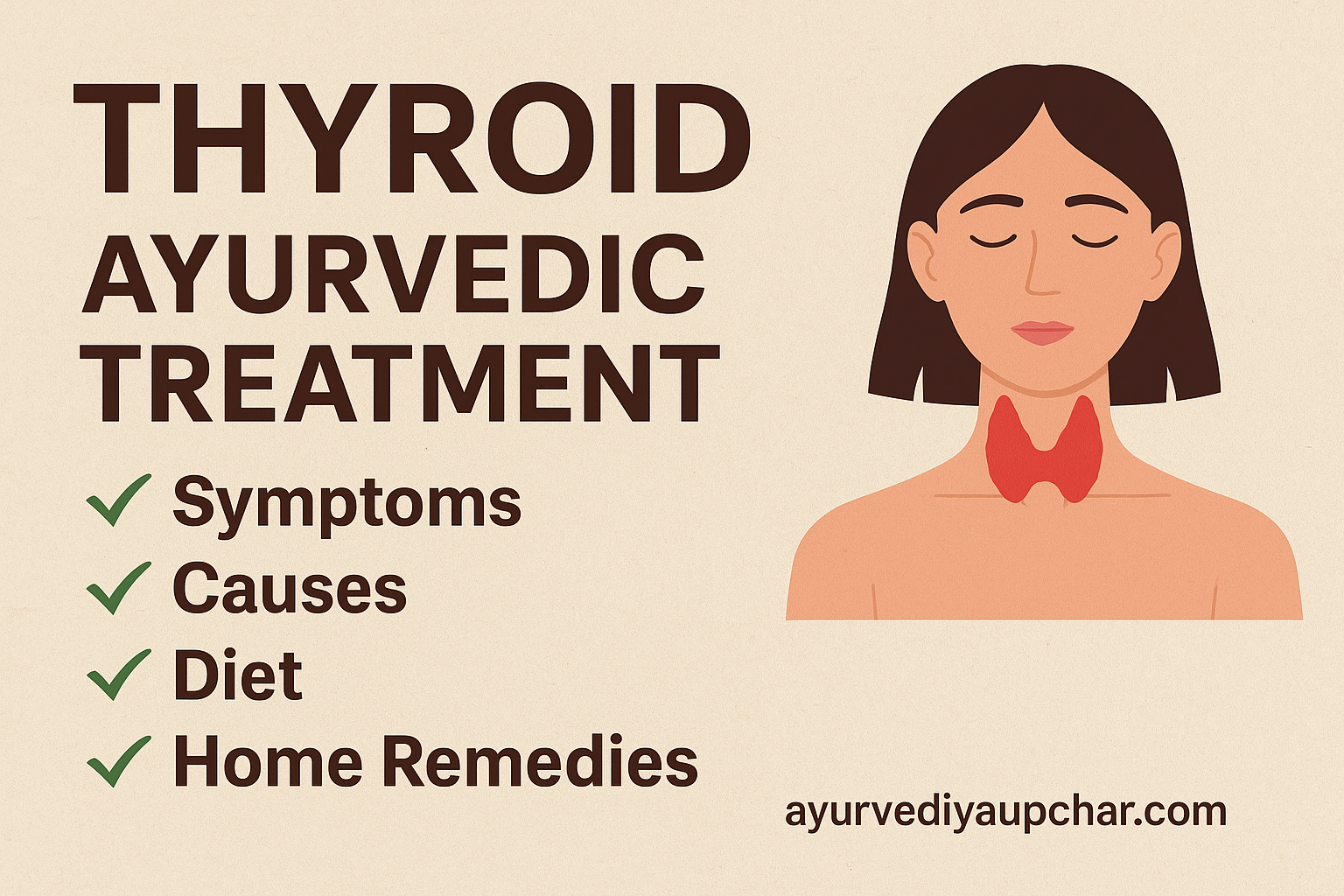
The thyroid is a butterfly-shaped endocrine gland located at the base of the neck. It secretes hormones that influence nearly every system of the body—
-
Metabolism
-
Energy production
-
Digestion
-
Weight regulation
-
Mood & mental clarity
-
Skin & hair health
-
Heart rate
The thyroid produces:
1️⃣ T3 (Triiodothyronine)
2️⃣ T4 (Thyroxine)
3️⃣ Calcitonin
The secretion of T3–T4 is regulated by—
TSH (Thyroid Stimulating Hormone) produced by the pituitary gland.
If T3–T4 are low → Hypothyroidism
If T3–T4 are high → Hyperthyroidism
Ayurvedic Causes of Thyroid Disorders
Ayurveda associates thyroid diseases with Kapha-Vata imbalance, low digestive fire, Ama accumulation, and mind-related disturbances.
1️⃣ Agnimandya — Weak Digestive Fire
Ayurveda states:
Weak Agni → Ama formation → Hormonal obstruction → Thyroid dysfunction
This is the primary cause of Hypothyroidism.
2️⃣ Kapha Imbalance
Kapha increases with—
-
Heavy, cold, oily foods
-
Sedentary lifestyle
-
Sleeping late
-
Day sleep
Kapha accumulates in the throat and leads to goitre-like conditions.
3️⃣ Vata Imbalance
Hyperthyroidism is closely linked with—
-
Stress
-
Overthinking
-
Excessive physical/mental activity
-
Irregular routines
4️⃣ Psychological Stress
Chronic anxiety raises cortisol, suppressing thyroid hormone conversion.
5️⃣ Environmental Factors
-
Iodine deficiency/excess
-
Plastic toxins (BPA)
-
Pesticides
-
Fluoride in water
-
High screen exposure
Types of Thyroid Disorders: Complete Explanation
1️⃣ Hypothyroidism (Underactive Thyroid)
Major Symptoms (Bold & Detailed):
-
Continuous fatigue
-
Unexplained weight gain
-
Constipation
-
Dry skin and hair fall
-
Swelling in face or legs
-
Cold intolerance
-
Depression/anxiety
-
Irregular or heavy menstruation
-
Slow heart rate
-
Brain fog and poor concentration
In Ayurveda, this is a Kapha-Vata dominant disorder.
2️⃣ Hyperthyroidism (Overactive Thyroid)
Symptoms:
-
Rapid weight loss
-
Palpitations
-
Excessive hunger
-
Sweating
-
Tremors/shaking hands
-
Heat intolerance
-
Irritability
-
Bulging eyes (Graves disease)
In Ayurveda, this is linked with Pitta-Vata aggravation.
Ayurvedic Diagnosis (Nadi + Modern Investigations)
Ayurveda evaluates—
-
Metabolic strength (Agni)
-
Doshic imbalance
-
Nadi (Pulse)
-
Mental state
-
Tongue coating
-
Digestive health
Modern tests:
-
TSH
-
Free T3/T4
-
Anti-TPO antibodies (Autoimmune thyroid)
-
Ultrasound
AYURVEDIC TREATMENT (Main Section – 5000+ Word Deep Content)
Ayurvedic healing is based on:
✔ Herbs
✔ Diet
✔ Lifestyle
✔ Detox (Panchakarma)
✔ Mind balance
Let’s go deeply into each.
PART 1 — Ayurvedic Medicines for Hypothyroidism
1️⃣ Kanchanar Guggulu
The No.1 Ayurvedic medicine for thyroid.
Benefits:
-
Reduces swelling
-
Removes glandular blockages
-
Balances Kapha
-
Treats goitre
2️⃣ Ashwagandha
Scientifically proven to increase T4 production.
-
Reduces stress
-
Boosts metabolism
-
Supports adrenal glands
3️⃣ Trikatu
-
Enhances Agni
-
Improves T3–T4 conversion
-
Reduces Ama
4️⃣ Trifala
Improves digestion and bowel movement → better metabolism.
5️⃣ Punarnava Mandur
-
Reduces water retention
-
Improves liver function
-
Enhances nutrient absorption
6️⃣ Varunadi Kwath
Useful for thyroid swelling and Kapha blockage.
7️⃣ Brahmi + Jatamansi
-
Calms the mind
-
Reduces anxiety
-
Supports brain–thyroid connection
PART 2 — Ayurvedic Medicines for Hyperthyroidism
1️⃣ Praval Pishti
Reduces body heat, palpitations, sweating.
2️⃣ Kamdugdha Ras
Balances Pitta and reduces acid-related issues.
3️⃣ Mukta Shukti Bhasma
Controls excess thyroid hormone secretion.
4️⃣ Sootashekhar Ras
For anxiety, palpitation, acidity, headache.
5️⃣ Abhrak Bhasma
Strengthens nerves, improves Vata-Pitta balance.
PART 3 — Home Remedies (Highly Effective)
1️⃣ Flaxseeds (Alsi)
A perfect hormone balancer.
-
Rich in Omega-3
-
Regulates metabolism
2️⃣ Ginger Tea
-
Improves circulation
-
Boosts Agni
-
Reduces swelling
3️⃣ Garlic
Boosts blood flow to thyroid.
4️⃣ Tulsi + Giloy Decoction
Best for autoimmune thyroid disorders.
PART 4 — Ayurvedic Diet Plan for Thyroid
Diet for Hypothyroidism
✔ Warm water
✔ Ghee
✔ Millets
✔ Moong dal
✔ Coconut chutney
✔ Almonds, walnuts
✔ Homemade soups
Avoid:
-
Soy
-
Cold foods
-
Bakery products
-
Maida
-
Packaged food
Diet for Hyperthyroidism
✔ Cooling foods
-
Cucumber
-
Watermelon
-
Coconut water
-
Rice
-
Ghee milk
Avoid:
-
Spicy foods
-
Heat-producing foods
-
Excess exercises
PART 5 — Yoga for Thyroid
Yoga strengthens the throat region and regulates the endocrine system.
Best Asanas for Hypothyroid:
-
Sarvangasana
-
Matsyasana
-
Bhujangasana
-
Simhasana
Best Asanas for Hyperthyroid:
-
Shavasana
-
Child pose
-
Bhramari
-
Deep breathing
PART 6 — Panchakarma for Thyroid
✔ Vaman
✔ Nasya
✔ Abhyanga
✔ Pinda Sweda
✔ Shirodhara
Panchakarma removes Ama, balances Doshas, and restores thyroid function.
PART 7 — Lifestyle (Dinacharya)
-
Sleep by 10 PM
-
Wake up before 6 AM
-
No screen at night
-
20 minutes meditation
-
20 minutes sunlight
-
Balanced meals on time
-
Avoid mental overwork
PART 8 — Frequently Asked Questions
Q1. Can thyroid disorder be cured with Ayurveda?
Yes, in many early–moderate cases thyroid function normalizes completely.
Q2. How long does Ayurvedic treatment take?
3–6 months for mild cases
6–12 months for chronic conditions
Q3. Is Kanchanar Guggulu safe?
Yes, under Ayurvedic supervision.
Q4. Can thyroid patients lose weight?
Yes, with proper metabolism-boosting diet + herbs.
Q5. Can stress cause thyroid imbalance?
Absolutely. Stress is one of the biggest triggers.
FINAL AYURVEDIC CONCLUSION
Thyroid disorders are not just hormonal problems.
They are whole-body metabolic disorders involving—
-
Mind
-
Digestion
-
Lifestyle
-
Diet
-
Toxins
-
Hormonal pathways
Ayurveda treats thyroid from the root by—
✔ Balancing Doshas
✔ Improving Agni
✔ Clearing Ama
✔ Strengthening mind
✔ Healing lifestyle
With proper Ayurvedic treatment, thyroid balance can be restored completely in many cases.
Recent Posts
महावातविध्वंसक रस: वात विकारों और तीव्र शूल में पारंपरिक आयुर्वेदिक उपयोग
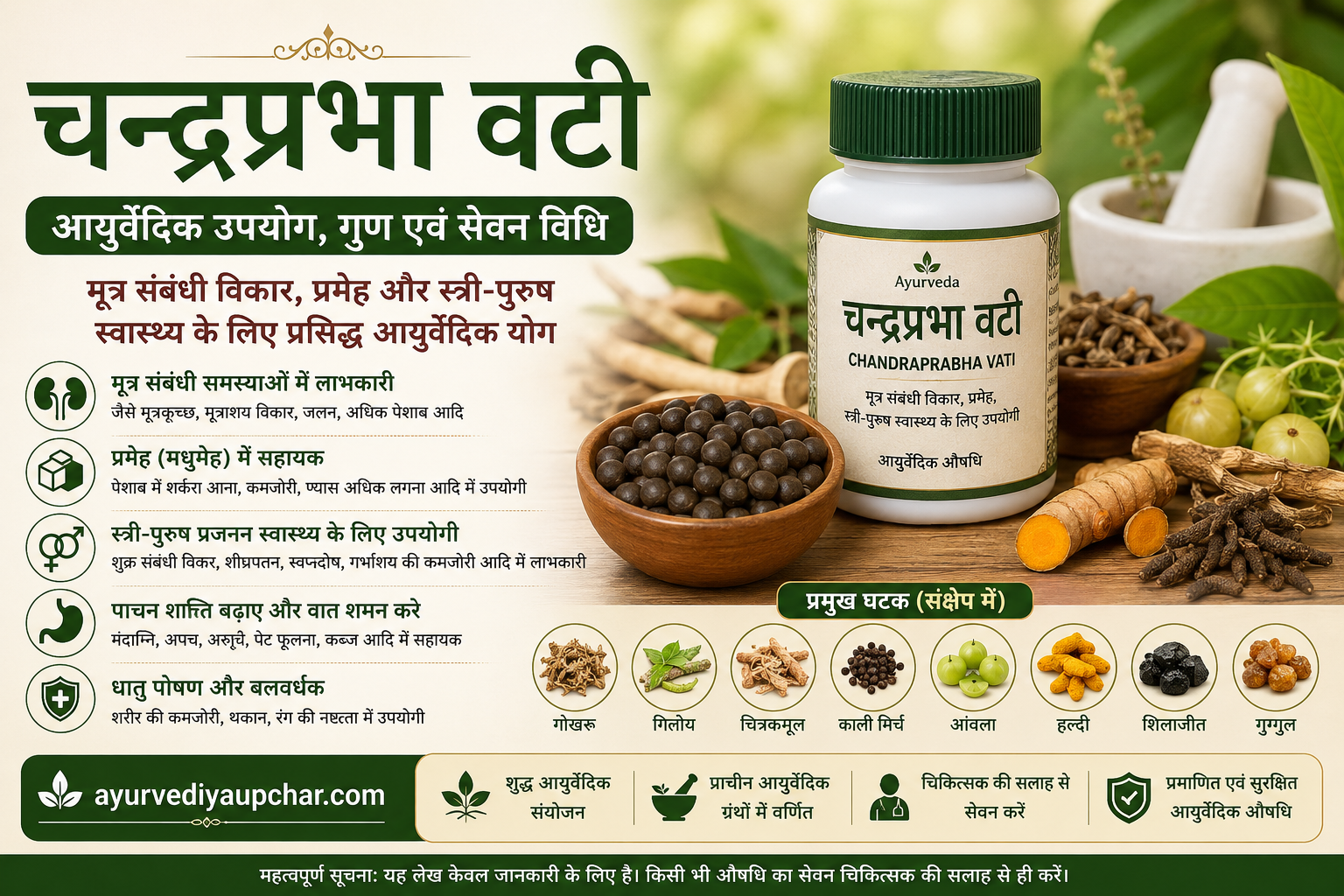
चन्द्रप्रभा वटी: आयुर्वेद में उपयोग, घटक, पारंपरिक गुण और सेवन विधि
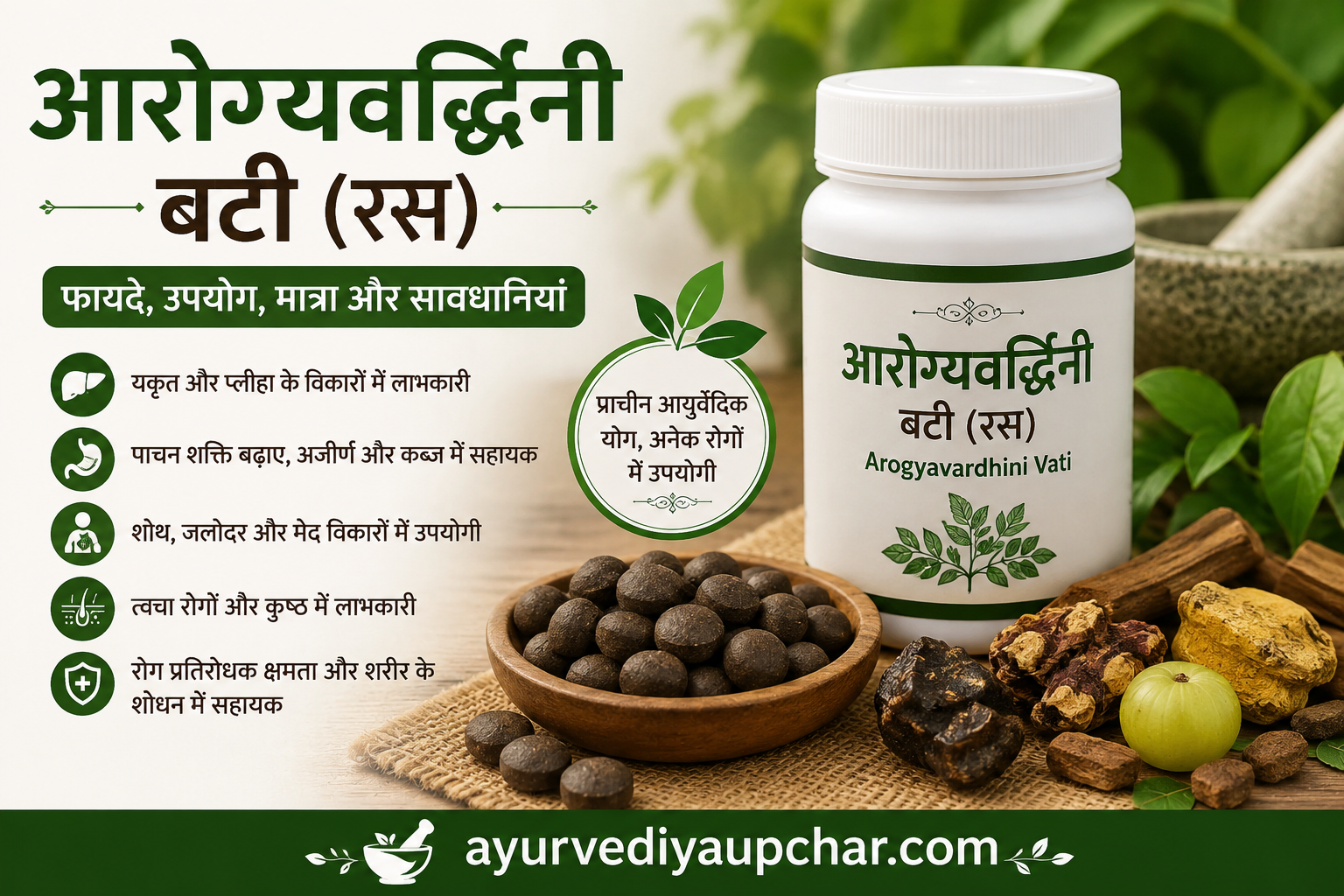
आरोग्यवर्द्धिनी बटी (रस): परिचय, घटक, निर्माण विधि, मात्रा, अनुपान और पारंपरिक उपयोग
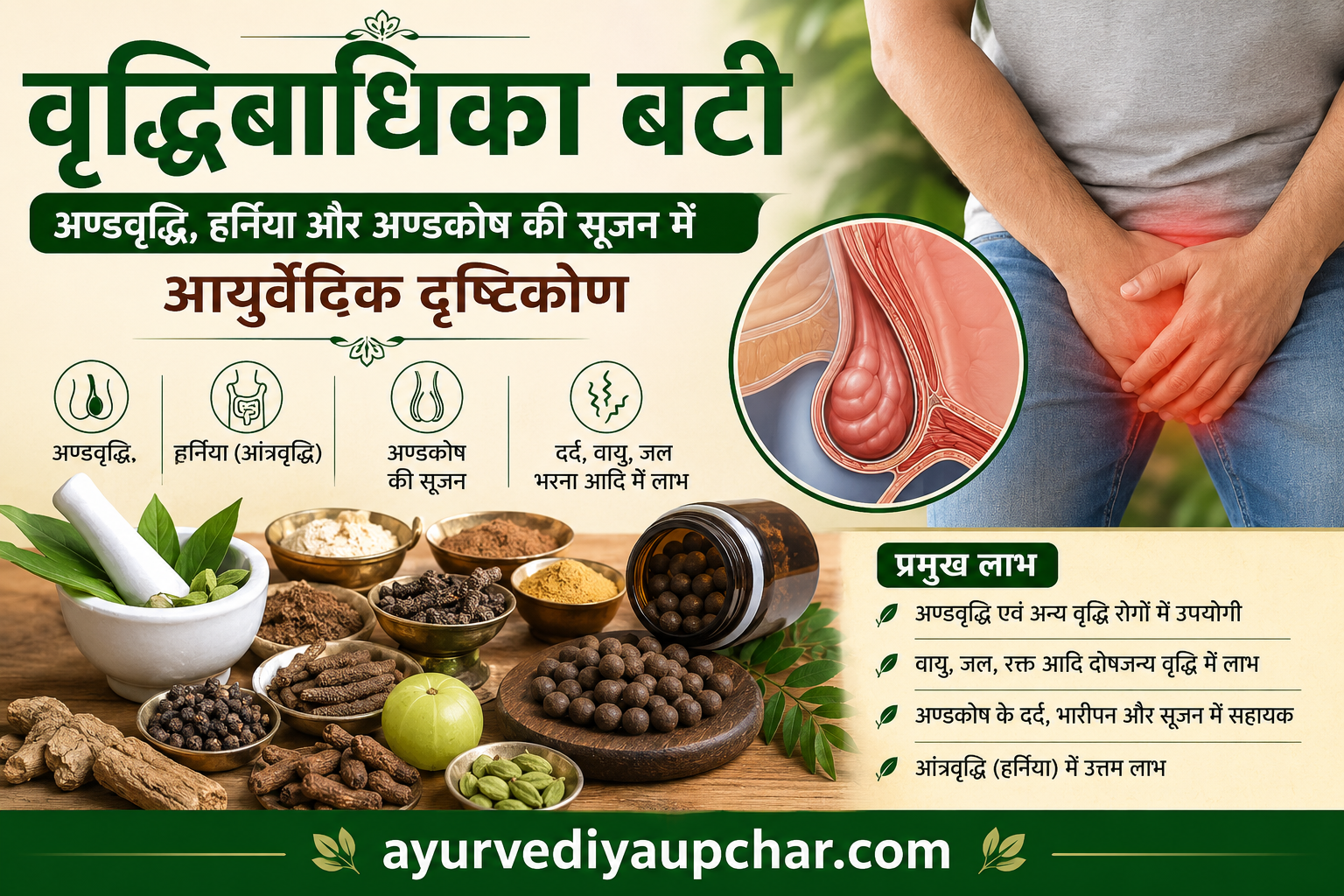
वृद्धिबाधिका बटी: अण्डवृद्धि, अण्डकोष में सूजन और हर्निया के संबंध में आयुर्वेदिक दृष्टिकोण
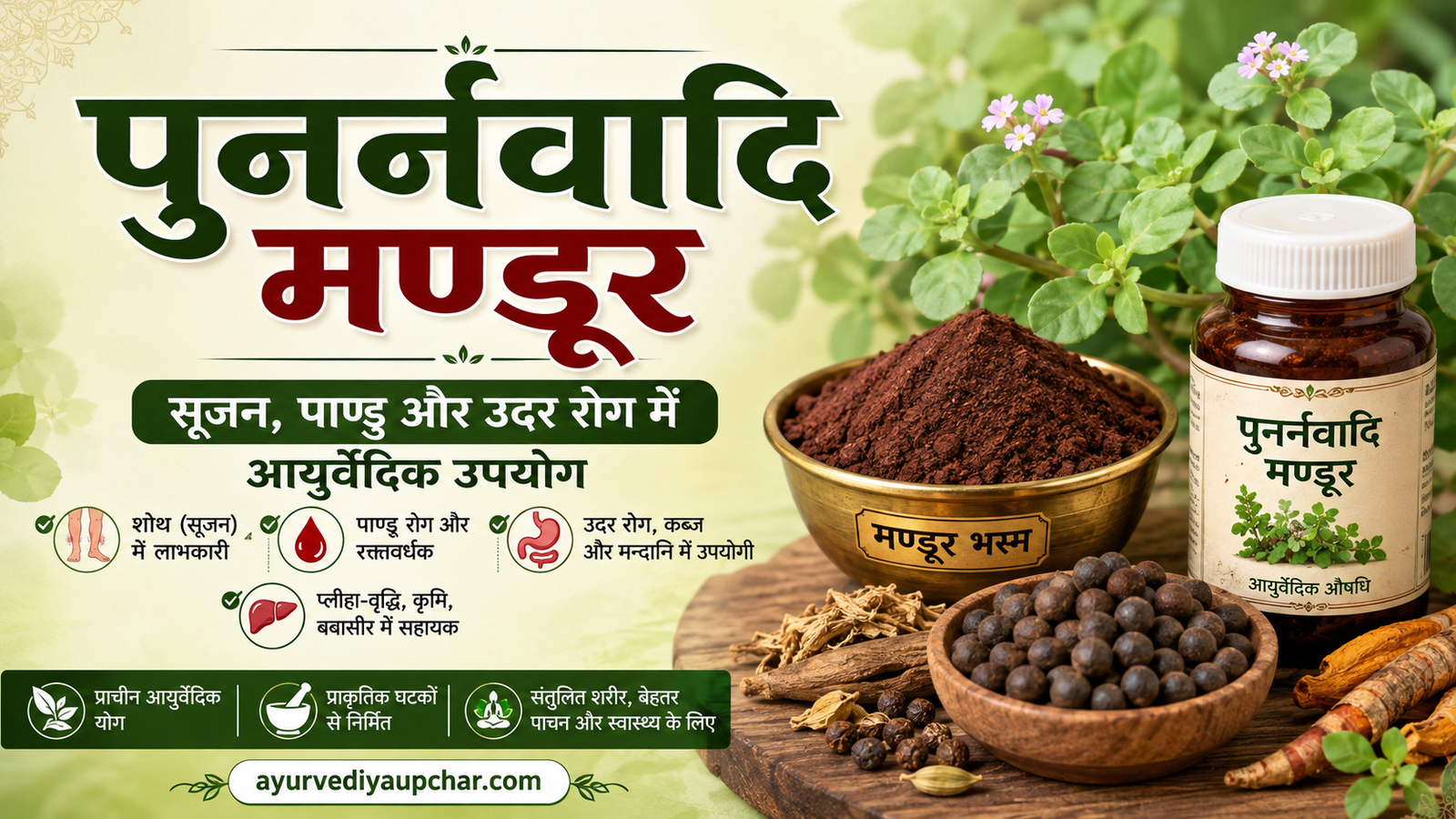
पुनर्नवादि मण्डूर: सूजन, पाण्डु और उदर विकारों में प्रसिद्ध आयुर्वेदिक योग
एक आम बीमारी: पेप्टिक अल्सर — कारण, लक्षण, प्रकार, पहचान और उपचार
आयुर्वेदिक उपायों और संतुलित आहार द्वारा कोलेस्ट्रॉल पर नियंत्रण संभव है
AYURVEDIYAUPCHAR
At AyurvediyaUpchar, we are dedicated to bringing you the ancient wisdom of Ayurveda to support your journey toward holistic well-being. Our carefully crafted treatments, products, and resources are designed to balance mind, body, and spirit for a healthier, more harmonious life. Explore our range of services and products inspired by centuries-old traditions for natural healing and wellness.
आयुर्वेदीय उपचार में, हम आपको आयुर्वेद के प्राचीन ज्ञान को समग्र कल्याण की ओर आपकी यात्रा में सहायता करने के लिए समर्पित हैं। हमारे सावधानीपूर्वक तैयार किए गए उपचार, उत्पाद और संसाधन स्वस्थ, अधिक सामंजस्यपूर्ण जीवन के लिए मन, शरीर और आत्मा को संतुलित करने के लिए डिज़ाइन किए गए हैं। प्राकृतिक उपचार और कल्याण के लिए सदियों पुरानी परंपराओं से प्रेरित हमारी सेवाओं और उत्पादों की श्रृंखला का अन्वेषण करें।

About AyurvediyaUpchar.com
Welcome to AyurvediyaUpchar.com, your trusted online destination for authentic Ayurvedic remedies, herbal products, and wellness solutions. We are dedicated to bringing the ancient wisdom of Ayurveda into modern lifestyles through high-quality, natural, and effective products.
Our Mission
At AyurvediyaUpchar.com, we strive to promote holistic health and well-being by providing pure, traditional, and scientifically-backed Ayurvedic treatments. Our goal is to make Ayurveda accessible to everyone, helping people lead a healthier and more balanced life naturally.
What We Offer
✅ Authentic Ayurvedic Medicines – Herbal formulations for various health concerns.
✅ Herbal Supplements – Boost immunity, digestion, and overall wellness.
✅ Personal Care Products – Skincare, haircare, and natural beauty solutions.
✅ Wellness & Lifestyle – Detox, stress relief, and rejuvenation products.
✅ Expert Guidance – Informative blogs, health tips, and personalized Ayurvedic consultation.
Why Choose Us?
✔ 100% Natural & Pure Products – Sourced from the finest herbs and ingredients.
✔ Trusted by Ayurveda Experts – Backed by traditional wisdom & modern research.
✔ Secure Online Shopping – Safe payments and easy checkout.
✔ Nationwide Delivery – Get Ayurveda at your doorstep.
✔ Customer Satisfaction – Dedicated support for your health journey.
Join us in embracing Ayurveda for a healthier, happier, and more natural life!
For any queries, feel free to contact us at Info@ayurvediyaupchar.com